 The Old Country
The Old Country
The Old Country
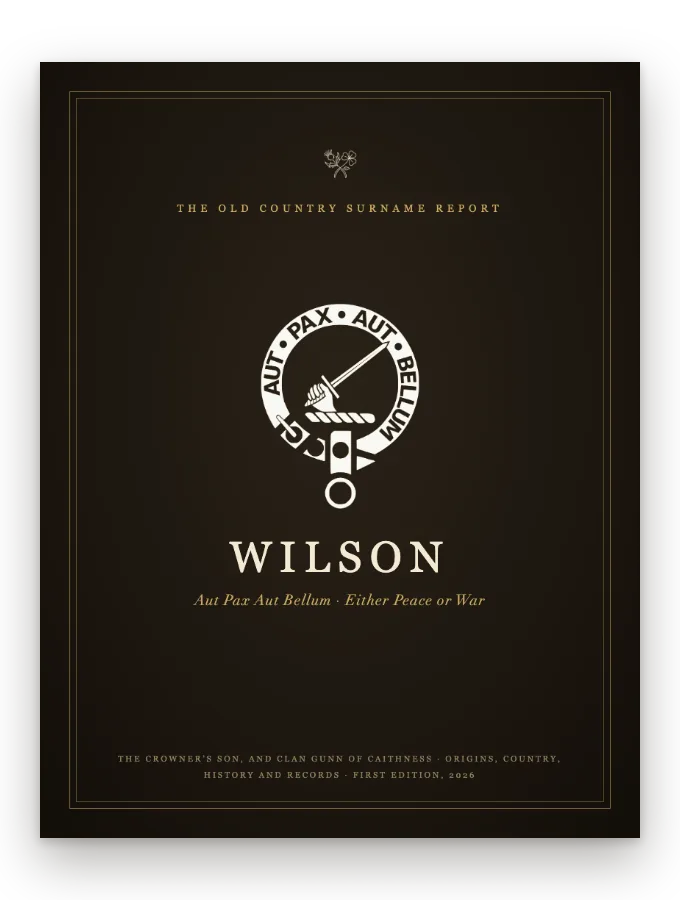
This report tells the story of a name that looks like it has nothing to tell. Wilson is the third most common surname in Scotland and one of the commonest in the English-speaking world, and it means exactly what it appears to mean: son of Will. A patronymic, formed the moment a man called William had children, in every parish where anyone was called William. Which was all of them.
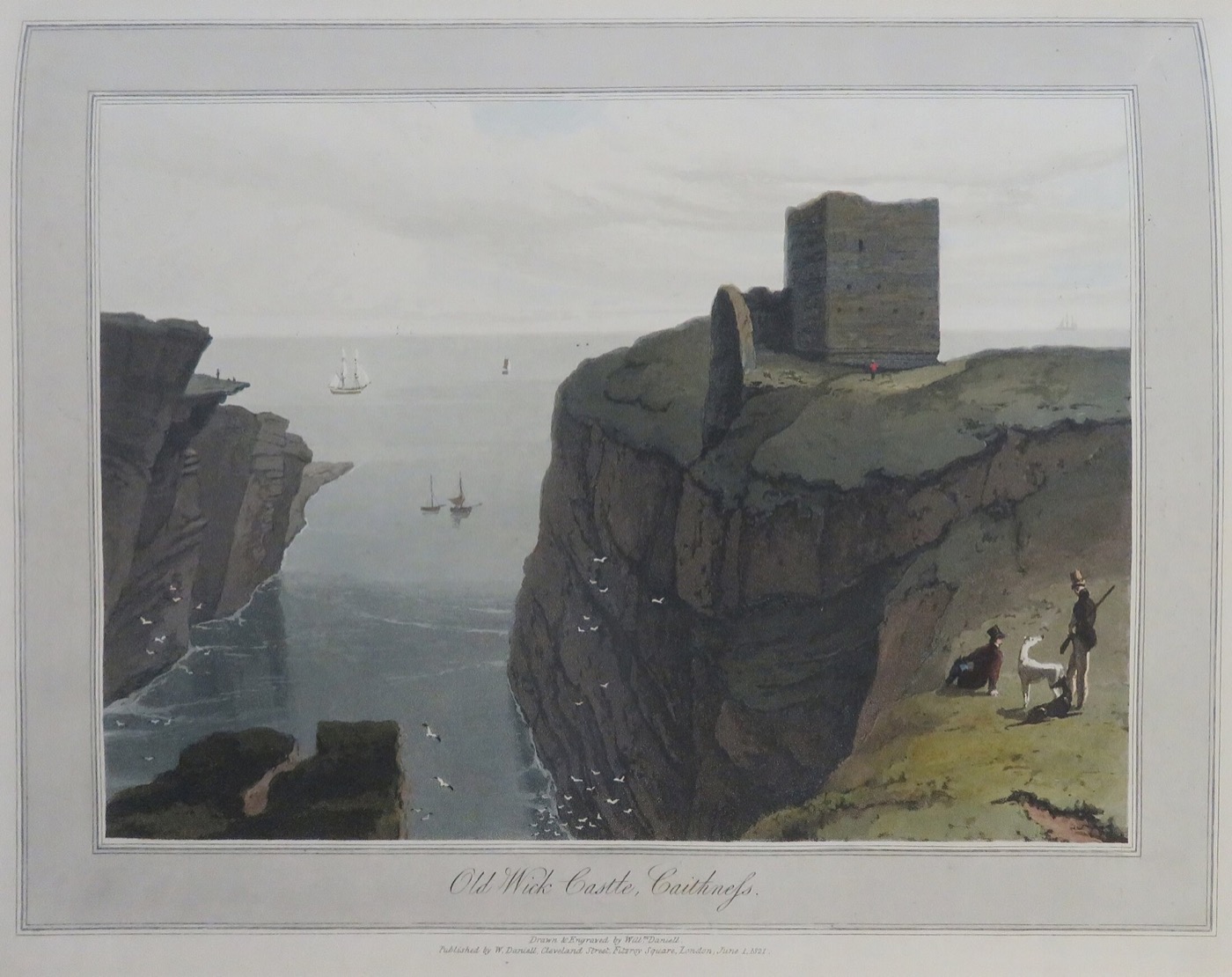
Caithness is not what people expect the Highlands to look like. The mountains stop at the Ord, the hill road up the coast from Sutherland, and beyond it the land opens out flat and treeless and enormous, running to a coastline of vertical cliffs and sea-stacks. Wick and Thurso are the towns; Latheron, Dunbeath, Halkirk, Reay and Canisbay are the parishes. Read those names and you read the clan's origin straight off the map. Wick is the Norse vik, a bay, and Thurso carries the god Thor. This was not Scotland at all but the earldom of Orkney, answering to Norway, and Clan Gunn's Norse descent is not an exotic claim grafted onto a Gaelic clan. It is the ordinary condition of the far north-east.
For a Wilson in particular this is an unusually rewarding county to arrive in, because the name is still all over it. Walk the kirkyards at Latheron, Wick, Halkirk or Canisbay and you will find Wilsons on the stones beside Hendersons, Williamsons, Gunns, Swansons and Mansons, which is to say the Crowner's sons still keeping company nine generations on. The parish registers behind those stones survive better than in most of the Highlands, so a Wilson who can get a line back into Caithness at all can usually keep going. At Latheron the clan keeps a heritage centre in an old parish church, and it is the one building anywhere in which the records, relics and family lines behind this surname are gathered in a single room.
Two roads lead into this county, and part of the pleasure of a name this common is working out whether one of them is yours. If your Wilsons were northern people, from Caithness or Sutherland or across in Orkney, then this is ancestral ground in the fullest sense and the Crowner's line is a real question to put to the records. If they came instead from the Lowlands or from Ulster, your country is elsewhere and no less real, and the chapter on tracing your line shows you how to find it. Either way Caithness repays the journey: it is five hours from Edinburgh by car, rather pleasanter by the train to Wick through the flow country, and very few people go, so it does not feel visited.
That was one chapter. The report carries the rest: where the name comes from, the clan and its chiefs, heraldry, the stories, a timeline, migration, the name today, notable bearers, and a page on tracing your own line. Every claim sourced the same way as the chapter above.
Get the Wilson report$14.99 · instant download, yours to keep and print
Not your name? Search yours, or read how we work, with another full chapter.
This history is written by AI from public-domain sources and the family's own published records, every one of them listed above. Where tradition and record disagree the text says so rather than choosing quietly. No image on this page is AI-generated.
First edition · last revised