 The Old Country
The Old Country
The Old Country
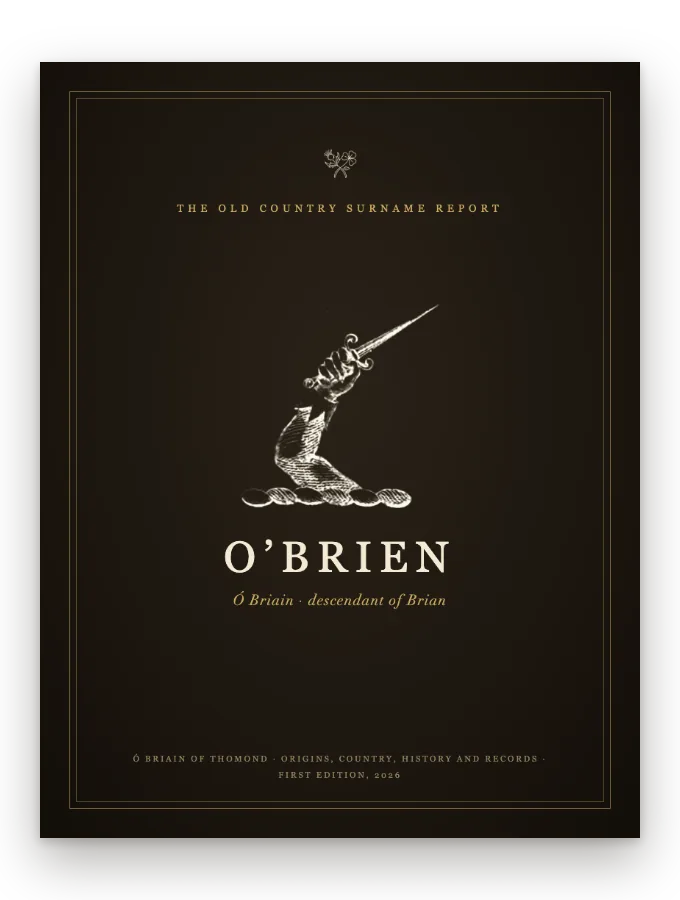
This report is about a surname that is younger than the battle it is famous for. Ó Briain means, plainly, descendant of Brian, and the Brian in question is the man the Annals of Ulster call Brian son of Ceinnétig son of Lorcán, king of Ireland, who was killed at Clontarf outside Dublin in 1014. He did not carry the surname. Nobody did yet. The first person in that chronicle to be given it is his grandson, in the entry for 1031, and the annalist who wrote it evidently thought the new form needed explaining, because he added the man's own name after it. That gap of seventeen years is where this name actually begins, and it is the first thing most accounts of it get wrong.
County Clare is the ground this name is measured against, and the measurement is worth doing properly. In the 1911 census of Ireland there were 1,365 people in Clare indexed as O'Brien, out of about 104,000 counted in the county: roughly thirteen in every thousand. That is a very heavy concentration by any standard. But it is not the heaviest. Tipperary held 2,435 O'Briens in a county of about 153,000, which is nearly sixteen in every thousand, and Limerick came second at just over thirteen. Cork held the largest raw number, 3,263, but Cork is a very large county and the share works out at eight in a thousand. So the densest O'Brien county in Ireland in 1911 was not the kingdom's own heartland but the county next door, which is exactly where Woulfe puts two of the five branches, Ara in the north of Tipperary and Aherlow under the Galtees.
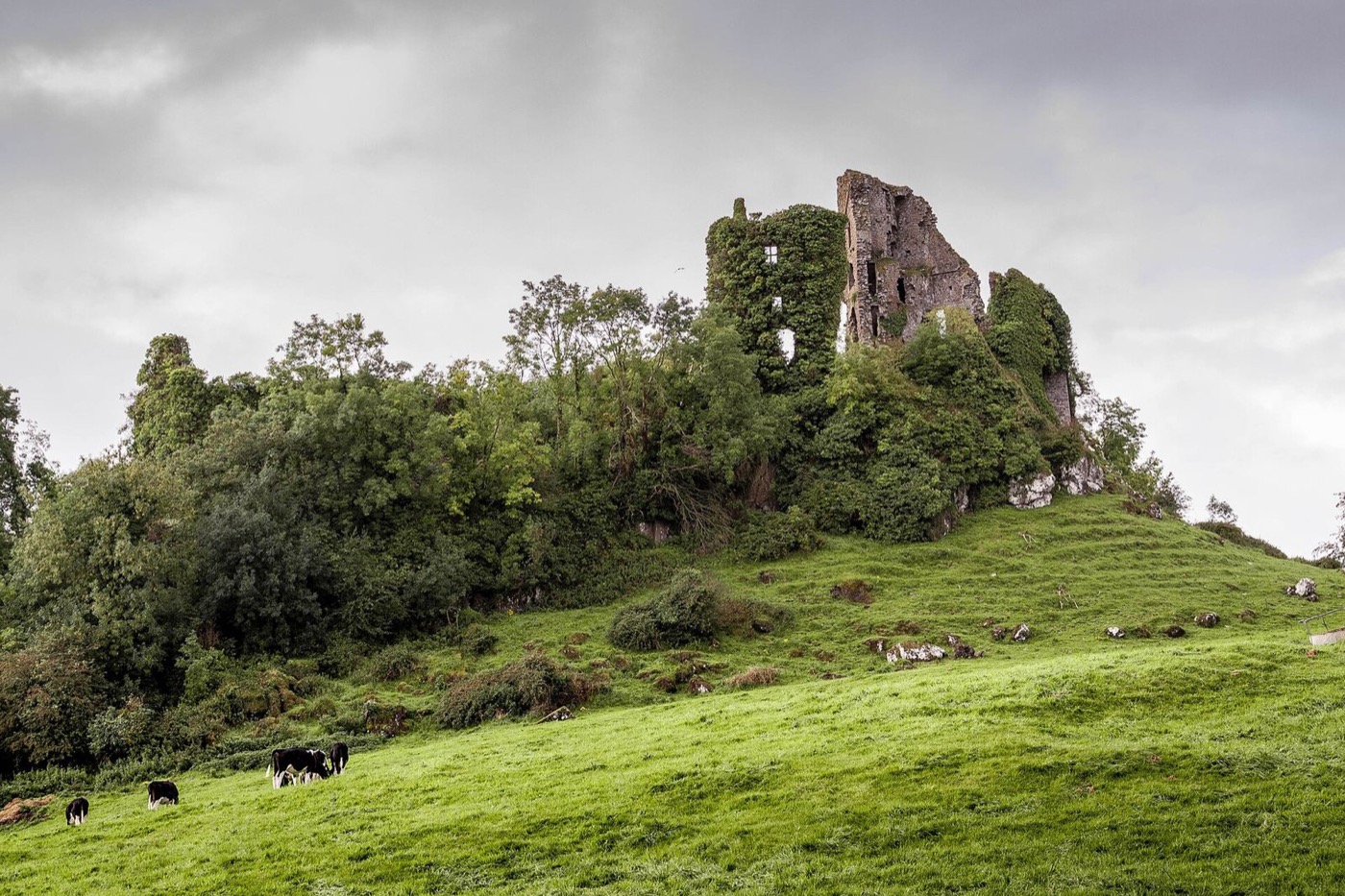
The places themselves are still there and most of them can be walked. Killaloe sits where the Shannon leaves Lough Derg, and it is the site later writers give for Cenn Corad, the fort the annals say Brian built. Bunratty stands on the estuary road between Limerick and Ennis, a fifteenth century tower that became the Earls of Thomond's principal seat. Carrigogunnell, which Woulfe names as the stronghold of the Pobblebrien branch, is a broken castle on a volcanic crag above the Shannon in County Limerick, and the barony around it is still called Pubblebrien on the map. Dysert O'Dea, where the day turned in 1318, is a church site and a round tower a few miles north of Ennis. Dromoland, near Newmarket on Fergus, is the house the Clare baronets built and rebuilt, and it is where William Smith O'Brien was born in 1803.
What ties them together is the Shannon. Every one of the O'Brien seats named in the record sits on that river or within sight of its estuary, which is not sentiment but geography: the Shannon was the road, the boundary and the reason Thomond was worth holding. It is also the reason the family kept turning up in the annals fighting people from Connacht, on the far bank. When the kingdom was finally shired into counties under the Tudors, the line the surveyors drew between Clare and Limerick ran down the same water the O'Briens had been defending for five hundred years, and the name is still commoner on both of its banks than almost anywhere else in Ireland.
That was one chapter. The report carries the rest: where the name comes from, the clan and its chiefs, heraldry, the stories, a timeline, migration, the name today, notable bearers, and a page on tracing your own line. Every claim sourced the same way as the chapter above.
Get the O'Brien report$14.99 · instant download, yours to keep and print
Not your name? Search yours, or read how we work, with another full chapter.
This history is written by AI from public-domain sources and the family's own published records, every one of them listed above. Where tradition and record disagree the text says so rather than choosing quietly. No image on this page is AI-generated.
First edition · last revised