 The Old Country
The Old Country
The Old Country
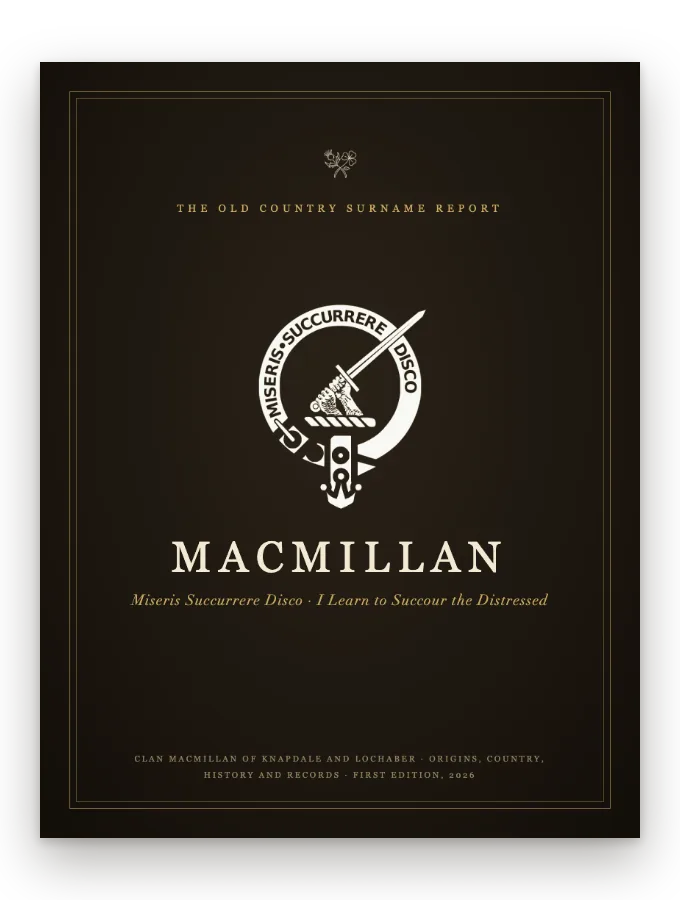
This report tells the story of the name MacMillan, and of McMillan, Macmillan, M'Millan and the handful of other spellings that are simply that same name in different clothes. Mac Mhaolain, the record's oldest form, is Gaelic for son of the tonsured, or bald, one: an ecclesiastical name, coined in the centuries when a Celtic churchman could still marry and found a line. Clan MacMillan traces that churchman's descendants south and west, from Moray through Lochaber to Knapdale in Argyll, where the clan kept one of Scotland's oldest stone castles and raised a carved cross that still stands at the end of a single track road. Eighteenth-century Buchanan historians claimed it as a Buchanan cadet branch, loudly enough and for long enough that this report deals with the claim directly; modern research on both sides rejects it.
The country of this name is a finger of Argyll between two seas. Knapdale runs from Loch Fyne to the Sound of Jura, a low landscape of oak woods, drowned valleys and sea lochs that barely lets the peninsula stay attached to the mainland at all; the Crinan Canal, opened in 1801, finishes the job the tides had already half done. It is quiet country today, reached by single track roads that keep promising to end sooner than they do, and it does not look like the seat of a fighting clan. For three centuries, it was exactly that.
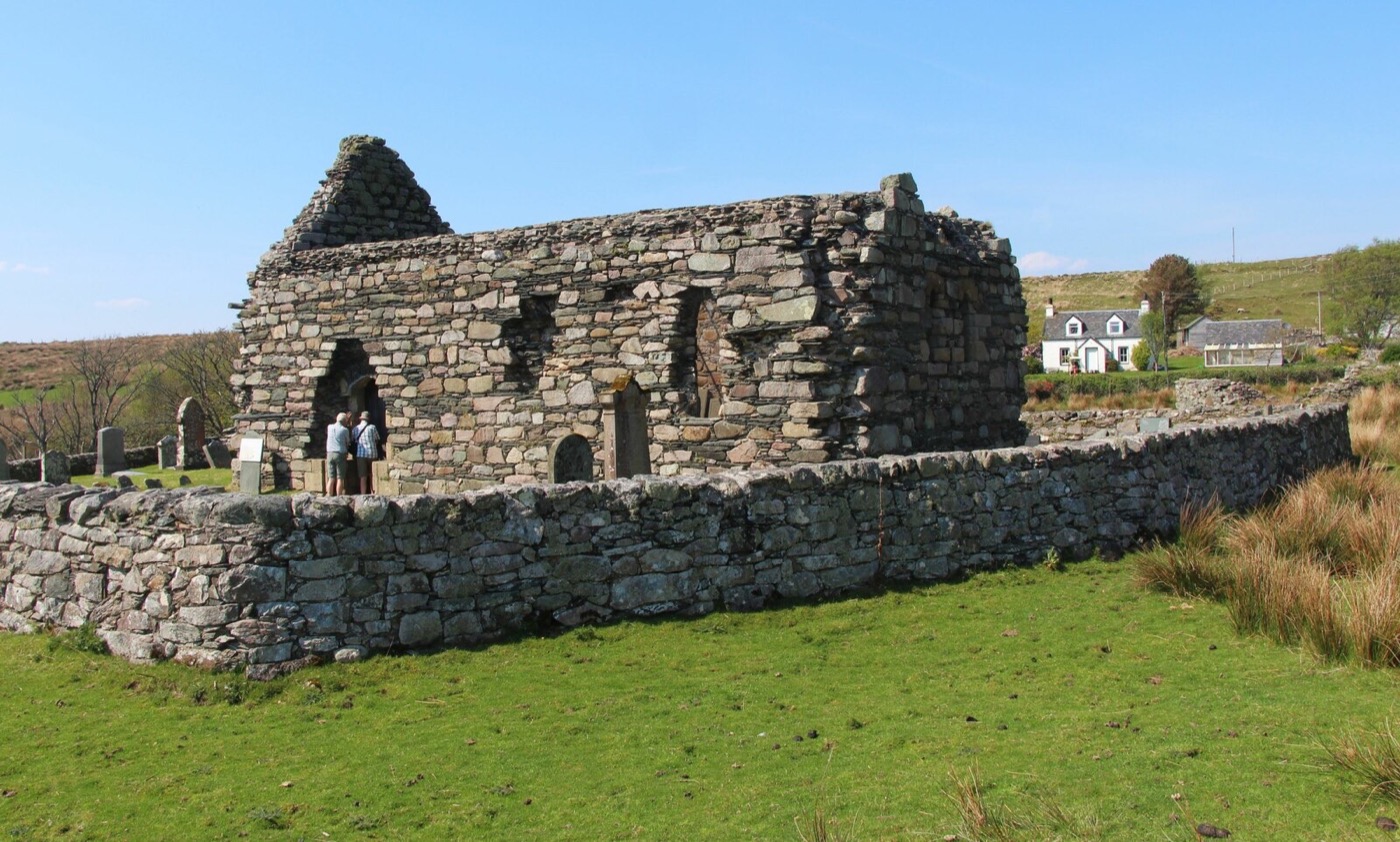
Castle Sween still stands above its loch, roofless, enormous and empty most days of the year, the tower the MacMillans added still standing and still known by their name. A few miles on, at the end of the Knapdale peninsula, a small chapel roofed in glass at Kilmory Knap shelters MacMillan's Cross and a remarkable run of carved West Highland grave slabs. Neither building is grand. Both are specific, in a way that a nameless ruin is not: a name is cut into the stone at Kilmory, and it is still legible today.
Three other places belong to this story, and none of them is in Argyll. Loch Arkaig in Lochaber, and the townships of Murlaggan and Glen Pean on its shore, held the branch that fought at Culloden and later sailed for Canada. Balmaghie, in the Stewartry of Kirkcudbright, held the Galloway branch and its Covenanting minister. And Finlaystone House, on the Clyde at Langbank in Renfrewshire, has been the chiefs' home only since the 1950s, a reminder that a chief's seat and a clan's homeland are not always the same field.
That was one chapter. The report carries the rest: where the name comes from, the clan and its chiefs, heraldry, the stories, a timeline, migration, the name today, notable bearers, and a page on tracing your own line. Every claim sourced the same way as the chapter above.
Get the MacMillan report$14.99 · instant download, yours to keep and print
Not your name? Search yours, or read how we work, with another full chapter.
This history is written by AI from public-domain sources and the family's own published records, every one of them listed above. Where tradition and record disagree the text says so rather than choosing quietly. No image on this page is AI-generated.
First edition · last revised