 The Old Country
The Old Country
The Old Country
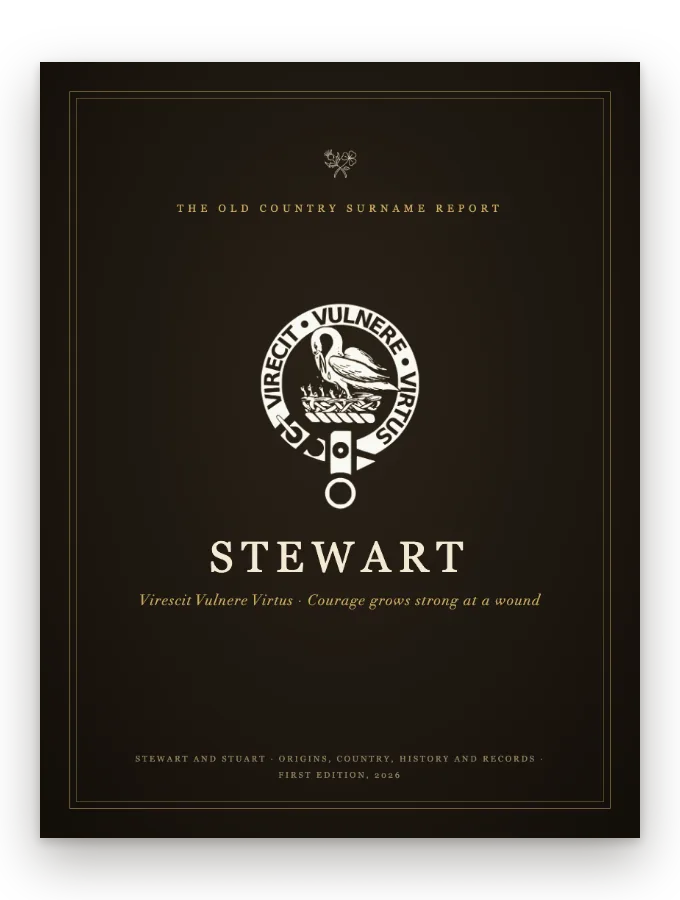
This report tells the story of the name Stewart, which is also the name Stuart: what it means, where it rose, the history it carried and how it crossed the ocean to the places its bearers live today. It is an unusual story even among Scottish names, because this one began as a job in a king's household, became the surname of the family who held that job, and ended as the surname of a royal house that ruled Scotland for three hundred and forty years and three kingdoms for a century of them. It is drawn from charters, parliamentary records, parish registers and the work of modern historians.
The name's first country is not the Highlands. It is the lower Clyde: Renfrewshire, the belt of coast and farmland running west from Glasgow to the sea, with the island of Bute lying off it like a stepping stone. This is what David I gave Walter fitz Alan, and everything else grew from it. Paisley, now one of the largest towns in Scotland, grew up around the abbey Walter founded. Renfrew, Dundonald in Kyle and Rothesay on Bute were the early strongholds. It is unglamorous ground by Highland standards, low and green and industrial in places, and it made the family rich long before the crown did.
When the Stewarts became kings, their country became the country. The royal line built where the hunting and the government were, at Doune above the Teith, at Falkland under the Lomond Hills, at Stirling and Linlithgow between the two. Meanwhile the younger sons went west and north and stayed there. Stewart of Appin took the seaboard between Benderloch and Ballachulish. Stewart of Atholl held highland Perthshire around Blair. Stewart of Balquhidder took the glen between Loch Voil and the Braes, and Stewart of Galloway the far southwest. One surname, five countries, and no two of them alike.
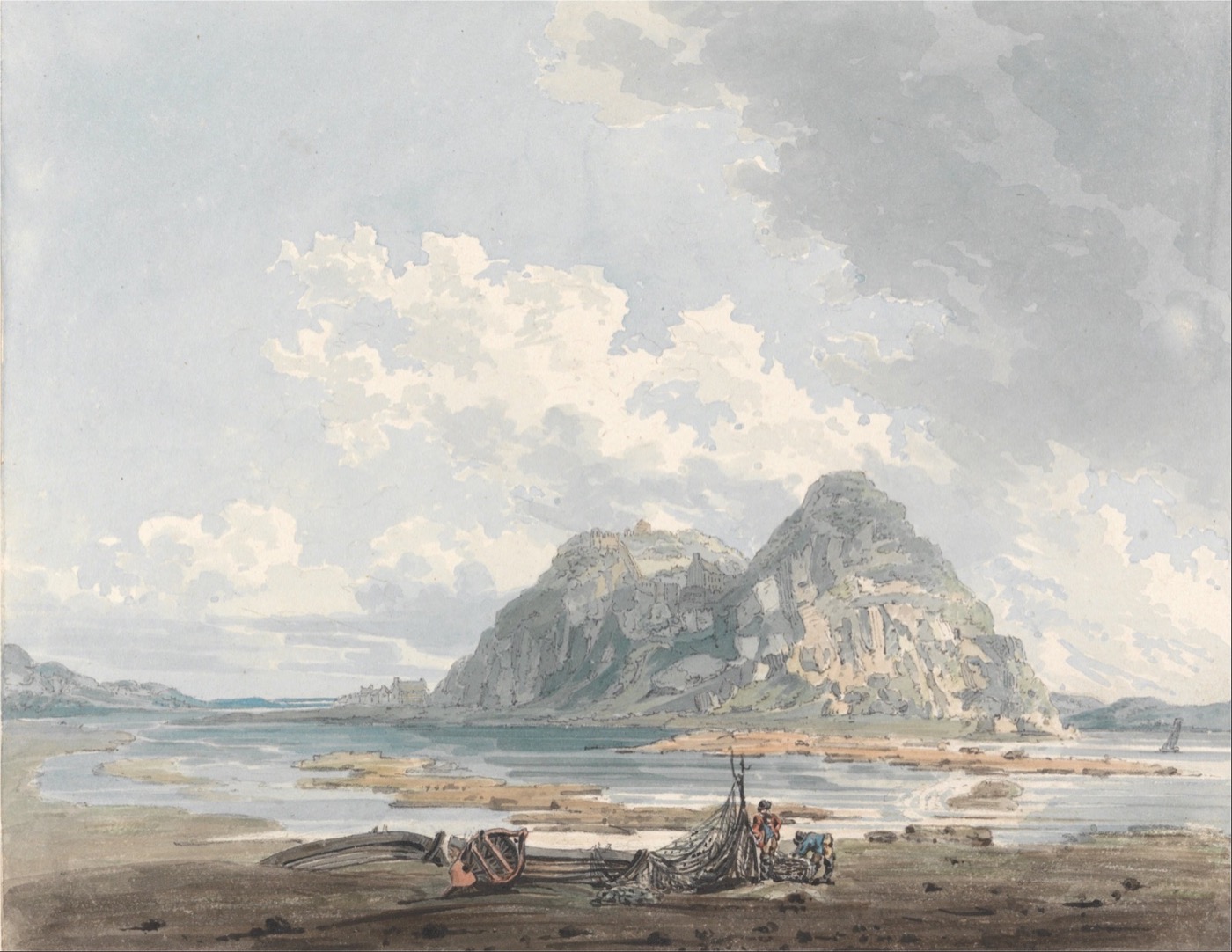
For a visitor it is an unusually easy inheritance to reach. Paisley Abbey stands open in the middle of its town, twenty minutes from Glasgow airport, with the early High Stewards buried beneath it and Marjorie Bruce remembered inside. Rothesay is a ferry ride from Wemyss Bay. Doune and Falkland sit within an hour of each other in the waist of the country, with Dumbarton Rock rising over the Clyde in between. If you want the Highland version instead, Appin is two hours north of Glasgow on the Oban road, and Castle Stalker still stands on its islet exactly where the Appin Stewarts put it in the 1440s.
That was one chapter. The report carries the rest: where the name comes from, the clan and its chiefs, heraldry, the stories, a timeline, migration, the name today, notable bearers, and a page on tracing your own line. Every claim sourced the same way as the chapter above.
Get the Stewart report$14.99 · instant download, yours to keep and print
Not your name? Search yours, or read how we work, with another full chapter.
This history is written by AI from public-domain sources and the family's own published records, every one of them listed above. Where tradition and record disagree the text says so rather than choosing quietly. No image on this page is AI-generated.
First edition · last revised