 The Old Country
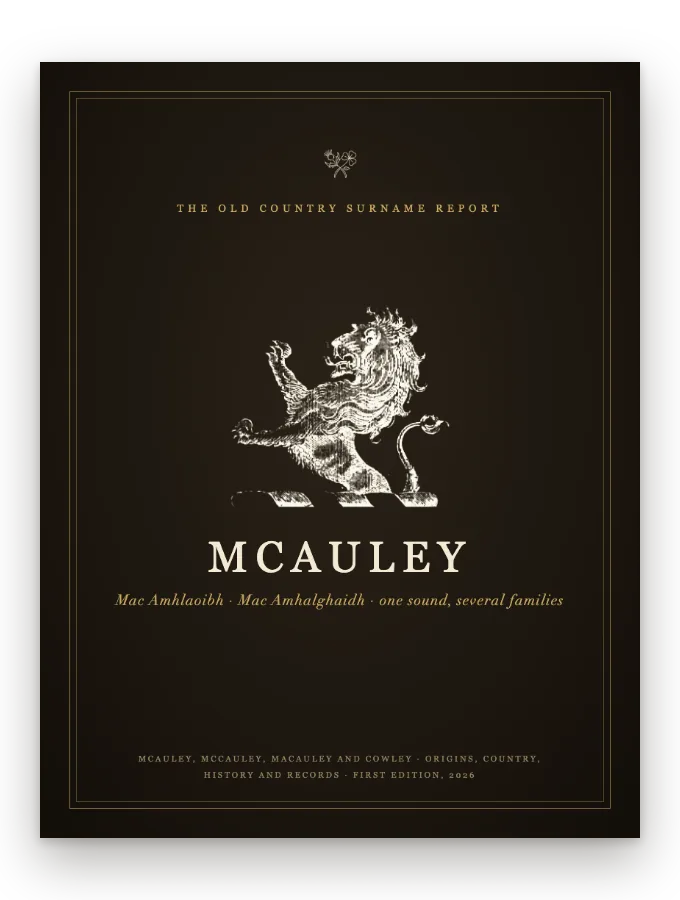
This report tells the story of the name McAuley: what it means, which families carried it, the people who made it known, and how it crossed the sea.
No email needed. It starts just below.
50 pages, 31 named sources, in your inbox within a minute.
The next page asks where to post it.
The hardback could not be added just now. Get your report here, and the hardback is offered on the next page for the same $79 in all.
Read it. If it is not the best account of your name you have seen, reply to your receipt within 14 days and we refund you.
“I have been tracing my family tree for some time, but there were certain stories that even our closest relatives never knew about. This surname report is a true deep dive. Thank you.”Susan D., reader
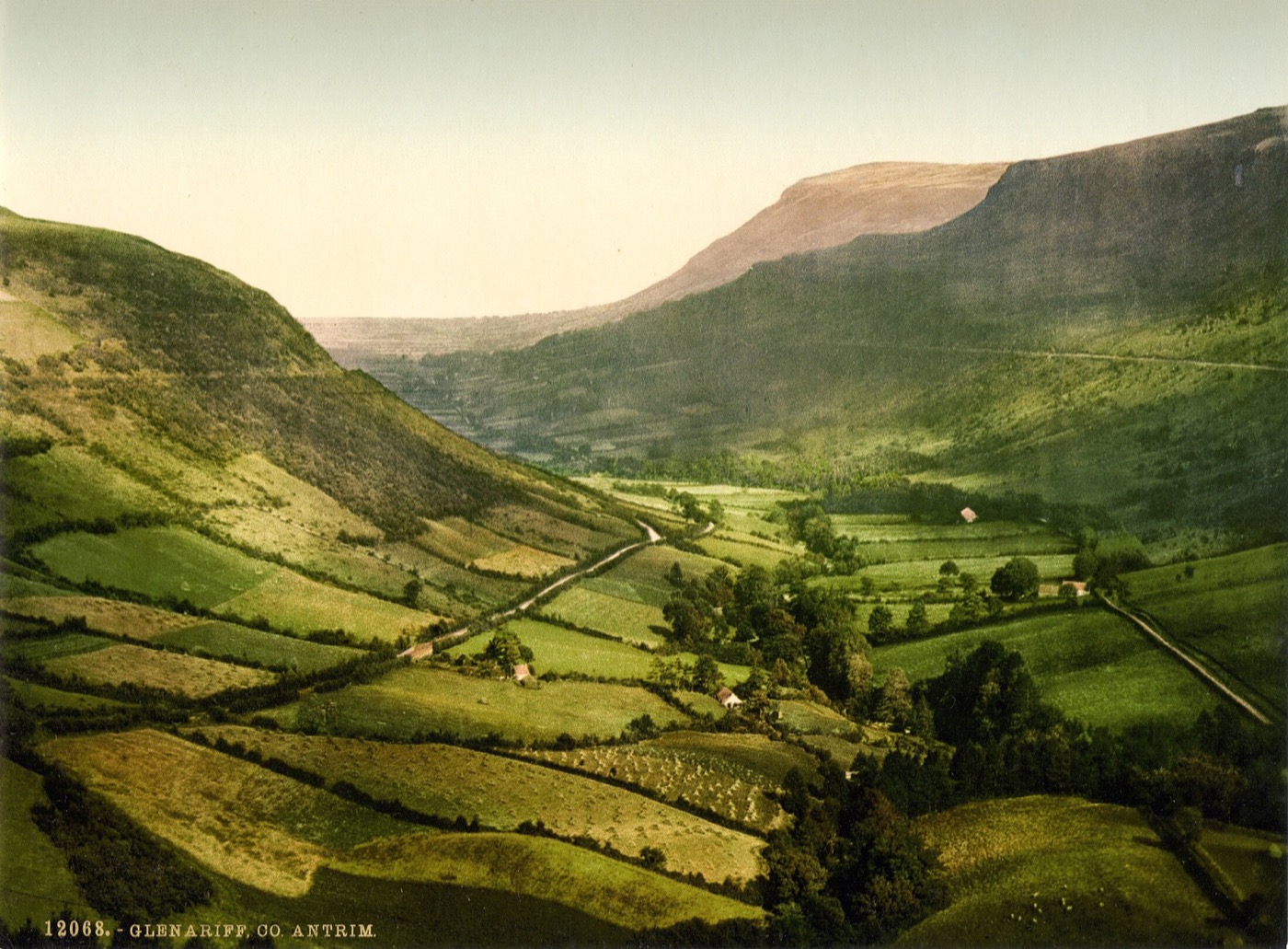
The McAuley country today is the Glens of Antrim: steep green valleys running down to the sea on the north-east coast of Ireland, with Scotland in sight across the water.
The oldest count is a tax roll. In 1669 each household paid a tax on its hearths, and the lists survive. Bill Macafee, who transcribed them, counts spellings like McAla and McCally as McAuley. On his count, 16 of the 26 McAuley households in north and mid Antrim were in two Glens parishes, Layde and Ardclinis. It topped the roll in Ardclinis and tied for the top in Layde.
The census of 1901 agrees. The electoral division with the most McAuleys in all of County Antrim was Red Bay, by Cushendall. There, 114 of the 860 people were McAuleys, more than one in every eight. Every one of them gave a Catholic religion.
Where did they come from? Here the honest answer is open. George Hill, in An Historical Account of the MacDonnells of Antrim (1873), wrote that the first comers of the name settled in the Middle Glens near Cushendall. He gave no origin and no date.
Woulfe called them a branch of the Ardincaple family from Scotland. Robert Bell, in The Book of Ulster Surnames (1988), has them coming with the MacDonnells in the early 1500s. Neither shows a document that proves it.
What of Ballymena, in mid-Antrim? The 1669 roll has no McAuley in its parishes of Ballyclug, Kirkinriola or Racavan. In 1901 the townland of Crebilly held none. Its division, Ballyclug, had 12, and Ballymena town had 56. Were they the Glens family, drawn down to the town and its farms? It is possible, but no record we read can say.
That was one chapter. The report carries the rest: where the name comes from, the family and its chiefs, heraldry, the stories, a timeline, migration, the name today, notable bearers, and a page on tracing your own line. Every claim sourced the same way as the chapter above.
Get my report · $14.99Instant download, yours to keep and print
Read it. If it is not the best account of your name you have seen, reply to your receipt within 14 days and we refund you.
Not your name? Search yours, or read another name's free chapter.
One piece of research, three more ways to have it. Every edition includes the McAuley report itself.
The McAuley report and a five and a half minute film of the name, your spelling on the title.
Get the film · $39.99The McAuley report as a hardback, posted free to your door.
Get the book · $79The report, the film and the hardback. Bought apart they are $118.99.
Get all three · $99For the wall. The McAuley record on one framed sheet, 16 by 12 inches, $89 posted free. See the framed plate.
A gift? Send the McAuley report on a day you choose, with a card.
This history is written from public-domain sources and the family's own published records, every one of them listed. Where tradition and record disagree the text says so rather than choosing quietly. No image on this page is AI-generated.
First edition · last revised