 The Old Country
The Old Country
The Old Country
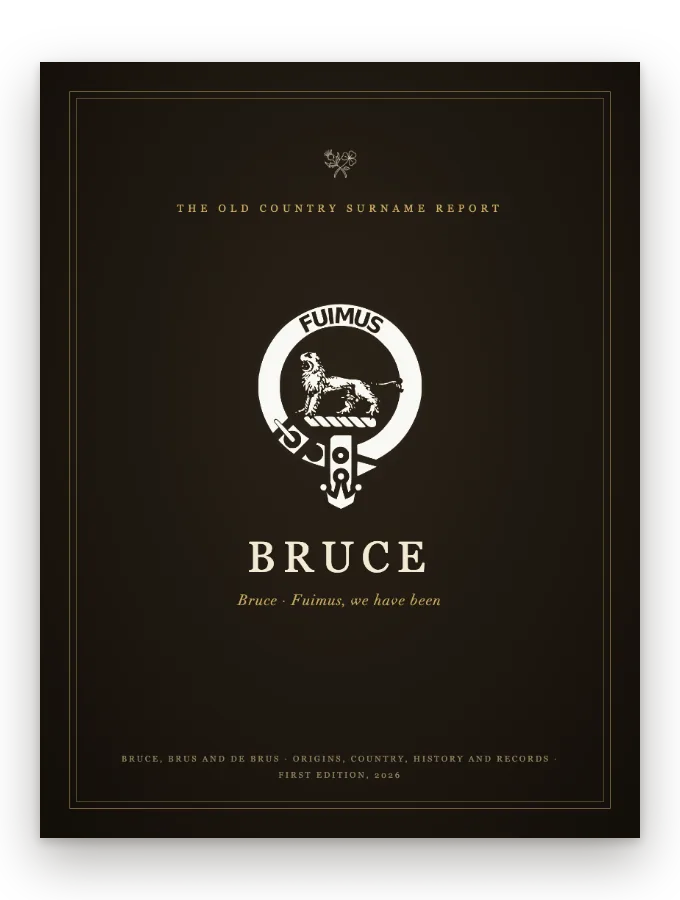
Bruce is a place name that turned into a family name, and the place is not in Scotland. It is Brix, a village on the Cotentin peninsula in Normandy, between Cherbourg and Valognes, where a castle mound and some vaulting were all that survived by the time the Dictionary of National Biography went looking for it in the 1880s. A man from there came to England after the Conquest, took Skelton in Cleveland and fifty other manors in the North Riding, and about 1124 his son took a grant of Annandale from David I of Scotland. Six generations later one of his descendants was crowned king. That is the shape of it, and the shape matters, because almost everything written about this name skips the first six generations and the last seven hundred years and tells you about the seventh man instead.
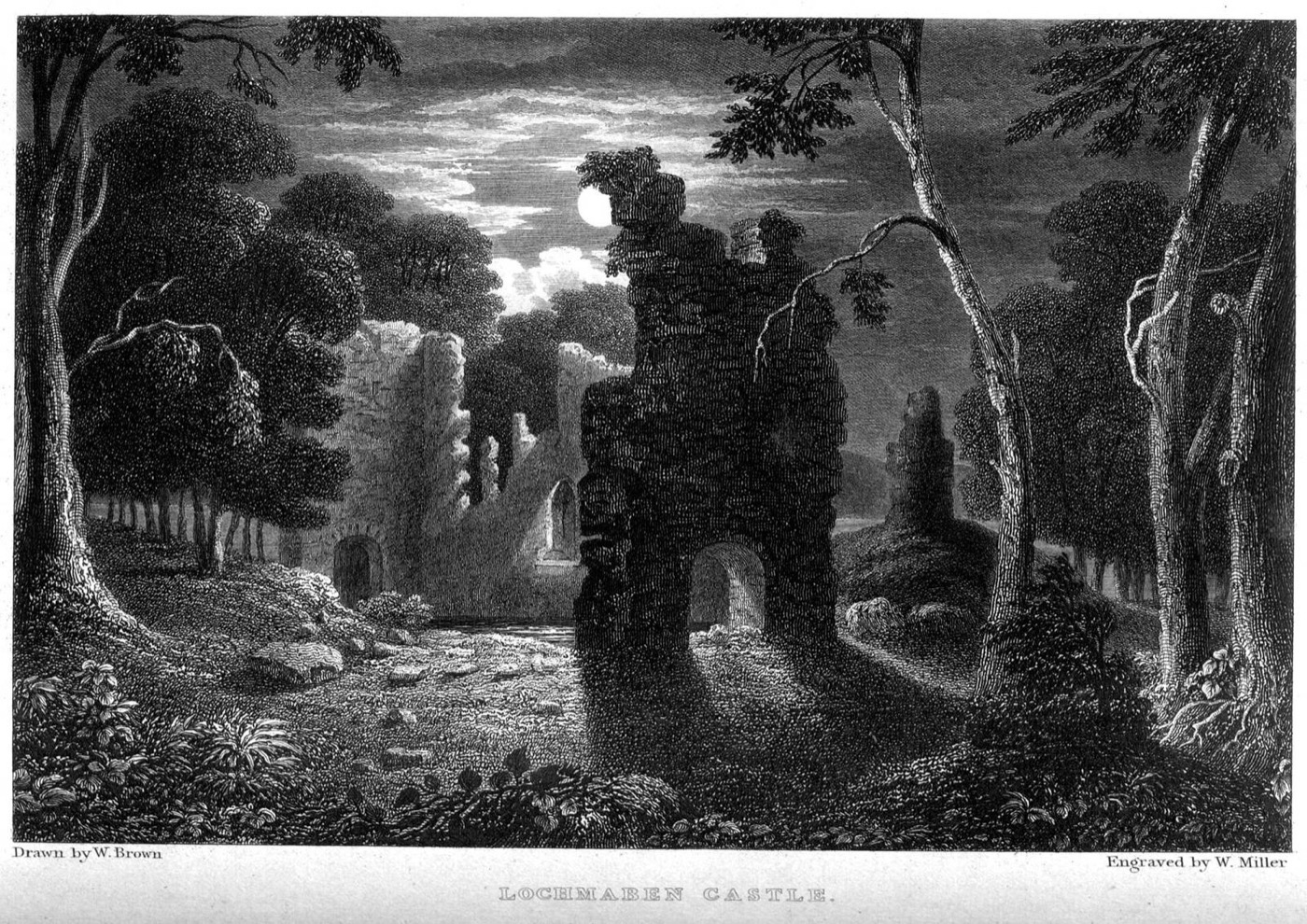
Annandale is the country the name is fixed to, and it is worth being specific about it. It runs from the Solway shore north into the hills, the eastern of the three Dumfriesshire dales, and the charter of about 1124 that gave it to Robert de Brus covered, in the Dictionary of National Biography's words, the largest part of the county of Dumfries. The Bruce castle there was Lochmaben, on the loch below the town, and it is where the Competitor retired after losing the crown to Balliol and where he died in 1295. Annandale is not a Highland glen and it never looked like one. It is farming country on the road from Carlisle to Glasgow, fought over for three centuries because of exactly that.
The name's second country is the Forth. Clackmannan sits above the river on its own small hill, and the tower there was Bruce property from 1359 until the male line ran out in 1772. Upstream and across are Airth and Stenhouse in Stirlingshire, Kinnaird where James Bruce the traveller was born and died, and, on the Fife shore, Culross, Kincardine, Limekilns and Broomhall, which is the chief's seat today. This is the part of the map most Bruce families actually come from. It is coal and salt and shipping country rather than heather, and the houses of the name there were lawyers, architects, ministers and improvers rather than warriors.
The third country surprises people. In about 1571 Laurence Bruce of Cultmalindie, a Perthshire Bruce and half-brother of Robert Stewart, later Earl of Orkney, was made sheriff of Shetland. He settled on Unst, was accused of taking bribes and of altering the official weights and measures to swell the earl's revenues, began Muness Castle in 1598, and died there in August 1617. His kinsman William Bruce of Symbister came north as his deputy and founded a Shetland line that was still armigerous when Fairbairn's Book of Crests recorded John Bruce of Sumburgh in 1905. There have been Bruces at the top of Britain for four and a half centuries, and almost no report about the name ever mentions them.
That was one chapter. The report carries the rest: where the name comes from, the clan and its chiefs, heraldry, the stories, a timeline, migration, the name today, notable bearers, and a page on tracing your own line. Every claim sourced the same way as the chapter above.
Get the Bruce report$14.99 · instant download, yours to keep and print
Not your name? Search yours, or read how we work, with another full chapter.
This history is written by AI from public-domain sources and the family's own published records, every one of them listed above. Where tradition and record disagree the text says so rather than choosing quietly. No image on this page is AI-generated.
First edition · last revised