 The Old Country
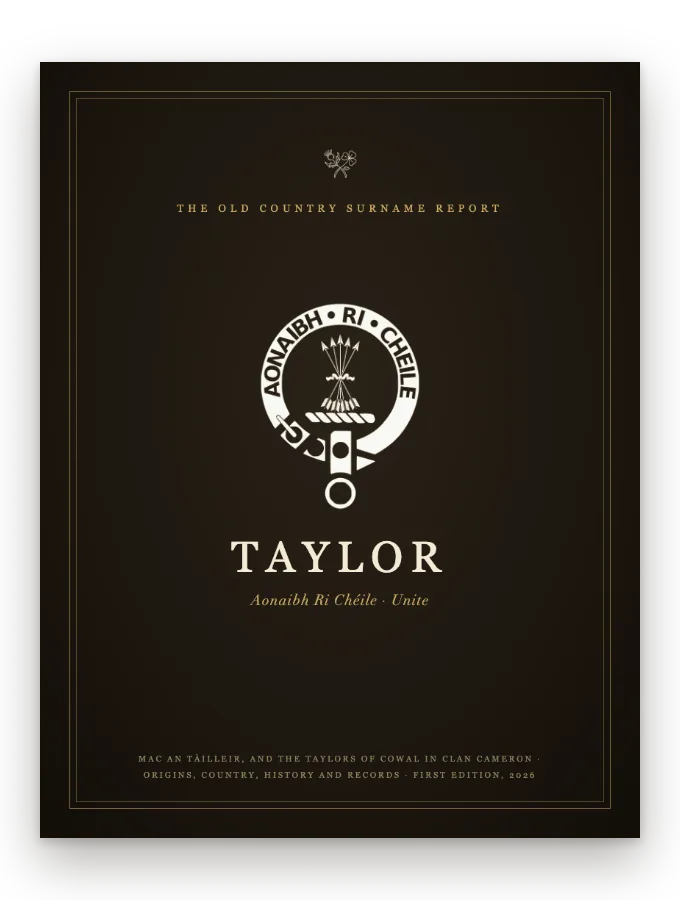
This report tells the story of one of the great trade names of the English-speaking world. Taylor stands seventeenth in the United States and twelfth in Scotland, and it means exactly what it says: the man who cut the cloth. It comes from the Old French tailleur, on the verb taillier, to cut, and it arrived in Britain with the Normans along with the fitted, cut-and-sewn clothing that made the trade necessary in the first place.
No email needed. It starts just below.
38 pages, 11 named sources, in your inbox within a minute.
The next page asks where to post it.
The hardback could not be added just now. Get your report here, and the hardback is offered on the next page for the same $79 in all.
Read it. If it is not the best account of your name you have seen, reply to your receipt within 14 days and we refund you.
“I have been tracing my family tree for some time, but there were certain stories that even our closest relatives never knew about. This surname report is a true deep dive. Thank you.”Susan D., reader
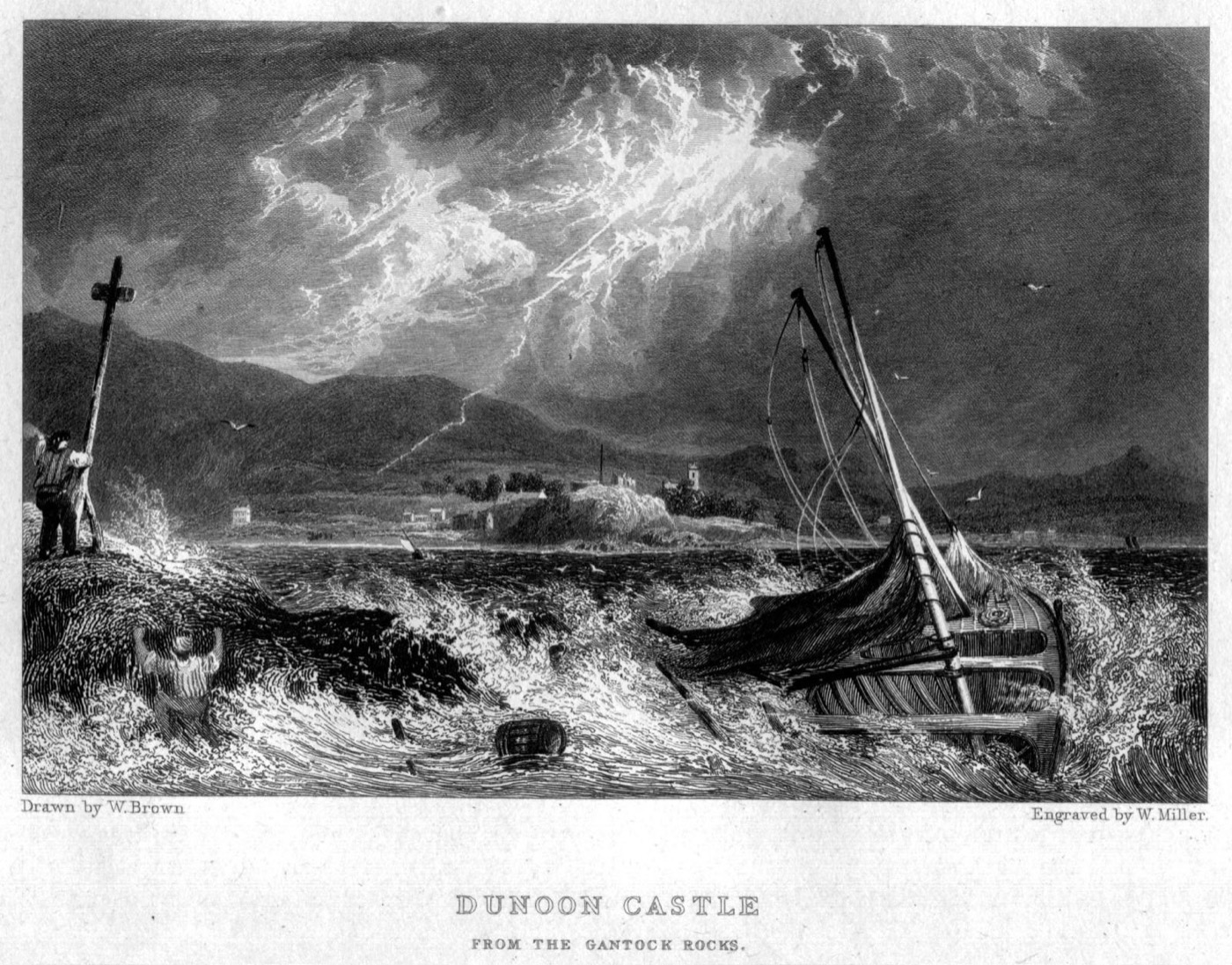
Cowal is the hand-shaped peninsula of southern Argyll, held between Loch Fyne on the west and Loch Long on the east, with the Firth of Clyde below it and the Arrochar hills at its back. Its fingers are sea-lochs: the Holy Loch, Loch Striven, Loch Riddon, and the narrow green passage of the Kyles of Bute that separates it from the island. Dunoon is the town. Loch Eck lies in a trench through the middle, Glendaruel runs north from the head of Loch Riddon, and Strachur sits on the Loch Fyne shore looking across at Inveraray. This is the country the clan means when it writes those two words beside your name.
It is worth understanding why a Cameron sept sits here at all, a hundred miles from Lochaber. Cowal was never Cameron country in the territorial sense; it belonged to the Lamonts, the MacLachlans and, increasingly, the Campbells. What the clan's list records is not a landholding but a people: a line of Taylors in Cowal recognised as affiliated with the clan. Highland kindreds were never as neatly bounded as maps suggest, and a family could carry an allegiance a long way from the glen that allegiance began in.
Cowal is also the most reachable Highland country in Scotland, which is a real advantage for anyone with this name. The ferry from Gourock lands at Dunoon in 20 to 25 minutes and you are in the hills immediately. Benmore's great botanic garden lies a few miles north of Dunoon, near Loch Eck, with a redwood avenue planted in 1863. The Kyles of Bute road is one of the finest short drives in the country. And in August the town fills up for the Cowal Highland Gathering, the largest Highland games in the world, which has been run since 1894 and is the easiest possible way to see the country this chapter describes with several thousand people in it.
That was one chapter. The report carries the rest: where the name comes from, the clan and its chiefs, heraldry, the stories, a timeline, migration, the name today, notable bearers, and a page on tracing your own line. Every claim sourced the same way as the chapter above.
Get my report · $14.99Instant download, yours to keep and print
Read it. If it is not the best account of your name you have seen, reply to your receipt within 14 days and we refund you.
Not your name? Search yours, or read another name's free chapter.
One piece of research, three more ways to have it. Every edition includes the Taylor report itself.
The Taylor report and a five and a half minute film of the name, your spelling on the title.
Get the film · $39.99The Taylor report as a hardback, posted free to your door.
Get the book · $79The report, the film and the hardback. Bought apart they are $118.99.
Get all three · $99For the wall. The Taylor record on one framed sheet, 16 by 12 inches, $89 posted free. See the framed plate.
A gift? Send the Taylor report on a day you choose, with a card.
This history is written from public-domain sources and the family's own published records, every one of them listed. Where tradition and record disagree the text says so rather than choosing quietly. No image on this page is AI-generated.
First edition · Second edition