 The Old Country
The Old Country
The Old Country
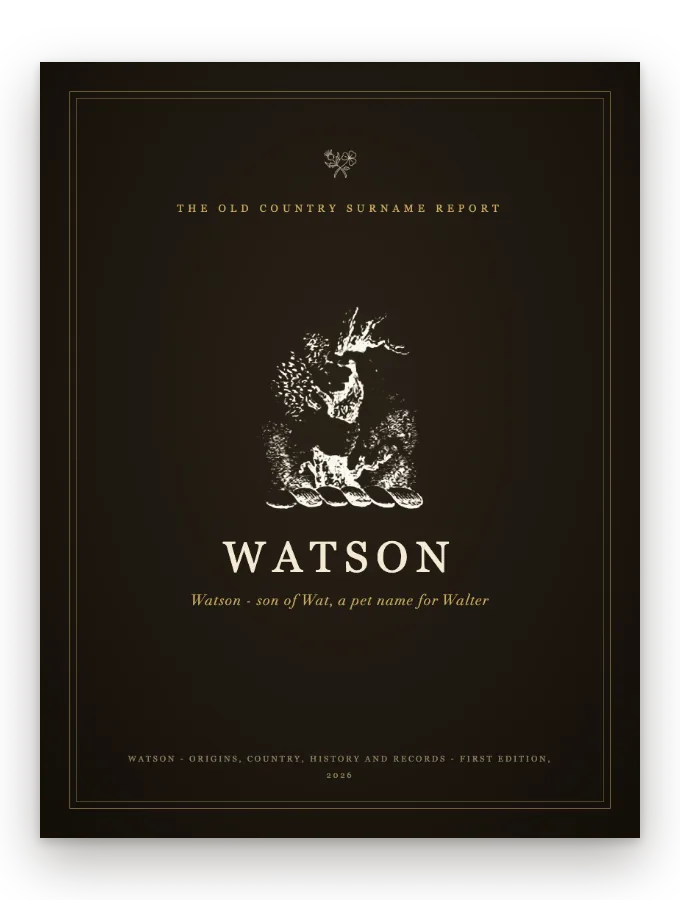
This report tells the story of a surname built the plainest way an English or Scots surname is ever built: a pet name plus a patronymic ending. Watson is Wat's son, and Wat is a medieval short form of Walter, worn by so many men that their sons' sons, in township after township, ended up sharing one surname without sharing one family. Harrison's Surnames of the United Kingdom dates the surname, under both the Watson and Wattson spellings, to the Yorkshire Poll Tax of 1379, and carries a dated Scottish citation of its own: Robertus Watsoun of Yselye, dated 1537-8 in the Coldstream Chartulary.
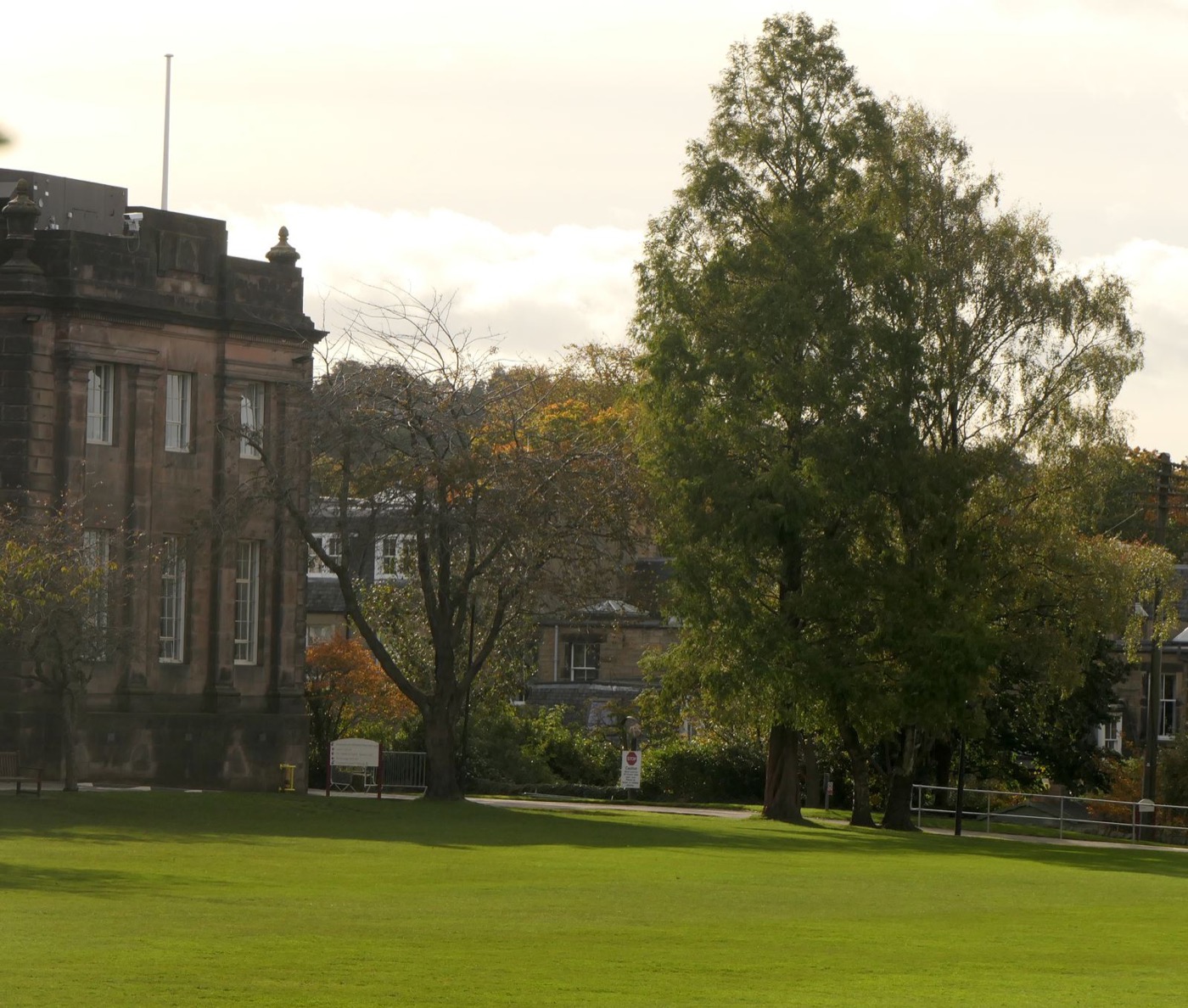
Edinburgh and its Lothian hinterland are the country the record ties most directly to this name's chief line: Saughton, on the burgh's western edge, held by the Watsons from 1537 to the early nineteenth century, and, a mile or two east, the charity school George Watson endowed on his death in 1723, which opened its doors in 1741 and still teaches Edinburgh's children today as George Watson's College. The two institutions sit close together on the map without any proven family tie between the men behind them, a reminder that this surname was never short of Edinburgh addresses even where it was short of blood relations. Saughton House itself burned in 1918 and was subsequently demolished.
Lanarkshire, southwest of the city, is the separate country of the Law Lords: Thankerton, the small Clyde-valley parish that gave William Watson, Baron Watson, and his son Baron Thankerton their territorial titles, and nearby Earnock, seat of a Watson baronetcy recorded by Fairbairn under the same oak-and-clouds crest. Whether either line traces back to the Saughton Watsons by blood is a question this report leaves open, honestly, rather than answering with an invented charter.
Across the Irish Sea, County Down and County Antrim carry the name's Ulster-Scots history: Watsons from Ayrshire are recorded in Down as part of the early-seventeenth-century plantation, and the name is claimed by secondary sources for both the defence of Derry in 1689 and the early Ulster linen trade a century later. The Derry claim holds at least for the garrison's Captain of the Gunners, whom a narrative printed in 1690 names; the linen claim remains repeated tradition rather than a settled record. In 1901 the census of Ireland counted 1,259 Watsons in County Antrim and 980 in County Down, the two largest county totals on the island.
Beyond these islands the name's places are its bearers' places: Watson's Bay at South Head, Sydney, the site of Robert Watson's 1801 land grant; Vimy Ridge, the ground Sir David Watson's 4th Canadian Division was assigned on 9 April 1917, its objectives completed by 12 April; and Cold Spring Harbor Laboratory in New York, which James D. Watson led for nearly forty years, to 2007.
That was one chapter. The report carries the rest: where the name comes from, the clan and its chiefs, heraldry, the stories, a timeline, migration, the name today, notable bearers, and a page on tracing your own line. Every claim sourced the same way as the chapter above.
Get the Watson report$14.99 · instant download, yours to keep and print
Not your name? Search yours, or read how we work, with another full chapter.
This history is written by AI from public-domain sources and the family's own published records, every one of them listed above. Where tradition and record disagree the text says so rather than choosing quietly. No image on this page is AI-generated.
First edition · last revised