 The Old Country
The Old Country
The Old Country
This report tells the story of the name Douglas: what it means, where it rose, the history it carried, and how it crossed the ocean to the places its bearers live today. It begins with something unusual. Almost every great Scottish surname comes from a man, a father whose sons and followers took his name. Douglas comes from a river. There is a small dark burn running out of the Lanarkshire hills into the Clyde, and everything the name became was built on its banks.
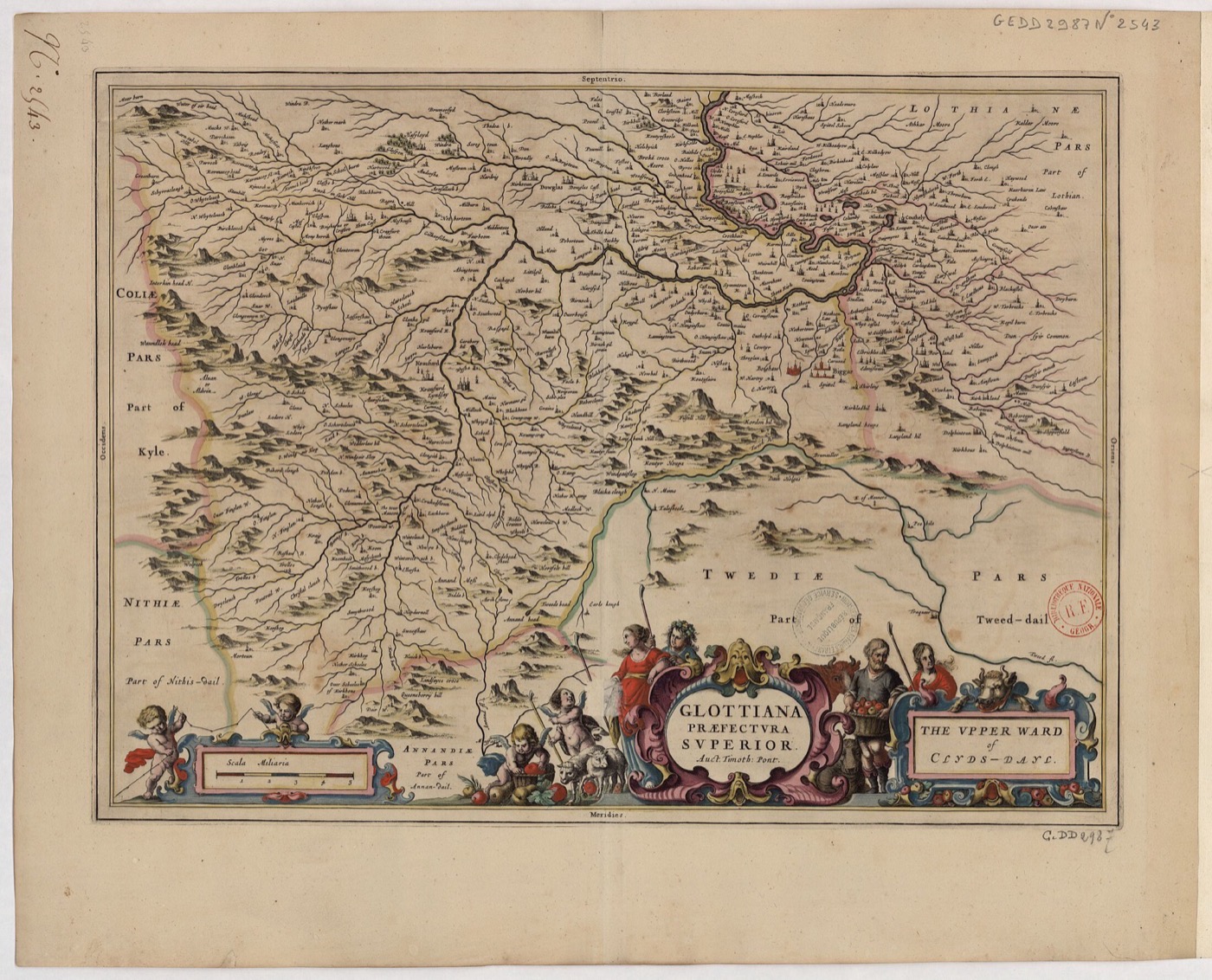
The homeland is smaller and quieter than the history suggests. Douglasdale is a green upland valley in south Lanarkshire, forty minutes from Glasgow, where the Douglas Water comes down off the moor between Ayrshire and Clydesdale. The village of Douglas sits on its bank: one long main street, a war memorial, and at the end of it the roofless choir of St Bride's Kirk, which is the single most important building this surname has. Douglas Castle, the stronghold that James Douglas burned and retook and that Walter Scott made famous as Castle Dangerous, is gone. Coal workings undermined the ground and the last house on the site was demolished in 1938. What remains is a fragment of tower in parkland, which is a fair emblem for a family the Crown decided to erase.
The country of the name spread far beyond the dale, and it spread in a pattern. Galloway came to Archibald the Grim, and with it Threave on its island in the Dee. Bothwell on the Clyde came by marriage in 1362. Along the Border the Douglases held Hermitage in Liddesdale and lands in Teviotdale and Eskdale, which is why so many riding surnames are counted among their allied families. On the east coast the Red Douglases held Tantallon above the sea at North Berwick, and in Dumfriesshire the Queensberry line raised Drumlanrig. You can drive the whole of it in three days and never leave the south of Scotland.
For the visitor this is an easy inheritance to claim, because most of it is in public care and open. St Bride's holds the tombs and it holds something no other parish church in Britain holds, which is the encased heart of the man who carried a king's heart. Threave takes a small boat. Tantallon takes a headland walk. Drumlanrig is still a lived-in house with a garden. And the village that gave the name to all of it will take you twenty minutes to walk from end to end.
That was one chapter. The report carries the rest: where the name comes from, the clan and its chiefs, heraldry, the stories, a timeline, migration, the name today, notable bearers, and a page on tracing your own line. Every claim sourced the same way as the chapter above.
Get the Douglas report$14.99 · instant download, yours to keep and print
Not your name? Search yours, or read how we work, with another full chapter.
This history is written by AI from public-domain sources and the family's own published records, every one of them listed above. Where tradition and record disagree the text says so rather than choosing quietly. No image on this page is AI-generated.
First edition · last revised