 The Old Country
The Old Country
The Old Country
This report tells the story of a name that means, at bottom, a boast about a man's courage: Ó Donnghaile, descendant of Donnghal, built from donn, brown or dark, and gal, valour. Woulfe's Sloinnte Gaedheal is Gall places the family plainly among the Cinel Eoghain of Ulster, holding first the Donegal ground around Druim Lighean, then the Tyrone lordship of Ballydonnelly, west of Dungannon, where they served the O'Neills of Tyrone as hereditary marshals for generations before an English grant and a new castle ended the arrangement. Donley, the spelling this report was asked to trace, is not a separate family or a separate country. It is what the name became on American paper: the same Donnelly, worn down to its plainest sound by clerks and census-takers who had never seen the O' or heard the Irish behind it.
Ballydonnelly, the town of O'Donnelly, sits a few miles west of Dungannon in Co. Tyrone, hill country on the western edge of the old O'Neill lordship rather than its ceremonial centre. It is not grand ground; it is working ground, the kind a hereditary officer's family could hold for generations on the strength of service rather than conquest. This is the seat Woulfe names as the O'Donnellys' own after they moved east from Druim Lighean in Donegal, and it is the ground that still carries the family's name today, even though the family itself no longer holds it.
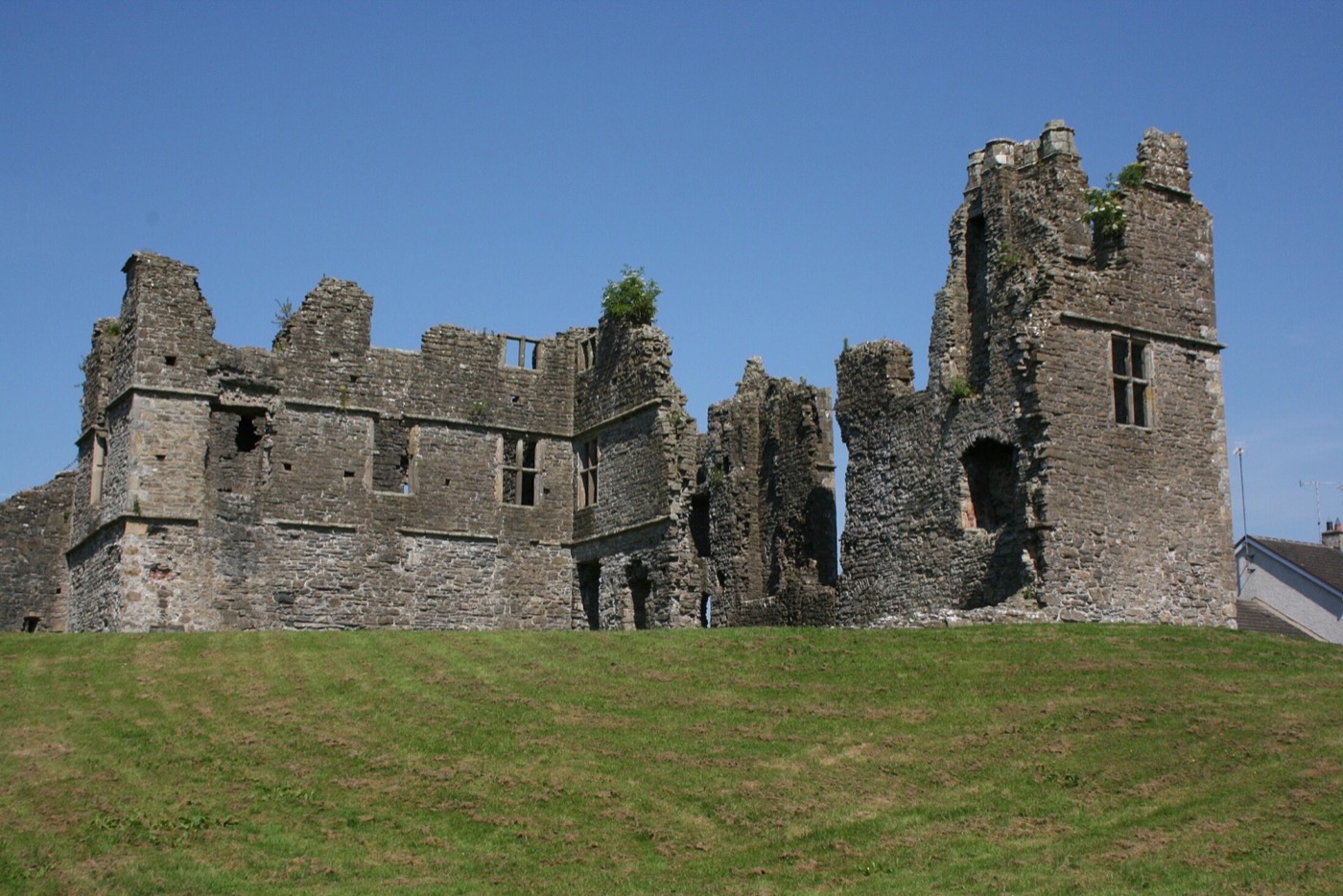
The tenure ended inside a single generation of the disaster at Kinsale. James I's Ulster Plantation granted the lordship to Sir Toby Caulfield, an English soldier of the Nine Years' War, and the fortified manor house built for him on that ground between 1611 and 1619 still stands, a well-preserved ruin, under the name it has carried ever since: Castle Caulfield. An excavation in 2011 found nothing under the house older than the seventeenth century, so the O'Donnellys' own fort stood elsewhere on their land, a few miles west. The O'Donnellys did not vanish from the ground quietly. In the rising of 1641 Patrick Moder O'Donnelly's people took Caulfield's house and set fire to it, and the scorching is still legible in its masonry; the Caulfields repaired it and were living there again, and held the site into the 1670s.
No image of the original O'Donnelly fort survives, and no trace of it has been found under Caulfield's house; what stands on the ground today is the house the family's tenure ended to make room for. That the ruin still carries the older name at all, Ballydonnelly folded into everyday memory even as Castle Caulfield became the map's own label, is as much a monument as this family's homeland has left.
That was one chapter. The report carries the rest: where the name comes from, the clan and its chiefs, heraldry, the stories, a timeline, migration, the name today, notable bearers, and a page on tracing your own line. Every claim sourced the same way as the chapter above.
Get the Donley report$14.99 · instant download, yours to keep and print
Not your name? Search yours, or read how we work, with another full chapter.
This history is written by AI from public-domain sources and the family's own published records, every one of them listed above. Where tradition and record disagree the text says so rather than choosing quietly. No image on this page is AI-generated.
First edition · last revised