 The Old Country
The Old Country
The Old Country
This report tells two stories under one spelling, and it keeps them apart from the first page to the last. The first is Irish: Ó Baoighill, a leading family of Cenél Conaill in Donegal, chiefs first of the Three Tuaths and later of the territory that still carries their name, Boylagh, on the county's Atlantic coast. The second is Scottish: Boyle, an anglicising of the Norman de Boyville, a family recorded holding the lands of Kelburn in Ayrshire from the thirteenth century and raised to the earldom of Glasgow in 1703. No source checked for this report ties the two families together, and none is claimed here. They share a spelling. They do not share a line.
Boylagh, on Donegal's Atlantic coast, is granite moorland and glen country running down to a shoreline of a dozen inhabited islands, Arranmore the largest among them. An 1846 description calls its western half a great undulating plain of granite, dark peat and small ponds; its eastern uplands are cut by glens and ravines rising to Crovehy, just over a thousand feet. The Rosses, immediately to its north, is the stretch of coast most often named alongside the O'Boyles in popular memory, though this report found no single dated event pinned to the Rosses by name independent of the wider Boylagh chieftaincy; it is the homeland region, not a battlefield.
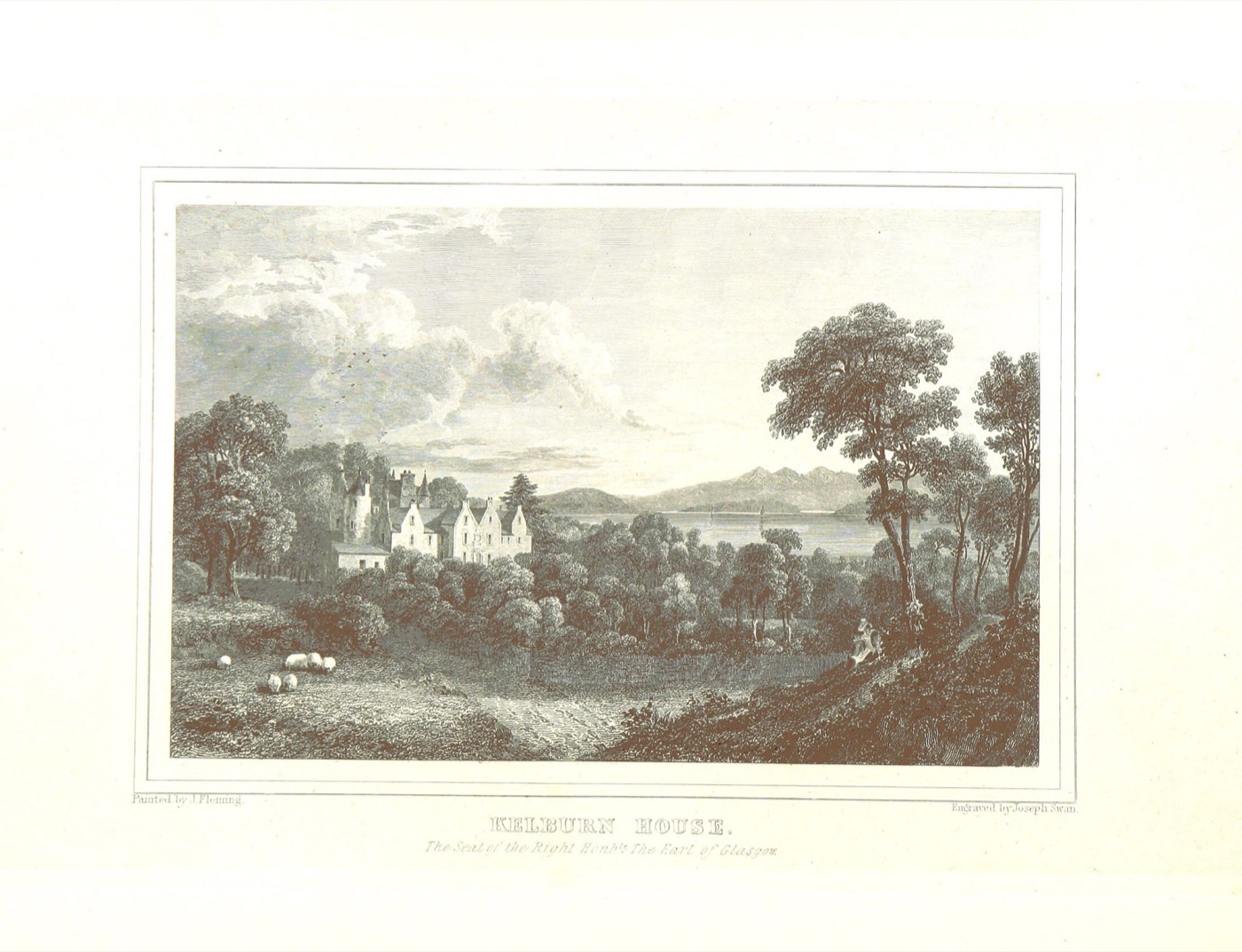
Kelburn, by contrast, is a single wooded estate above the Firth of Clyde, in the parish of Largs, Ayrshire, close enough to the water that the family's medieval tower could watch shipping on the firth. It has never covered the ground of a Highland chieftaincy; it is one seat, held by one family, continuously, since the documentary record picks Richard de Boyville up there around 1275. The present castle, much altered since, still stands in Boyle hands, home today to the 10th Earl of Glasgow.
The two places share nothing beyond the coincidence that both look out over water their families never fully controlled: Donegal's O'Boyles across the Atlantic approaches that later carried away their own descendants, Kelburn's Boyles across a firth that made Glasgow, and the earldom the family took its name from, one of Scotland's great trading ports.
That was one chapter. The report carries the rest: where the name comes from, the clan and its chiefs, heraldry, the stories, a timeline, migration, the name today, notable bearers, and a page on tracing your own line. Every claim sourced the same way as the chapter above.
Get the Boyle report$14.99 · instant download, yours to keep and print
Not your name? Search yours, or read how we work, with another full chapter.
This history is written by AI from public-domain sources and the family's own published records, every one of them listed above. Where tradition and record disagree the text says so rather than choosing quietly. No image on this page is AI-generated.
First edition · last revised