 The Old Country
The Old Country
The Old Country
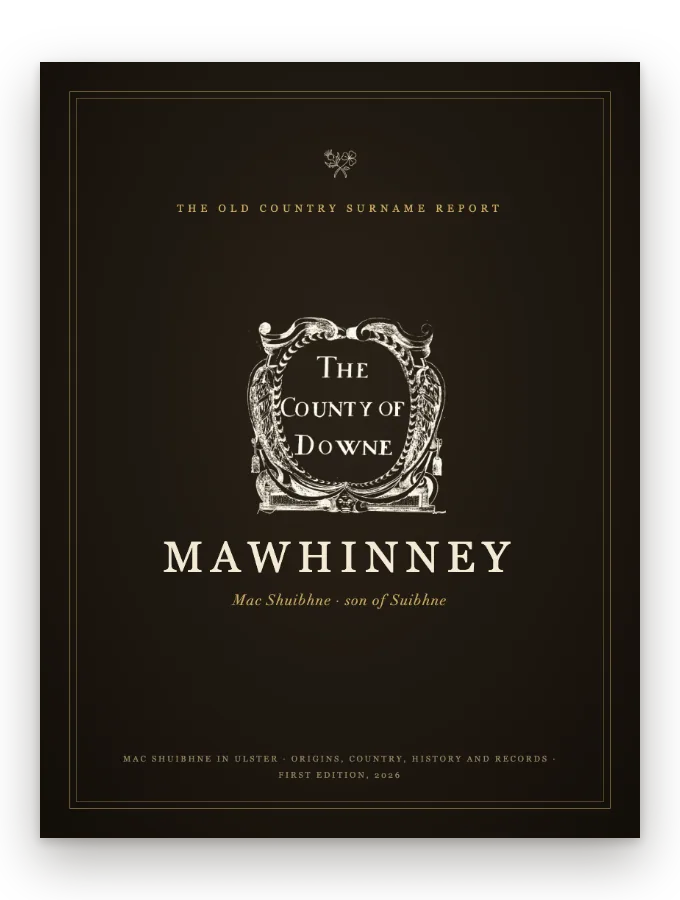
This report tells the story of a small, plainly Ulster surname whose sound survived even though its spelling never settled: Mawhinney and McWhinney, which the Oxford Dictionary of Family Names in Britain and Ireland lists as possible anglicised forms of the Gaelic Mac Shuibhne, son of Suibhne. The personal name Suibhne, meaning well-going or pleasant, is shared with a much larger and far better documented family, the MacSweeney gallowglass captains of Donegal, and the two are very often run together online. They should not be. Patrick Woulfe's Sloinnte Gaedheal is Gall keeps the two apart in its own dictionary: Mac Suibhne is the Donegal family's own headword, while Mac Shuibhne is described, in Woulfe's own words, simply as a Scottish surname, the form this report follows into Ulster's own Mawhinneys and McWhinneys. A second scholarly dictionary derives the name from a different root altogether, and chapter two prints that disagreement rather than hiding it.
County Antrim and County Down hold this name between them, and the 1901 and 1911 census returns record Mawhinney and Macwhinney households across both without a clear preference for one over the other. This report treats them as a single Ulster heartland rather than forcing a distinction the record itself does not show. Where the name can be put on smaller ground, it is in County Down: the Ards Peninsula runs down the eastern side of Strangford Lough, a narrow arm of farmland between the lough's sheltered water and the open Irish Sea, with Newtownards as its chief town at the peninsula's northern neck, and the name is recorded there parish by parish rather than gathered under any single seat or estate.
The connection to that ground is not only historical. Maxine Mawhinney, whose own broadcasting career this report tells later, was educated at Regent House School in Newtownards itself, a small, present-day confirmation that the name has not left the country the census first counted it on. County Antrim, immediately north and west across Belfast Lough, is the other half of the same heartland, and the more populous county of the two; a Mawhinney household in the 1901 returns is about as likely to be found in one as in the other.
What this report cannot give you is anything earlier. A claim circulates widely on surname sites that the name was most prominent in County Fermanagh, further west again, with some fifteen families of it recorded in Sir William Petty's Census of Ireland of 1659. It is a specific, quotable figure, and it is exactly the kind of claim a paid report should either source or drop. This one could not be sourced: it traces to a commercial surname page and to copies of that page's own wording, no transcription of the Fermanagh returns carrying the name could be reached, and the 1659 census groups Fermanagh by parishes rather than by baronies in any case. The 1901 census, which can be checked, finds almost no bearers of the name in Fermanagh at all. The claim is set out and cut in the last chapter.
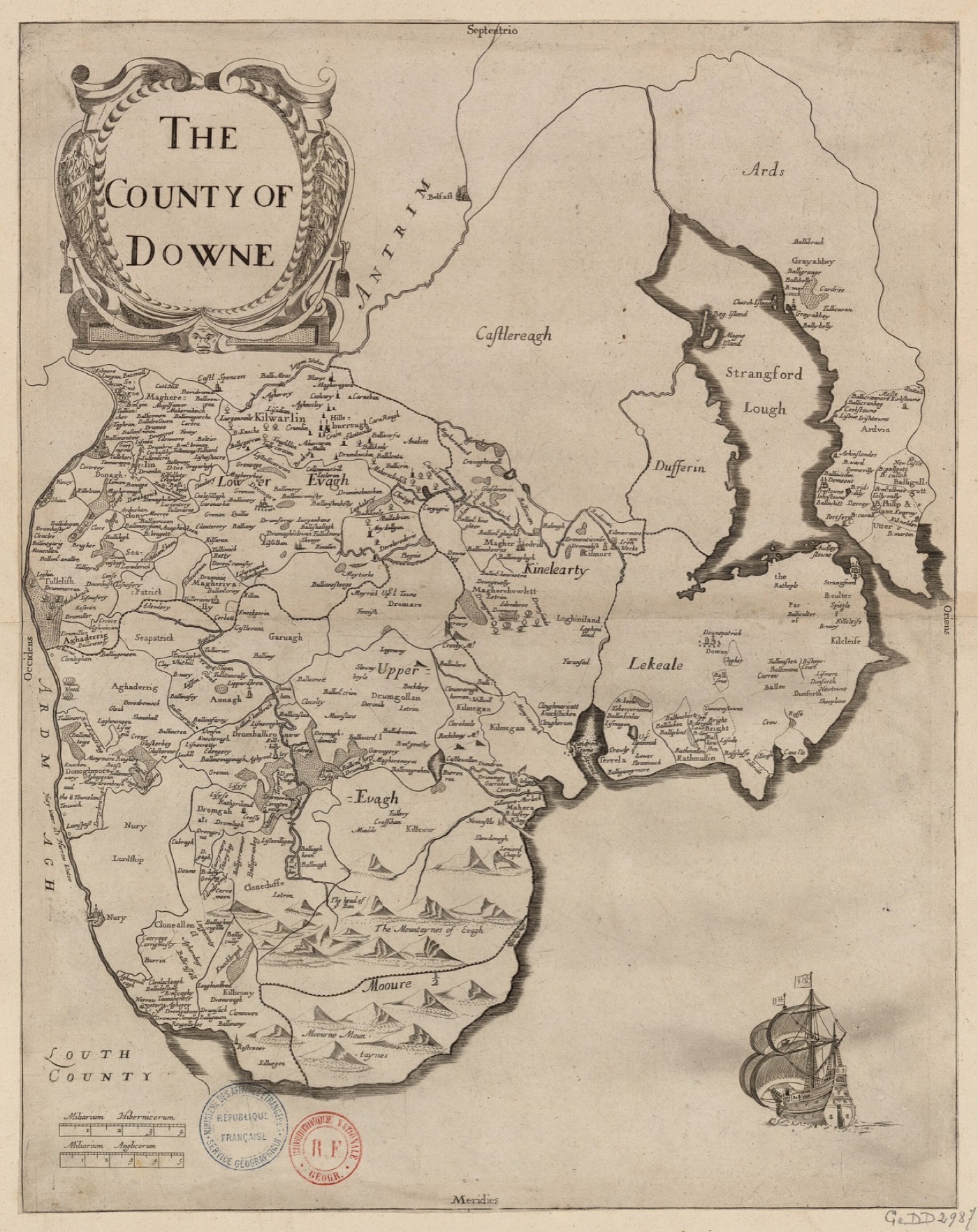
That was one chapter. The report carries the rest: where the name comes from, the clan and its chiefs, heraldry, the stories, a timeline, migration, the name today, notable bearers, and a page on tracing your own line. Every claim sourced the same way as the chapter above.
Get the Mawhinney report$14.99 · instant download, yours to keep and print
Not your name? Search yours, or read how we work, with another full chapter.
This history is written by AI from public-domain sources and the family's own published records, every one of them listed above. Where tradition and record disagree the text says so rather than choosing quietly. No image on this page is AI-generated.
First edition · last revised