 The Old Country
The Old Country
The Old Country
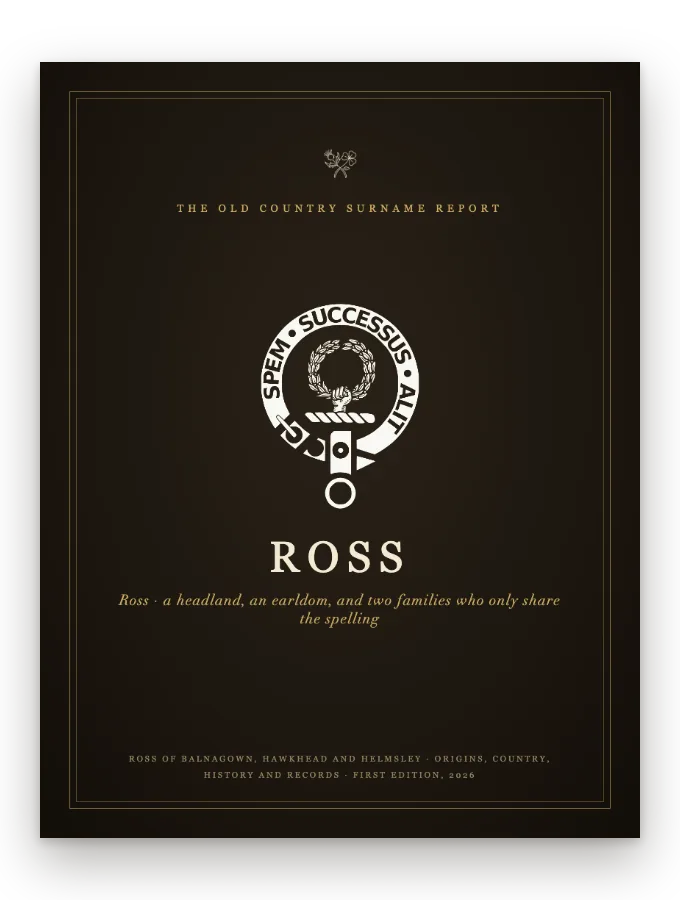
This report tells a surname's history honestly, which means it starts by admitting the name is not one story but three. The largest is Highland and Gaelic: Ross, from ros, a headland or promontory, the peninsula of Easter Ross itself, home to an earldom founded in the thirteenth century and, after that earldom passed out of the family, to three centuries of chiefs at Balnagown Castle. The second is Lowland and Anglo-Norman: the Rosses of Hawkhead in Renfrewshire, granted their lands in 1367, whose own record states plainly that they are not, so far as is known, related to the Highland Earls of Ross or the Balnagown chiefs at all. The third is English: the Barons de Ros of Helmsley in Yorkshire, a Magna Carta family with no documented Scottish connection whatsoever. Three families, one spelling, and this report keeps them apart rather than borrowing the drama of one to pad the page count of another.
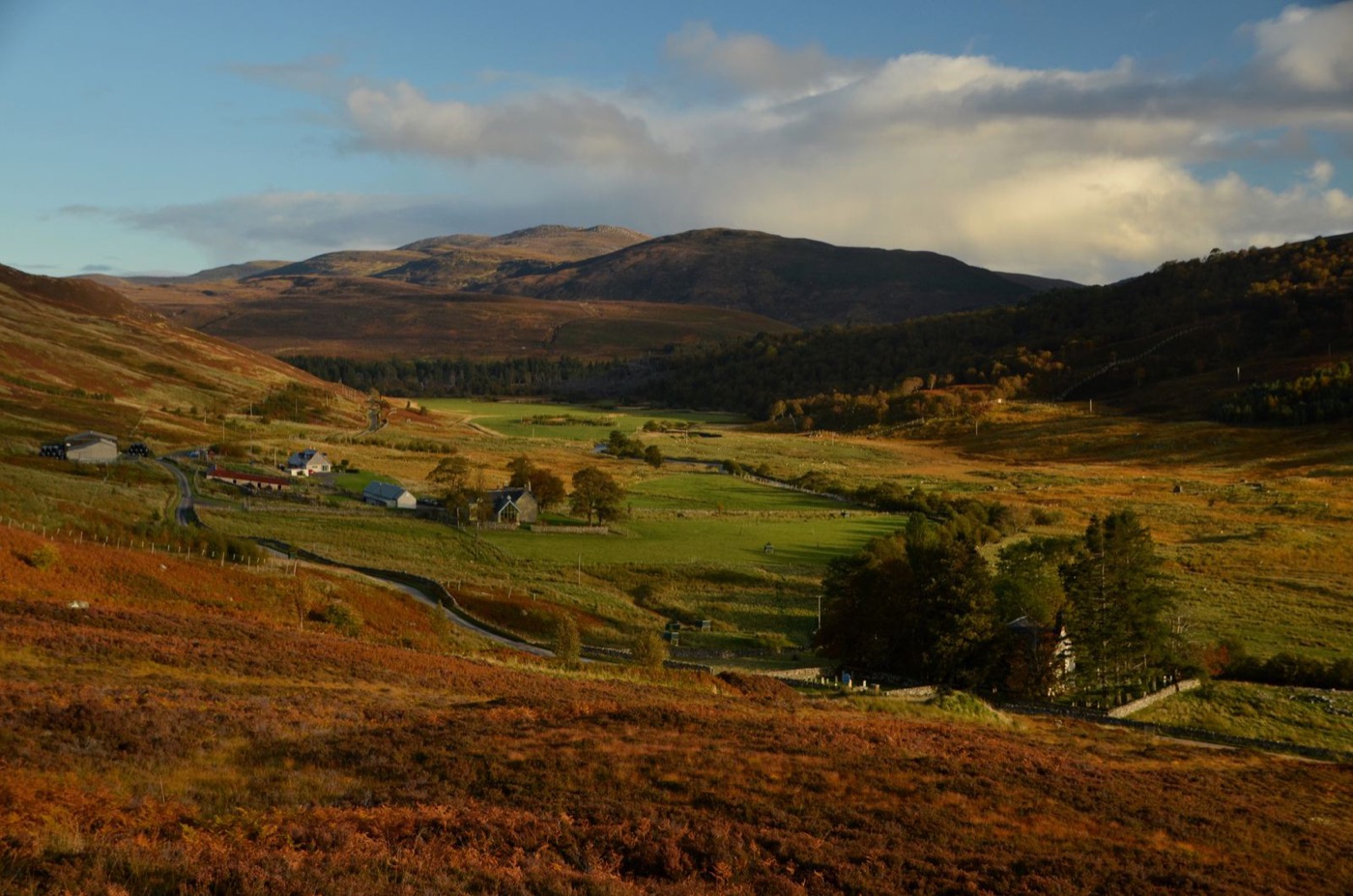
Easter Ross is the country this name is actually from: the peninsula between the Cromarty and Dornoch Firths, hill and farmland running down to two sheltered arms of the North Sea, with the harder western Highlands rising behind it toward Applecross and the Atlantic coast. It is quieter country than its history suggests, three great firths and a scatter of farming parishes rather than a single dramatic seat, which is itself a kind of evidence: an earldom and, after it, a chiefship that held this ground for seven centuries without needing one castle to carry the whole story.
Two moments define how that ground was held and who worked it. The earldom's own chief seat was Dingwall Castle, held by Donald of Islay sometime after 1405 and before 1411 while pressing the claim of his wife, Mariota, Countess of Ross, and the physical castle is largely gone today, a relic among later streets. The chiefship's own seat, Balnagown, has fared better: still standing, still called Balnagown, though no Ross has owned it since before its sale in 1972. Between those two facts sits the harder one: in 1792, tenants across Easter Ross rose against the sheep that were replacing them on land their families had farmed for generations, a rising put down by soldiers from Fort George and remembered, in this country, as the Year of the Sheep.
The clearances that followed did not end in 1792. At Glencalvie, in 1845, evicted tenants sheltered in the churchyard at Croick, and messages about their plight survive scratched into the church's own diamond windowpanes; who scratched them is credited by local tradition to the tenants themselves, though not established beyond doubt. This report does not conflate the 1792 rising and the 1845 eviction into one event; they are two dated moments in the same longer story of this land and the people whose name it gave to the world.
Some of these places can still be visited. Fort George, whose soldiers were sent against the 1792 rising, can be walked today, and Tain keeps the Clan Ross Centre in its museum. The Lowland line lies far to the south: the Scots Peerage records a recessed tomb in the parish church of Renfrew carrying the effigies of John, first Lord Ross of Halkhead, and his wife Marjory Mure.
That was one chapter. The report carries the rest: where the name comes from, the clan and its chiefs, heraldry, the stories, a timeline, migration, the name today, notable bearers, and a page on tracing your own line. Every claim sourced the same way as the chapter above.
Get the Ross report$14.99 · instant download, yours to keep and print
Not your name? Search yours, or read how we work, with another full chapter.
This history is written by AI from public-domain sources and the family's own published records, every one of them listed above. Where tradition and record disagree the text says so rather than choosing quietly. No image on this page is AI-generated.
First edition · last revised