 The Old Country
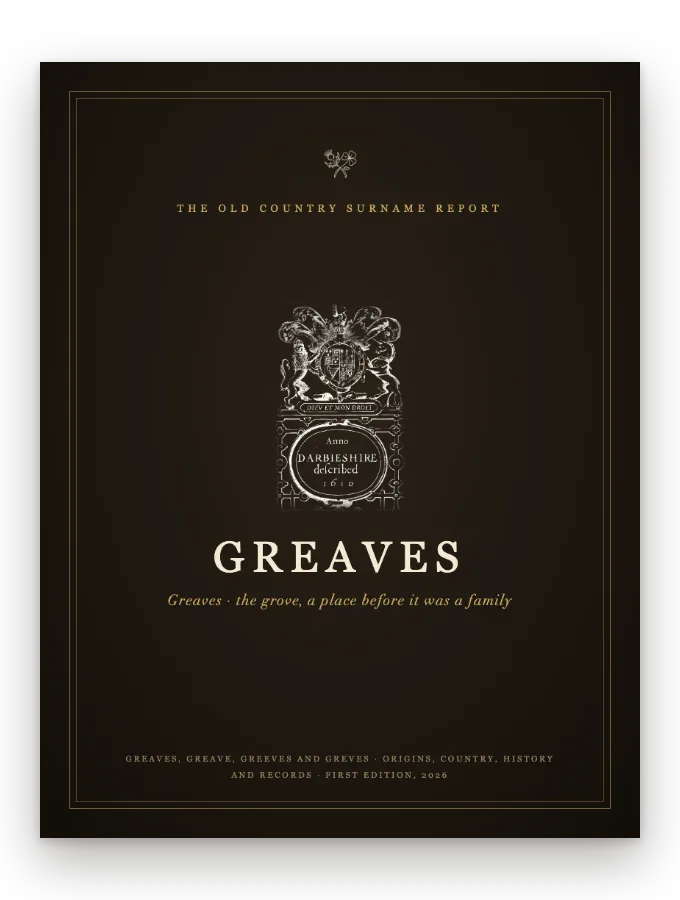
Greaves is an English place name. It means the grove or thicket, from the Old English word græfe.
Greaves is a name of the English Midlands and north. The censuses of Great Britain counted 8,773 people named Greaves in 1881. The 2020 US Census counted 5,009.
No email needed. It starts just below.
43 pages, 23 named sources, in your inbox within a minute.
The next page asks where to post it.
The hardback could not be added just now. Get your report here, and the hardback is offered on the next page for the same $79 in all.
Read it. If it is not the best account of your name you have seen, reply to your receipt within 14 days and we refund you.
“I have been tracing my family tree for some time, but there were certain stories that even our closest relatives never knew about. This surname report is a true deep dive. Thank you.”Susan D., reader
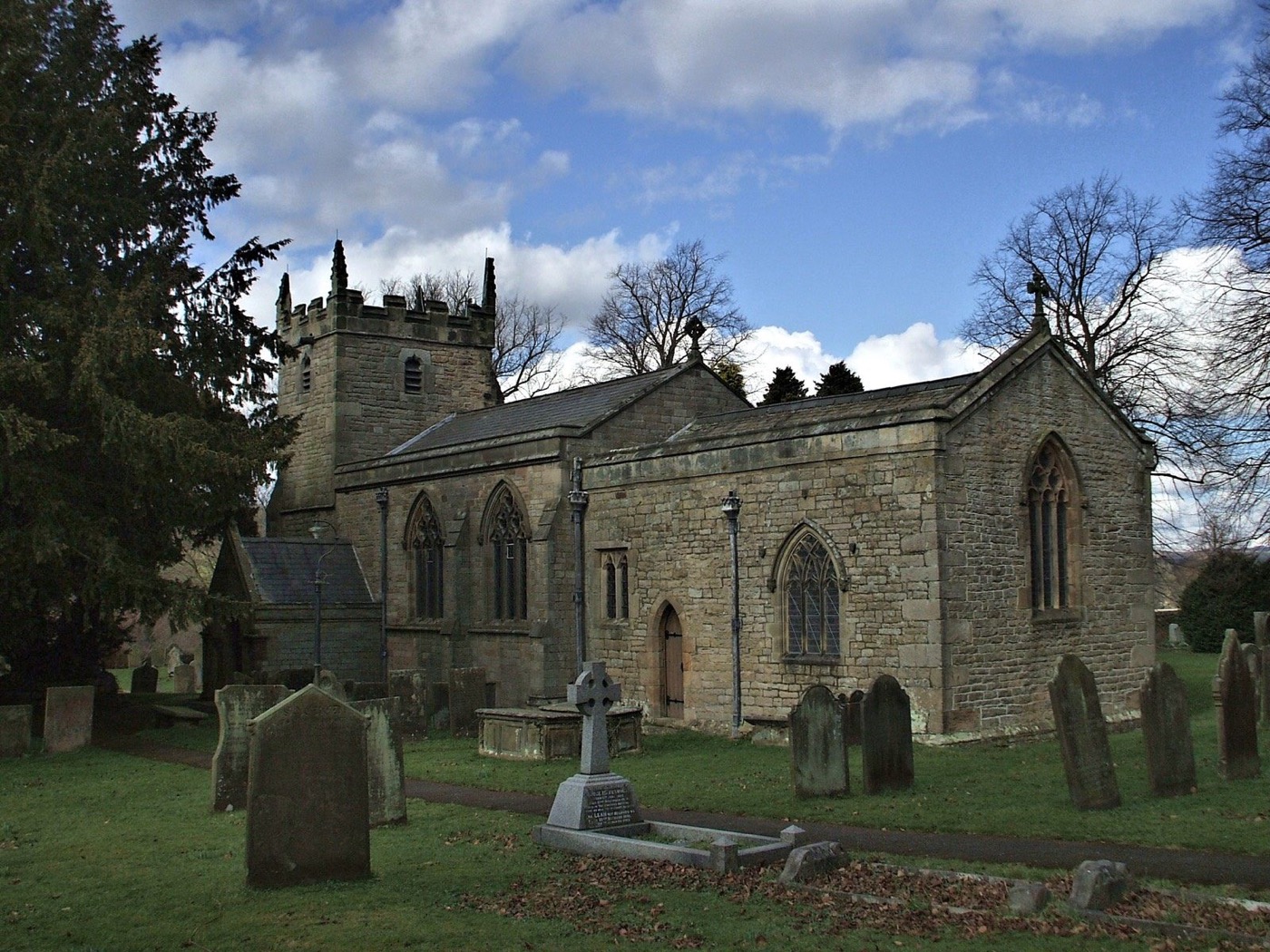
Beeley is a village in Derbyshire, in the middle of England, near Chatsworth. Somewhere in its fields lay a place the old deeds call le Grevis, le Greves or le Greveys: the Greaves, the grove. Addy still knew it in 1888 as "The Greaves or Greves". A family took its name from that place, and the deeds let us watch it happen.
The deeds are the Wolley charters, given to the British Museum in 1828 and now in the British Library. Jeayes set out their contents in English in his Descriptive Catalogue of Derbyshire Charters (1906). Eighteen Beeley charters carry the place or the name, from the reign of Henry III to 1549. Fifteen of them are dated before 1438 or in it. The oldest, from Henry III's reign, has Margery, lady of Beeley, granting half a bovate of land "in le Grevis". A bovate was an old measure of farm land. Here the Greaves is still only a place. No one bears its name yet.
Burke had a grander tale. The family, he wrote, was in Derbyshire "so early as the time of Henry I", in the early 1100s. But his own footnote says "as early as the reign of Henry III", and Jeayes has nothing earlier than Henry III. Henry III is what the record shows. Then comes a good turn. Burke prints a descent from a herald's visitation of Derbyshire: Hugo le Grevis, his son William, Giles and Letitia his wife, and Thomas son of Giles. The charters name the same people, deed by deed.
Burke says a John Greaves, under Queen Elizabeth, was "a joint purchaser of the manor" of Beeley, and that the family stayed "till about the year 1700". Then, Burke says, Beeley passed "to the house of Rutland". No deed behind this report shows that, and Beeley is a Chatsworth village today. The family left the village, but the name had long since spread.
That was one chapter. The report carries the rest: where the name comes from, the family and its places, heraldry, the stories, a timeline, migration, the name today, notable bearers, and a page on tracing your own line. Every claim sourced the same way as the chapter above.
Get my report · $14.99Instant download, yours to keep and print
Read it. If it is not the best account of your name you have seen, reply to your receipt within 14 days and we refund you.
Not your name? Search yours, or read another name's free chapter.
One piece of research, three more ways to have it. Every edition includes the Greaves report itself.
The Greaves report and a five and a half minute film of the name, your spelling on the title.
Get the film · $39.99The Greaves report as a hardback, posted free to your door.
Get the book · $79The report, the film and the hardback. Bought apart they are $118.99.
Get all three · $99For the wall. The Greaves record on one framed sheet, 16 by 12 inches, $89 posted free. See the framed plate.
A gift? Send the Greaves report on a day you choose, with a card.
This history is written from public-domain sources and the family's own published records, every one of them listed. Where tradition and record disagree the text says so rather than choosing quietly. No image on this page is AI-generated.
First edition · last revised