 The Old Country
The Old Country
The Old Country
This report tells the story of a name that described a place before it ever described a family: kirk land, land that belonged to the church. Reaney and Wilson's Dictionary of English Surnames and George Black's Surnames of Scotland agree on the shape of the answer even where the detail differs: places called Kirkland stood in Cumberland, Lancashire, Ayrshire, Dumfriesshire and Lanarkshire, and whoever farmed church land could end up carrying the description into the record as a surname. Burke's General Armory names the man it credits as the founder of the name's senior English line, Gamel, Lord of Kirkeland in Cumberland, in the time of William the Conqueror, a personal name that is itself Old English or Old Norse, not the Norman French of an incoming baron. The earliest dated Scottish record this report can point to comes two centuries later: Johannes de Kyrkeland, holding land in the territory of Gordon around 1280.
Two places in Scotland carried the name outright. Kirkland in Nithsdale sits on the Cairn Water in Dumfriesshire, a few miles from Moniaive; a second Kirkland lay in the Upper Ward of Clydesdale, the hill country above the Clyde in Lanarkshire. Across the Solway in Cumberland, Burke's General Armory names Kirkland itself as the seat of the name's senior English line, the estate Gamel's descendants are said to have held from the eleventh century onward, together with a second Kirkland in Lancashire and Brampton in Derbyshire. None of the three is a single great estate; each is exactly the kind of small, working parish holding the etymology predicts, land the church once held, farmed afterward by whoever the record came to call by it.
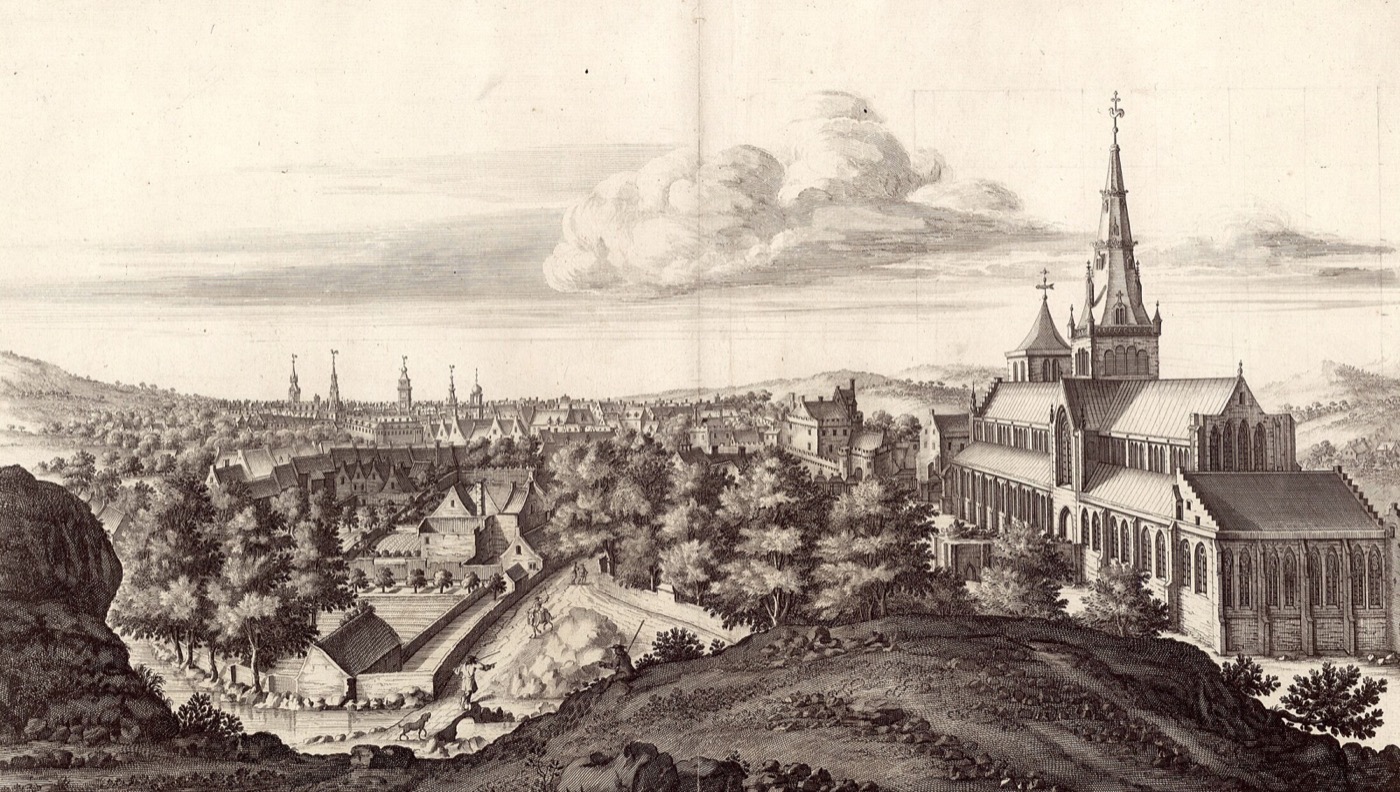
Glasgow itself was never called Kirkland, but it is where the earliest individually named Scottish bearers actually appear: William de Kyrkland, a burgess of the city in 1424, and Alan de Kyrkelande and John de Kirkland, both recorded there in 1463 and 1471. The cathedral at the city's heart, seat of the whole diocese since the twelfth century, explains the cluster; wherever a mother church held the most land, a name built from kirk land was always likeliest to take root among the people who worked it.
Not every place called Kirkland produced a family of the name, and the caution is worth stating plainly rather than leaving it as a footnote. Near Kilmaurs in Ayrshire, church land called Kirkland passed after the Reformation to the Cunninghame family, David Cunninghame receiving the church lands of Kirkland-Kilmaurs in 1532 and Patrick Cunninghame of Kirkland recorded there in 1586. They held the ground, and borrowed its name as a designation, without ever becoming Kirklands. A search that finds the place name alone has not yet found a family.
That was one chapter. The report carries the rest: where the name comes from, the clan and its chiefs, heraldry, the stories, a timeline, migration, the name today, notable bearers, and a page on tracing your own line. Every claim sourced the same way as the chapter above.
Get the Kirkland report$14.99 · instant download, yours to keep and print
Not your name? Search yours, or read how we work, with another full chapter.
This history is written by AI from public-domain sources and the family's own published records, every one of them listed above. Where tradition and record disagree the text says so rather than choosing quietly. No image on this page is AI-generated.
First edition · last revised