 The Old Country
The Old Country
The Old Country
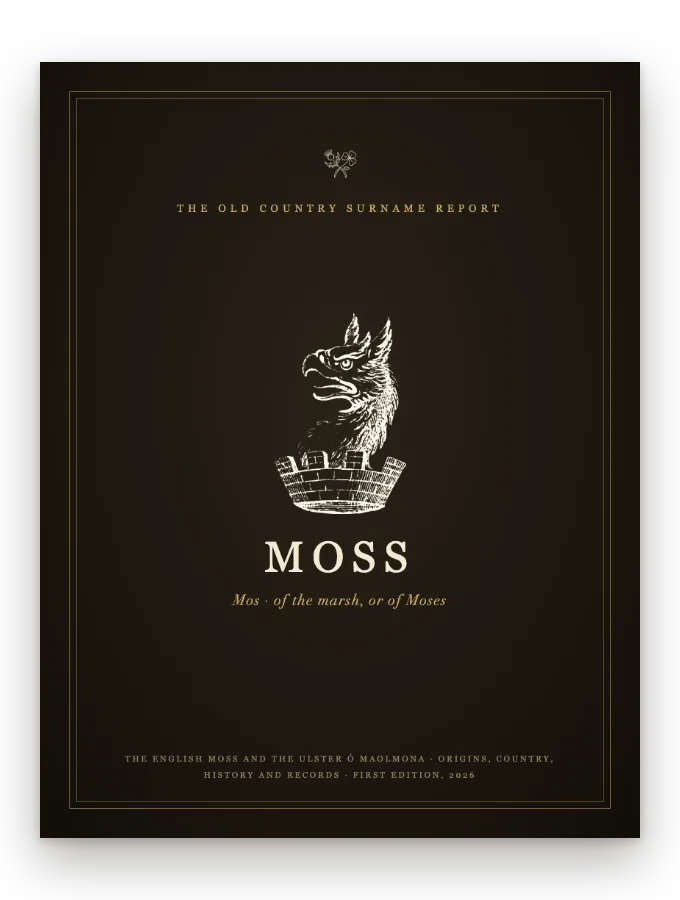
This report tells the history of a name that is not, in truth, one name at all. Moss reaches the twenty-first century by at least two roads that never cross. One begins in medieval England, where mos simply meant a bog or a moor, and where a man who lived by one, or in a village called Moss, was named for the ground under his feet; that same English road later widens to take in a second, unrelated source, families named Moses who anglicised the name to Moss, most visibly from the nineteenth century onward. The other road begins in Ulster, where the Irish Gaelic Ó Maolmona, glossed by the scholar who catalogued it as chief of the bog, was anglicised the same way, by translation rather than sound, into the identical English word. Two languages, two unconnected families, and the same bog, arrived at independently. That coincidence is this report's spine.
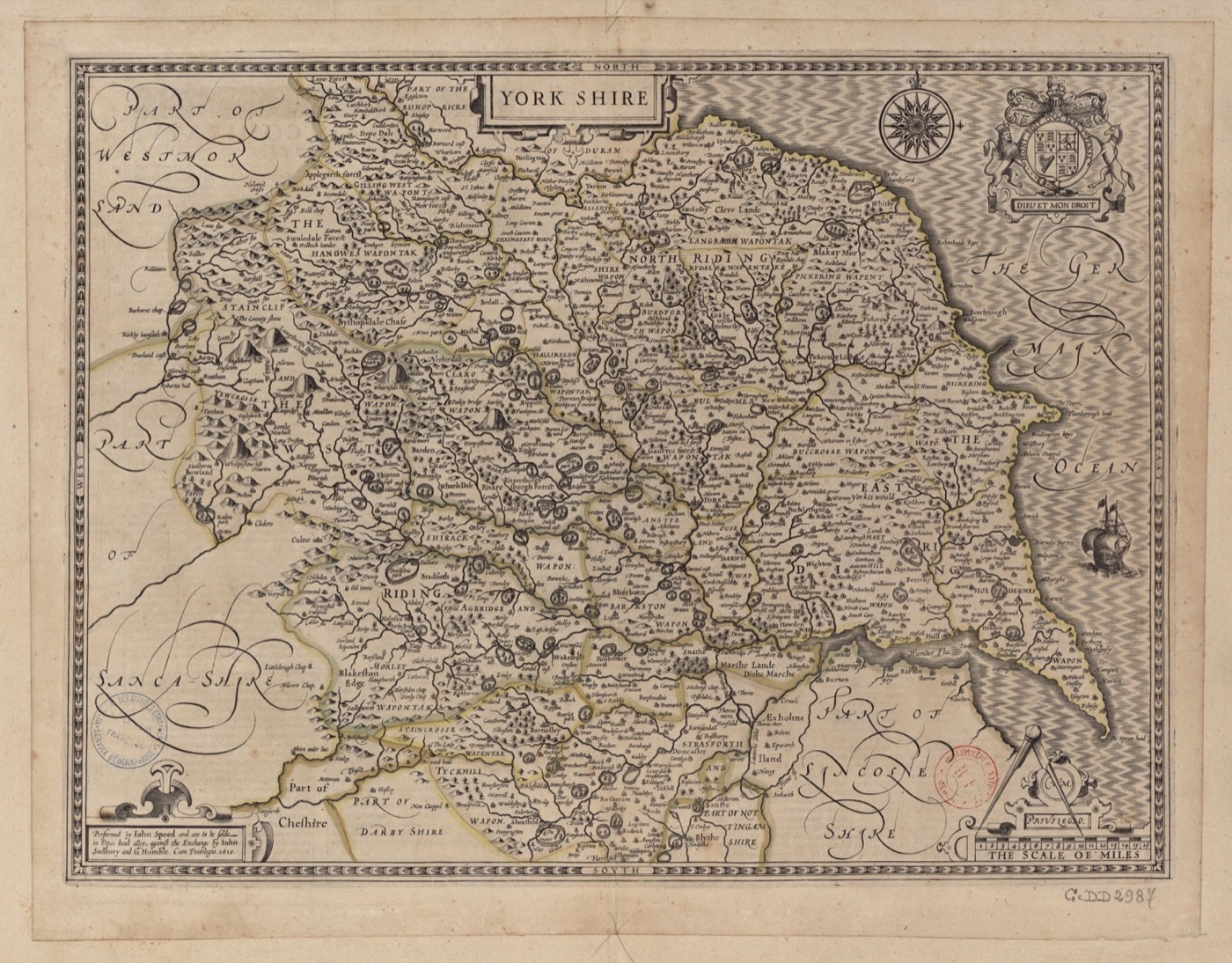
There is no single Moss homeland, and this chapter says so plainly rather than picking a winner. The English bog-name form is thickest across Lancashire and the West Riding of Yorkshire, moorland counties either side of the Pennines where a family living beside a mos needed no further description; compilations of the 1881 returns put the single heaviest cluster of the name at Ashton-under-Lyne, immediately next to the moor still called Ashton Moss. A separate, later English concentration sits in London and the south-east, carried there by the Jewish-derived line rather than the bog-name one, a demographic split this report's sources describe consistently: the topographic Moss around Lancashire and the north-west, the Jewish Moss around London and the south-east, two populations sharing a spelling and nothing else.
Ulster is the second homeland, and it belongs to a different family altogether. Woulfe's Sloinnte Gaedheal is Gall records Ó Maolmóna as "a rare Ulster surname," full stop: no barony named, no chief recorded, no confiscation roll to trace. That silence is itself informative: unlike the sept-based Gaelic surnames this series has told before, with chiefs and territories and Four Masters entries, Ó Maolmóna left too thin a documentary trail even for Woulfe, working in the 1920s with access to record collections since lost or scattered, to say more than that it existed and where, broadly, it was found. This report treats that thinness honestly rather than padding it with a borrowed Monaghan tradition it could not independently confirm.
What both homelands share, oddly, is the word itself rather than any connection between them: an English moor and an Irish bog, described in two languages that have no common ancestor, producing the identical English surname by two processes, direct descriptive naming in England, translation of a Gaelic compound in Ireland, that never once crossed paths. A reader who traces a Moss line back far enough will eventually need to know which homeland their own family's Moss belongs to, because past a certain point the two stories do not merge into one; they simply stop, on two different islands, for two different reasons.
That was one chapter. The report carries the rest: where the name comes from, the clan and its chiefs, heraldry, the stories, a timeline, migration, the name today, notable bearers, and a page on tracing your own line. Every claim sourced the same way as the chapter above.
Get the Moss report$14.99 · instant download, yours to keep and print
Not your name? Search yours, or read how we work, with another full chapter.
This history is written by AI from public-domain sources and the family's own published records, every one of them listed above. Where tradition and record disagree the text says so rather than choosing quietly. No image on this page is AI-generated.
First edition · last revised