 The Old Country
The Old Country
The Old Country
This report tells the story of the name MacRae, and of McRae, Macrae, MacCrae and the handful of other spellings that carry the same Gaelic root into English. The surname comes from MacRath, son of Rath, and Rath itself is glossed by clan and dictionary sources alike as grace, luck or good fortune, a personal name with an almost churchly ring to it. Tradition brings the family from Ireland to Clunes, near Beauly, in the thirteenth century, in company with the ancestor of the Mackenzies; the record this report can actually check begins later and more modestly, with a Christopher Macrae witnessing a land charter at Inverness in 1386. By the early sixteenth century the family had moved west to Kintail, on Scotland's Atlantic coast, and taken up a post that would define the name for four centuries: constables of Eilean Donan Castle, on behalf of the Mackenzie chiefs who owned it.
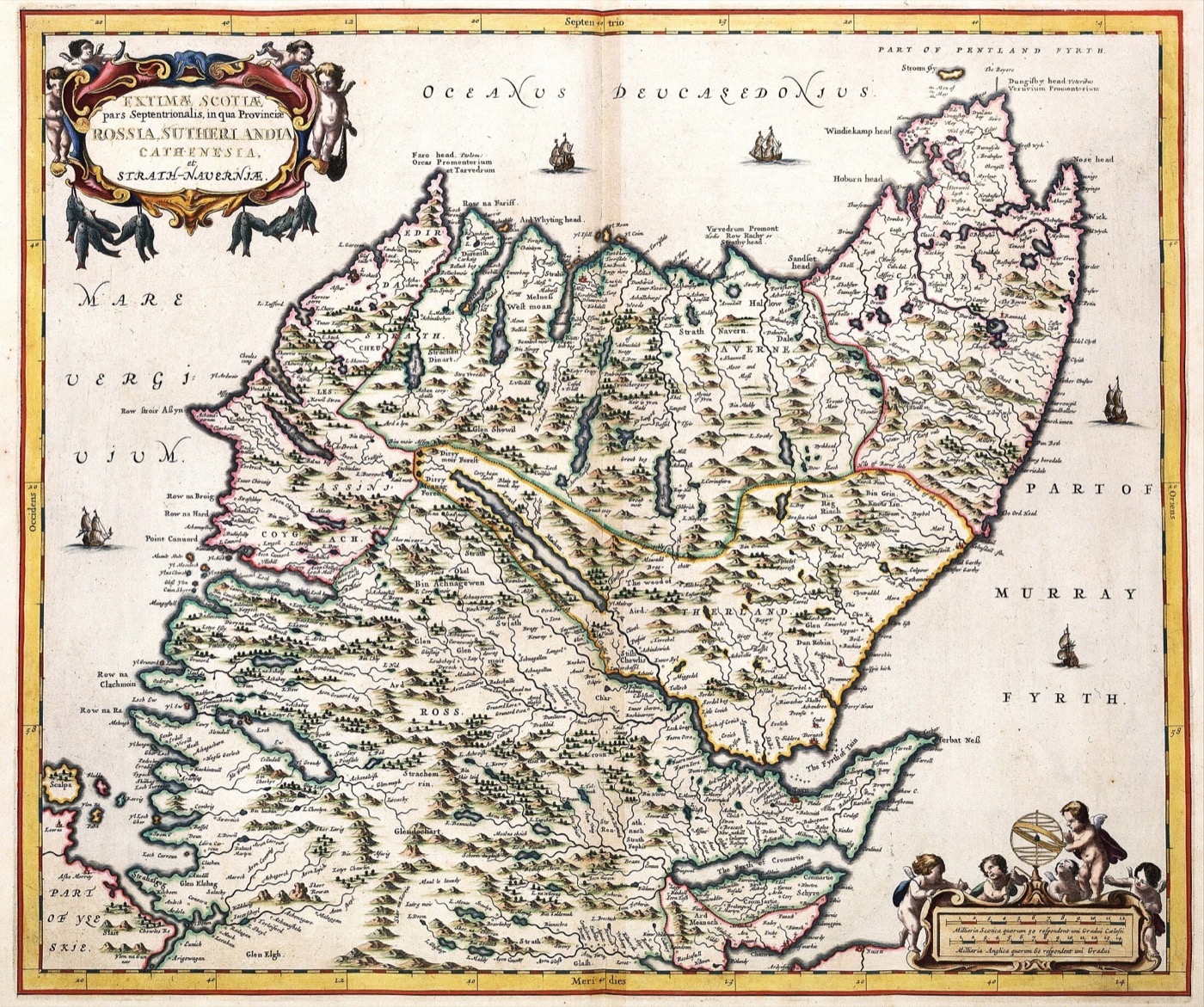
Kintail sits on Scotland's west coast, where Loch Duich, Loch Long and Loch Alsh meet in a knot of sea lochs below some of the steepest ground in the Highlands. It is spectacular country and thin farming country in the same breath: the Five Sisters of Kintail rise almost directly from the water, and the strip of usable land below them was never going to support a large population on its own. What it did support, for four centuries, was a garrison, because whoever held Eilean Donan, the small tidal island where three lochs meet, held the gate to the Mackenzie lands beyond.
The MacRaes' own homeland, in the family's telling, lies further east again: Clunes, near Beauly, on the Mackenzie's Lovat neighbours' ground, where clan tradition places the family before its move west in the fourteenth century. A branch stayed there, becoming, over generations, the clergy, lawyers and civic officers of Ross-shire rather than the Kintail garrison; this report cannot verify a documented link between every Beauly-area Macrae and the Kintail chiefly line, and says so rather than assuming one.
What can be verified, and walked, is Kintail itself: the castle on its tidal rock, the parish kirk at Clachan Duich where generations of MacRaes are buried, and the pass at Glenshiel where the clan's Jacobite adventure ended in 1719, in the same summer the castle was destroyed. This is remote country even today, a single road running the length of Loch Duich; it does not feel like the seat of a name known across three continents, and that gap between the size of the place and the size of its story is much of what this report has to tell.
That was one chapter. The report carries the rest: where the name comes from, the clan and its chiefs, heraldry, the stories, a timeline, migration, the name today, notable bearers, and a page on tracing your own line. Every claim sourced the same way as the chapter above.
Get the MacRae report$14.99 · instant download, yours to keep and print
Not your name? Search yours, or read how we work, with another full chapter.
This history is written by AI from public-domain sources and the family's own published records, every one of them listed above. Where tradition and record disagree the text says so rather than choosing quietly. No image on this page is AI-generated.
First edition · last revised