 The Old Country
The Old Country
The Old Country
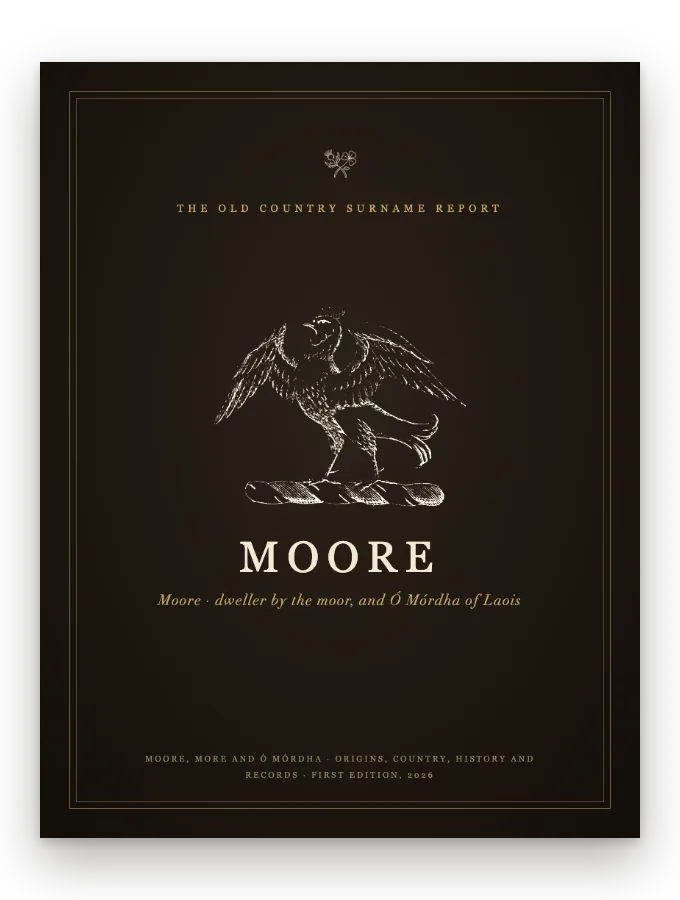
Moore is the eighteenth largest surname in the United States, 724,374 people at the 2010 Census, and by the time this report reaches the shelf it will be the largest name this series has written after Smith, Brown, Wilson and Taylor. A name that size cannot be one family's story, and this report does not pretend otherwise. It is at least three unrelated names sharing one spelling: an English and Scots surname for a family that once lived beside a moor or heath, the Irish Gaelic Ó Mórdha, lords of Laois before the crown broke their territory into Queen's County in 1556, and a smaller nickname sense, a nod to a dark-complexioned man, that Harrison's Surnames of the United Kingdom records for Moore and Moor themselves, and again under the related name Morel.
This name has no single homeland because it was never one family's to carry. The English and Scots line settled wherever a moor or heath gave a household its name, from the thirteenth century onward, and no county claims it more than any other. The Irish Gaelic line is different and more precise: Laois, in Leinster, the Ó Mórdha lordship broken into Queen's County by the crown in 1556, its leaders agreeing to transplantation in 1607 and carried out to the Tarbert area of Kerry by 1608-09, though the family held on across Leinster besides.
A third geography belongs to the Moore Earls of Drogheda alone: Mellifont, County Louth, confirmed to Sir Garrett Moore's father, Sir Edward, by a crown lease of 1566, and then Moore Abbey at Monasterevan, County Kildare, the family's seat for two centuries. On their own Dublin lands, north of the Liffey, the family laid out streets that still carry pieces of their title: Henry Street, Moore Street, North Earl Street, a lane once called Of Lane and Drogheda Street, rebuilt in the 1740s as Sackville Street and renamed O'Connell Street in 1924. Moore Street still trades as a street market today, one of the oldest in the city, trading since the eighteenth century on the same street name a seventeenth century peer's development gave it.
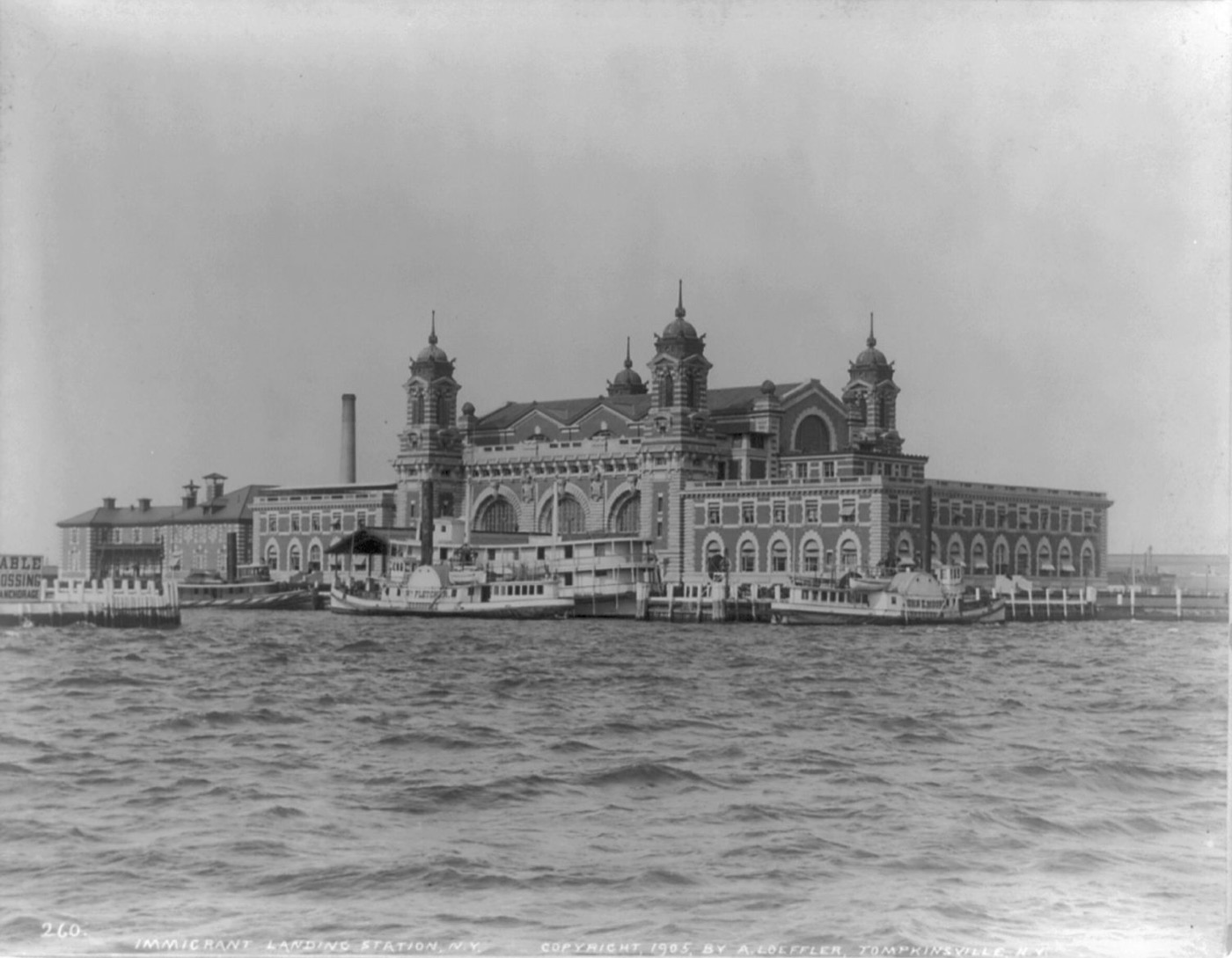
The places themselves can still be found, and they are scattered in a way that tells the story honestly. The Rock of Dunamase, named by Woulfe as the chief fortress of the Ó Mórdha lords of Laoighis, still stands as a ruin above the plain near Portlaoise. Thomas Moore was born at 12 Aungier Street, Dublin. Sir John Moore, born in Glasgow and buried at Corunna in Galicia, where he died on 16 January 1809, has a bronze by John Flaxman in his native city's George Square, put up in 1819. In Mayo, the burned shell of Moore Hall still stands by Lough Carra; in Leicestershire, the school Sir John Moore, Lord Mayor of London, founded at Appleby in 1697 still carries his name. And in New York Harbor stands the station where Annie Moore, later identified as seventeen, became the first immigrant processed on 1 January 1892, rebuilt after the wooden original burned in 1897.
That was one chapter. The report carries the rest: where the name comes from, the clan and its chiefs, heraldry, the stories, a timeline, migration, the name today, notable bearers, and a page on tracing your own line. Every claim sourced the same way as the chapter above.
Get the Moore report$14.99 · instant download, yours to keep and print
Not your name? Search yours, or read how we work, with another full chapter.
This history is written by AI from public-domain sources and the family's own published records, every one of them listed above. Where tradition and record disagree the text says so rather than choosing quietly. No image on this page is AI-generated.
First edition · last revised