 The Old Country
The Old Country
The Old Country
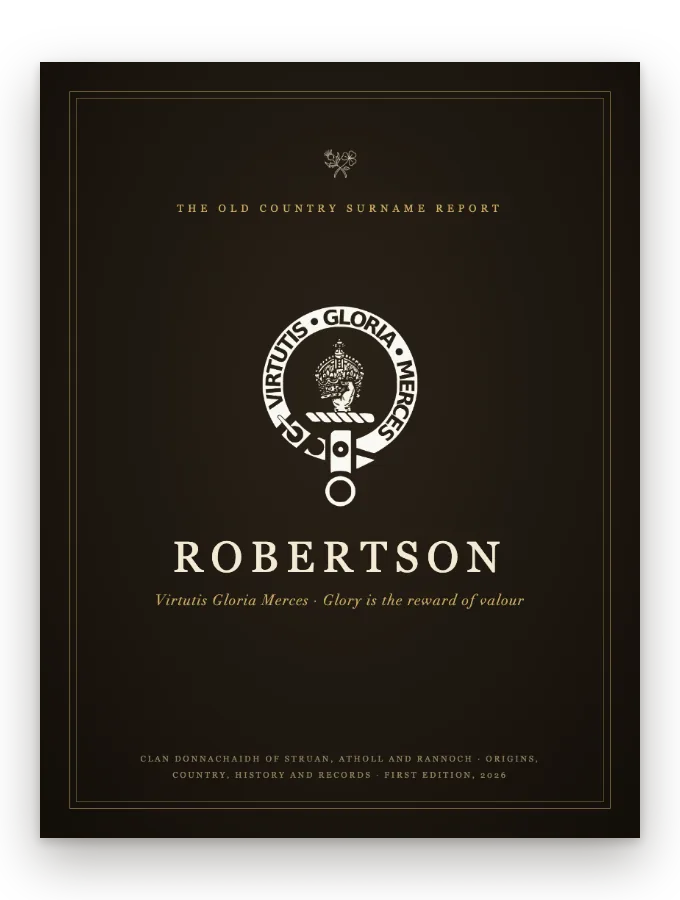
This report tells the story of the name Robertson, and of Clan Donnachaidh, the Gaelic "children of Duncan" whose members carried that surname before an anglicised English one took its place. Robertson is a patronymic, son of Robert, one of the commonest forenames in medieval Scotland; what makes this particular Robertson line worth a report of its own is not the word but the family that adopted it. In the mountains of Highland Perthshire, around Loch Rannoch, Glen Errochty and the slopes of Schiehallion, a kindred that called itself MacDonnachie, after a fourteenth-century leader remembered as Donnchadh Reamhar, Stout Duncan, took a new name in the fifteenth century after one of its own chiefs did the Crown a very particular service: he ran down the murderers of a king.
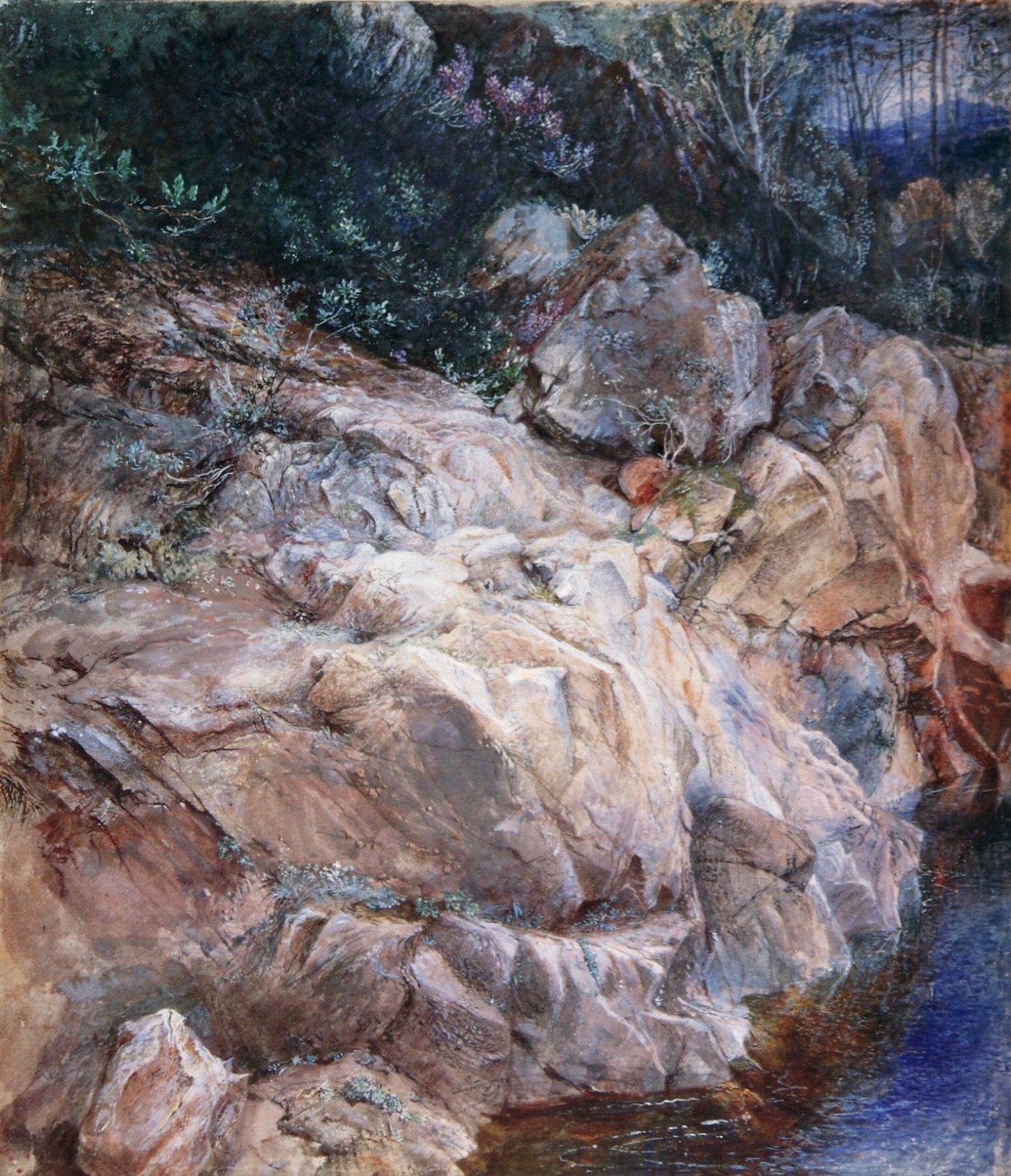
The country of this name is written into the 1451 charter itself: Struan, the mid-part of Rannoch, Glenerochie, Grannich, Faskally, Balnaguard and the rest, a swathe of Highland Perthshire inside the old Earldom of Atholl, running from the passes above Blair Atholl west along Loch Tummel to Loch Rannoch and south to Loch Tay's northern shore. It is dramatic, mountainous country, dominated by the near-symmetrical cone of Schiehallion, and it was never rich farmland; the clan's own strength here was always more a matter of a defensible glen and a loyal tenantry than of broad acres.
Struan itself, where the barony took its name, sits on the River Garry a few miles from Blair Atholl. The old parish church, dedicated to St Fillan, is where clan tradition says the medieval chiefs were buried, though no individual monument from that period survives to be read today. Up to the mid-seventeenth century the family's own seat was at Invervack, near the motte at Struan; later generations moved to Dunalastair, on the Tummel below Schiehallion, where Alexander Robertson of Struan had his own tower, burned by government troops after the 1745 rising. The Victorian ruin visible at Dunalastair today was built for General Sir John Macdonald after the estate was sold in 1853, and was never itself a Robertson residence, despite being popularly assumed to be the chiefs' own castle; the wider Dunalastair estate, the earlier houses on or near the site, and the chiefs' own burial ground do carry the family's genuine history.
The pass at Killiecrankie, at the southern gateway to Atholl, belongs to this country's story too, not as clan ground itself but as a road central to more than one Jacobite campaign: Alexander Robertson of Struan rode this way to join Bonnie Dundee's army in 1689, and Hanoverian and Jacobite forces alike marched it again in 1745. The whole district, from Blair Atholl to the shores of Loch Rannoch, is walkable and largely unchanged in outline, though the crofts and shielings the clan's own tenantry once worked are mostly gone, cleared in the same nineteenth century that emptied so much of the Highlands.
That was one chapter. The report carries the rest: where the name comes from, the clan and its chiefs, heraldry, the stories, a timeline, migration, the name today, notable bearers, and a page on tracing your own line. Every claim sourced the same way as the chapter above.
Get the Robertson report$14.99 · instant download, yours to keep and print
Not your name? Search yours, or read how we work, with another full chapter.
This history is written by AI from public-domain sources and the family's own published records, every one of them listed above. Where tradition and record disagree the text says so rather than choosing quietly. No image on this page is AI-generated.
First edition · last revised