 The Old Country
The Old Country
The Old Country
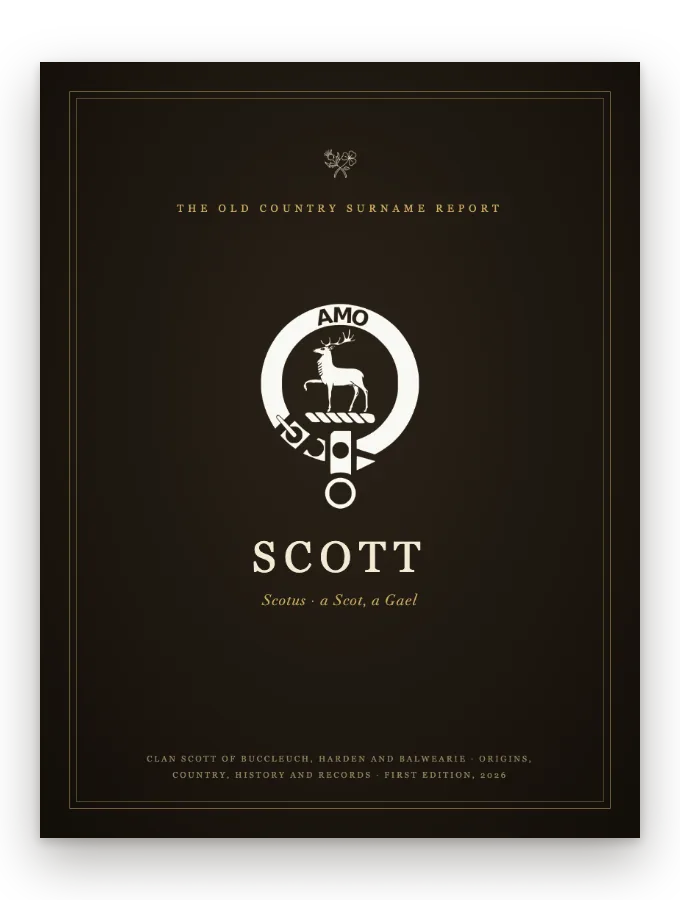
This report tells the story of the name Scott, and it starts with a small surprise: the name was never a claim to be from a place called Scotland. Scottus, in the Latin of twelfth-century charters, generally meant a Scot; in early Scottish usage it could specifically mean a Gael, a Scottish or Irish Gaelic speaker, a description one man carried among neighbours who did not speak as he did. The earliest bearer the record can actually name, Uchtred filius Scoti, son of the Scot, witnesses the founding of the burgh of Selkirk around 1120 and Earl David's inquisition around 1124, in the Borders rather than the Highlands, and his own name marks him out as a Scot, not as a claim to hail from a specific place. From that single Border byname grew a family that would hold Ettrick Forest, ride with the most feared reivers on either side of the line, produce a philosopher Dante placed among the damned, rescue a prisoner from an English castle in defiance of a queen, and stage the pageant that gave the whole world its picture of what a Scottish clan looks like.
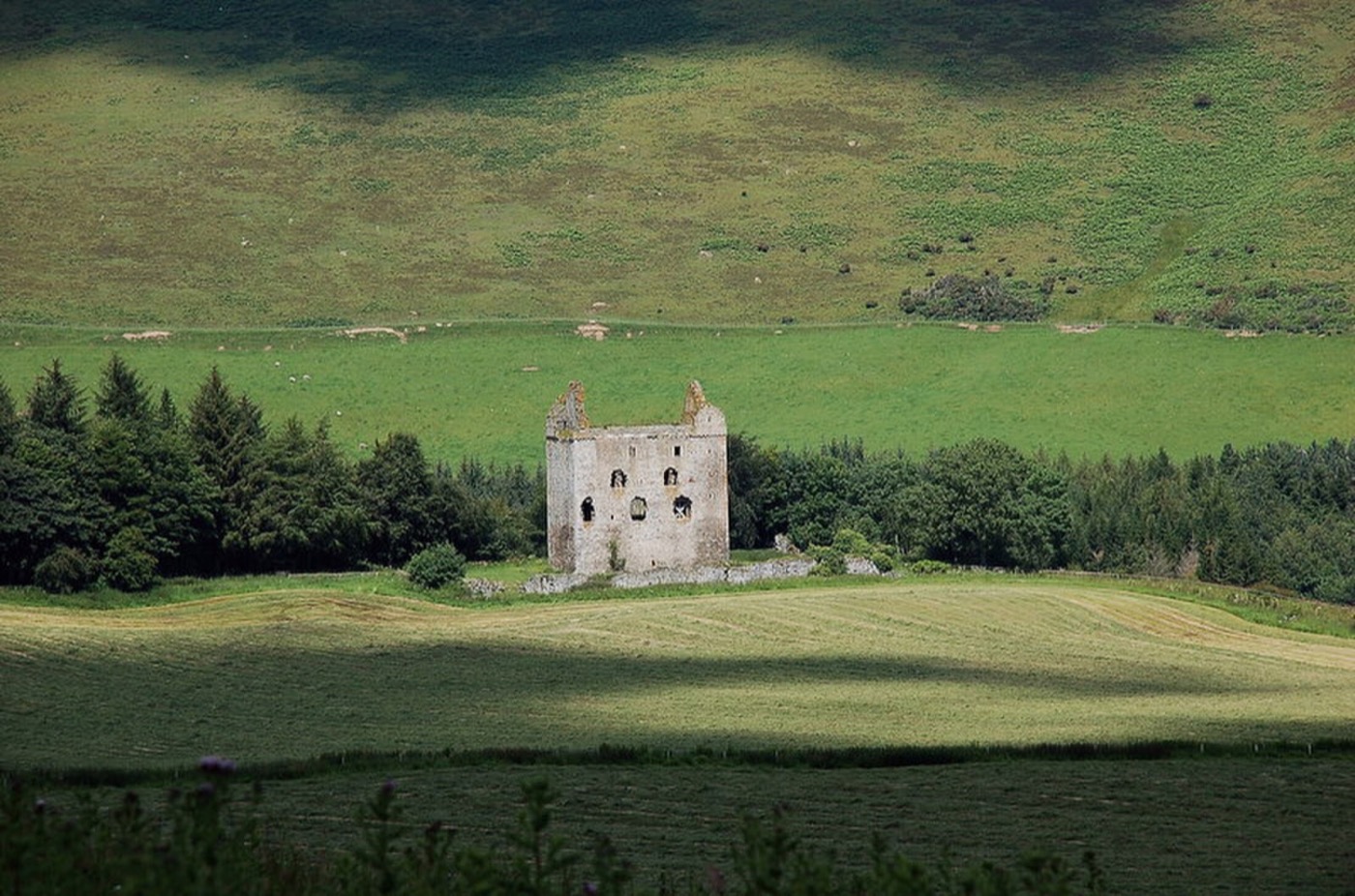
The country of this name is Border country first, an outlier in Fife second. Ettrick Forest, the wooded hill ground south of Selkirk that gave Buccleuch its name, is quiet farming and forestry land today, criss-crossed by the Ettrick and Yarrow Waters, a short drive rather than a wilderness; it does not look, at first glance, like the seat of a family that once raised armed men against a Scottish king and raided an English royal castle. Roxburghshire, immediately east, held the family's second great house at Harden and its own barony at Branxholme, ground the Kerrs contested with the Scotts for generations and the English raided as readily as the Scotts raided them back.
Balwearie, on the other side of the country in Fife, near Kirkcaldy, belongs to a different, quieter story: the traditional seat of the family that may, the ODNB's own hedge intact, have produced Michael Scot the philosopher. No Highland-style clan territory ever united these two countries under a single sword; what unites them is a shared surname whose bearers, in the Borders and in Fife alike, left their own separate paper trails.
This is not a landscape built for the visitor the way a single castle-topped glen can be. The Buccleuch estates today, Bowhill, Drumlanrig in Dumfriesshire and Boughton in Northamptonshire, are still the family's own working seats rather than museum pieces, and Selkirk, Hawick and Kirkcaldy remain working Border and Fife towns rather than heritage-trail stops, a fact this report states plainly rather than dressing the country up as more picturesque than it is.
That was one chapter. The report carries the rest: where the name comes from, the clan and its chiefs, heraldry, the stories, a timeline, migration, the name today, notable bearers, and a page on tracing your own line. Every claim sourced the same way as the chapter above.
Get the Scott report$14.99 · instant download, yours to keep and print
Not your name? Search yours, or read how we work, with another full chapter.
This history is written by AI from public-domain sources and the family's own published records, every one of them listed above. Where tradition and record disagree the text says so rather than choosing quietly. No image on this page is AI-generated.
First edition · last revised