 The Old Country
The Old Country
The Old Country
This report tells the story of the name Sinclair, and of St Clair, St. Clair, Sinclare and the handful of other spellings that are the same name in different clothes. The surname is Norman and toponymic: it comes from Saint-Clair, a place-name that occurs more than once in Normandy, and family historians still argue over which Saint-Clair the first bearers actually left: Saint-Clair-sur-Epte of the 911 treaty, Saint-Clair-sur-Elle in the Manche, or a third candidate near Pont-l'Eveque. Tradition holds that a Norman knight named William, called the Seemly for his fair looks, arrived in Scotland in the eleventh century and was granted the barony of Roslin in Midlothian; the record that can actually be checked starts later and more modestly, with the family appearing in Scottish church charters in the twelfth century. From that Lothian beginning the name spread to two more homelands entirely, Caithness on Scotland's northern coast and the Northern Isles of Orkney, after a fourteenth-century Sinclair became Earl of Orkney by the King of Norway's own hand.
The country of this name is not one place but three, won and lost at different times for different reasons. Roslin, nine miles south of Edinburgh on the North Esk, is where the documented story starts: a Lothian barony, a small stone castle, and beside it the unfinished collegiate church that became Rosslyn Chapel. It is quiet, wooded country today, a short run from Edinburgh rather than a wilderness, and it does not look like the seat that once produced earls of two other territories entirely.
Caithness, at the far northern tip of the Scottish mainland, became a Sinclair earldom in 1455 and stayed the family's power base for more than two centuries after Orkney was lost. Wick and Thurso, its two burghs, and the clifftop ruin of Castle Sinclair Girnigoe between them, are the heartland the name is most associated with today; this is bleak, wind-scoured farming and fishing country, a long day's travel from Edinburgh even now, and the earls who ruled it fought Campbells and Sutherlands, and in 1680 lost a pitched battle for the earldom itself just outside Wick.
Orkney is the shortest-held of the three, and in some ways the most consequential. Henry Sinclair held it as a Norwegian earldom from 1379; his grandson resigned Scotland's claim to it in 1470, in exchange for Ravenscraig, and by 1472 it belonged to the Scottish Crown outright. Some ninety years of Sinclair rule left the islands' own Norse-speaking population governed, for a time, by a Scottish-Norman family answering to a Norwegian king, a peculiarity this report returns to in the chapter on migration.
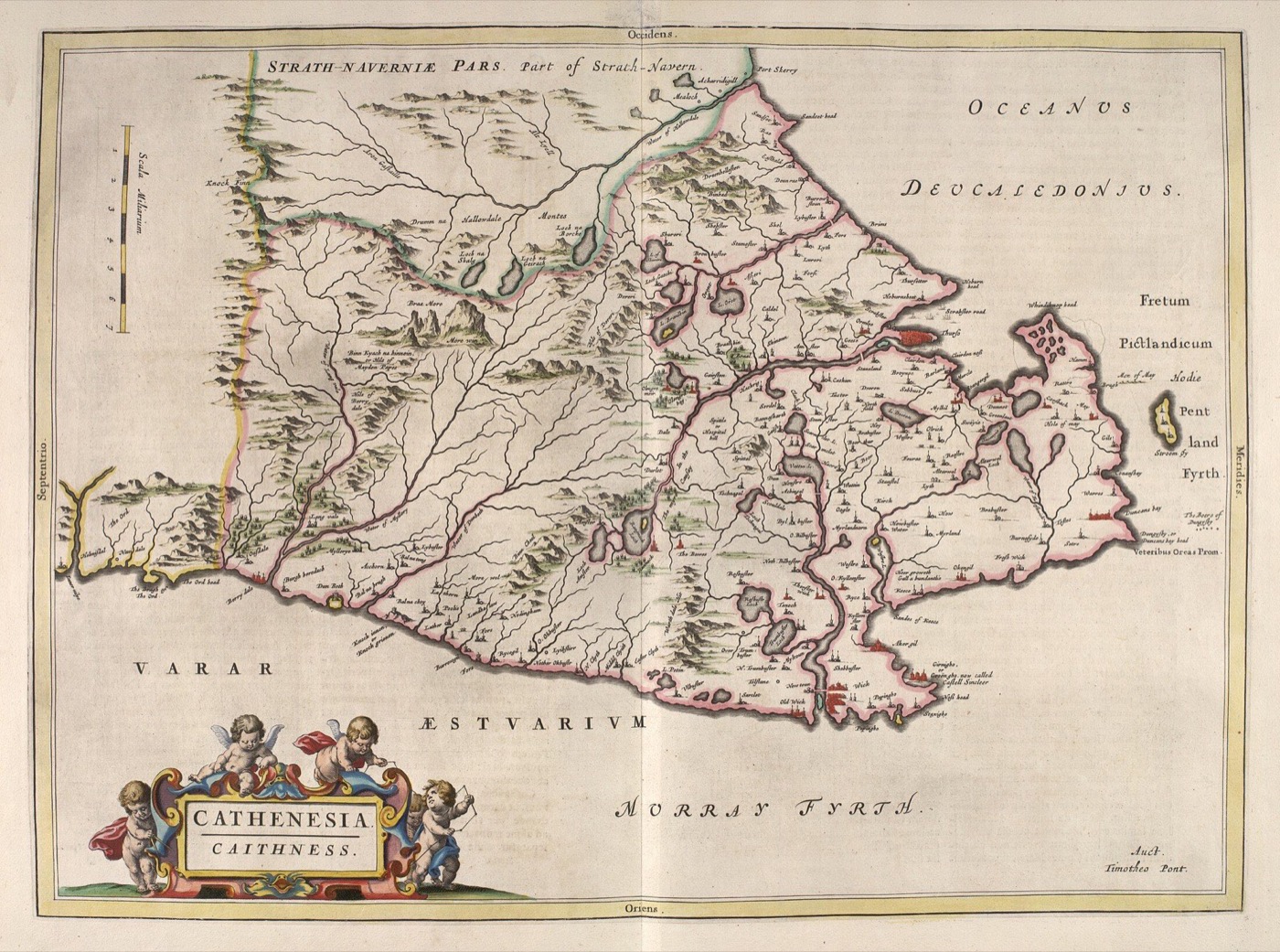
That was one chapter. The report carries the rest: where the name comes from, the clan and its chiefs, heraldry, the stories, a timeline, migration, the name today, notable bearers, and a page on tracing your own line. Every claim sourced the same way as the chapter above.
Get the Sinclair report$14.99 · instant download, yours to keep and print
Not your name? Search yours, or read how we work, with another full chapter.
This history is written by AI from public-domain sources and the family's own published records, every one of them listed above. Where tradition and record disagree the text says so rather than choosing quietly. No image on this page is AI-generated.
First edition · last revised