 The Old Country
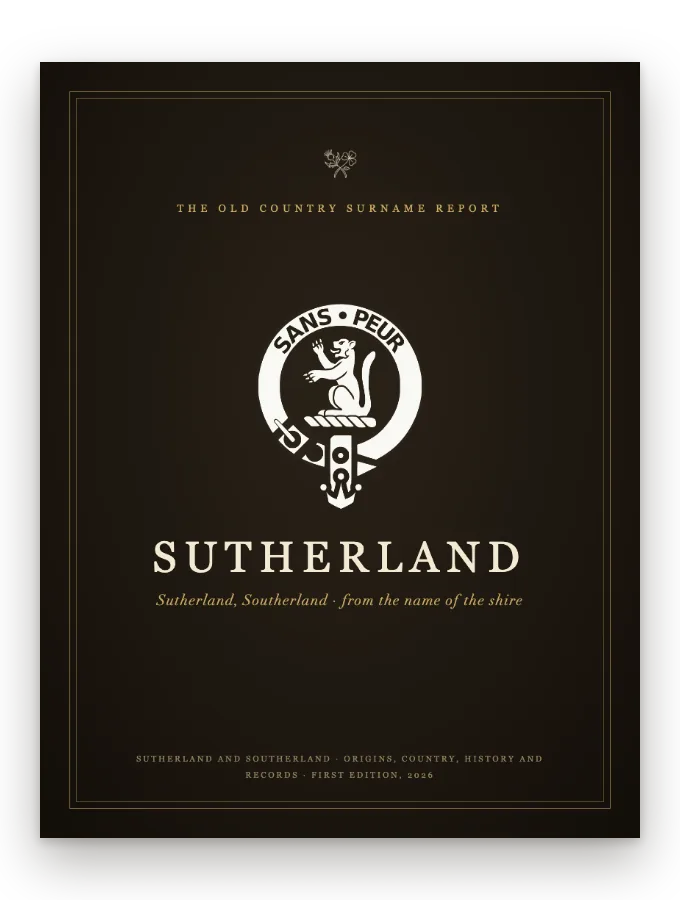
This report is about a surname that was taken from a county. George Black's Surnames of Scotland, the standard dictionary of Scottish names, opens its entry with six words: from the name of the shire. The shire is Sutherland, the southerly part of the old earldom of Caithness, and its own name is Old Norse, the south land, given to it by people who lived to its north. That makes Sutherland a name open to anyone who came from there, and the record shows it was taken by two very different kinds of family.
No email needed. It starts just below.
41 pages, 28 named sources, in your inbox within a minute.
The next page asks where to post it.
The hardback could not be added just now. Get your report here, and the hardback is offered on the next page for the same $79 in all.
Read it. If it is not the best account of your name you have seen, reply to your receipt within 14 days and we refund you.
“I have been tracing my family tree for some time, but there were certain stories that even our closest relatives never knew about. This surname report is a true deep dive. Thank you.”Susan D., reader
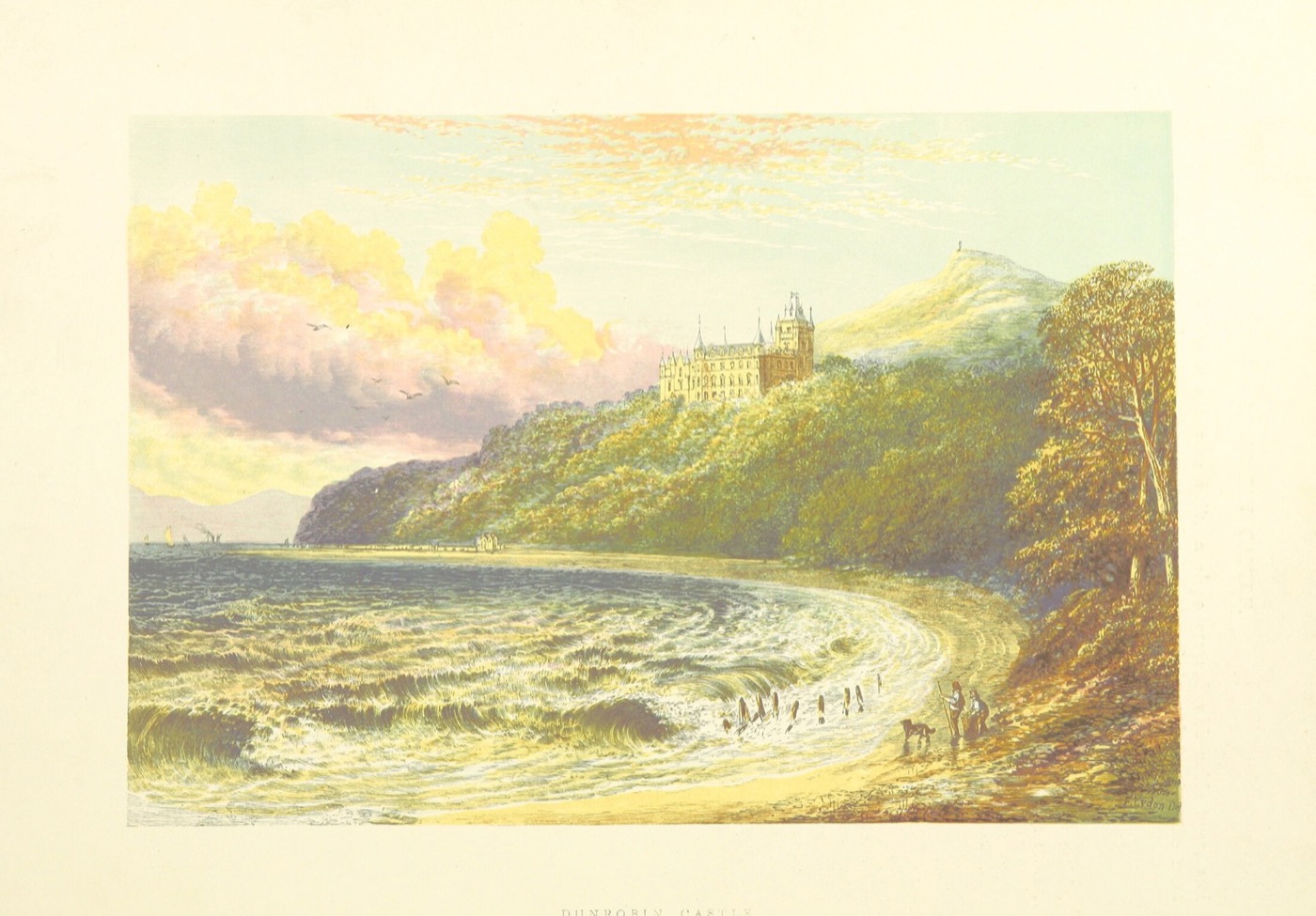
The old Sudrland was the south-east of the modern county. Dornoch, with its cathedral, is where Gordon and the Scots Peerage put the burials of the earls. Dunrobin Castle, at Golspie, is where Earl John died in 1567. Skelbo and Torboll are in the early charters, Skibo is where the boy earl of 1567 was sent for safety, and Helmsdale is where the supper of that year was eaten. Hugh Freskyn's charter of about 1211 gives Skelbo "in Suthyrlandia", and the earls took their surname from the land they held there.
The parts of the modern county outside it are where the name is found among ordinary families. Kildonan is the parish of the Scone lease of 1332, of a shepherd's son who became a minister in Nova Scotia, and of the emigrants of 1813 and 1815. Strathnaver was left out of the old Sudrland altogether, and the report on the Mackay name tells it at length. Rogart, Lairg and Clyne are the parishes from which, Patterson says, nearly all the early settlers of Earltown in Nova Scotia came.
Over the border in Caithness the name sits on Forse in Latheron, on Dunbeath and Berriedale, and on Wick, where in 1438 the wife of a Sutherland, late lord of Torboll, held a halfpenny land at her death. Beyond lie the northern isles, where the spelling keeps its d. And in Moray a Sutherland was lord of the castle of Duffus by 1408: it was the lords of Duffus, not the earls, who carried the name into Moray.
That was one chapter. The report carries the rest: where the name comes from, the clan and its chiefs, heraldry, the stories, a timeline, migration, the name today, notable bearers, and a page on tracing your own line. Every claim sourced the same way as the chapter above.
Get my report · $14.99Instant download, yours to keep and print
Read it. If it is not the best account of your name you have seen, reply to your receipt within 14 days and we refund you.
Not your name? Search yours, or read another name's free chapter.
One piece of research, three more ways to have it. Every edition includes the Sutherland report itself.
The Sutherland report and a five and a half minute film of the name, your spelling on the title.
Get the film · $39.99The Sutherland report as a hardback, posted free to your door.
Get the book · $79The report, the film and the hardback. Bought apart they are $118.99.
Get all three · $99For the wall. The Sutherland record on one framed sheet, 16 by 12 inches, $89 posted free. See the framed plate.
A gift? Send the Sutherland report on a day you choose, with a card.
This history is written from public-domain sources and the family's own published records, every one of them listed. Where tradition and record disagree the text says so rather than choosing quietly. No image on this page is AI-generated.
First edition · last revised