 The Old Country
The Old Country
The Old Country
This report tells the story of the name Campbell: what it means, where it rose, the history it carried, and how it crossed the ocean to the places its bearers live today. It is the history of a name, of the clan that made it famous and the people who wore it through eight centuries, drawn from parish registers, charters, government orders and the work of modern historians.
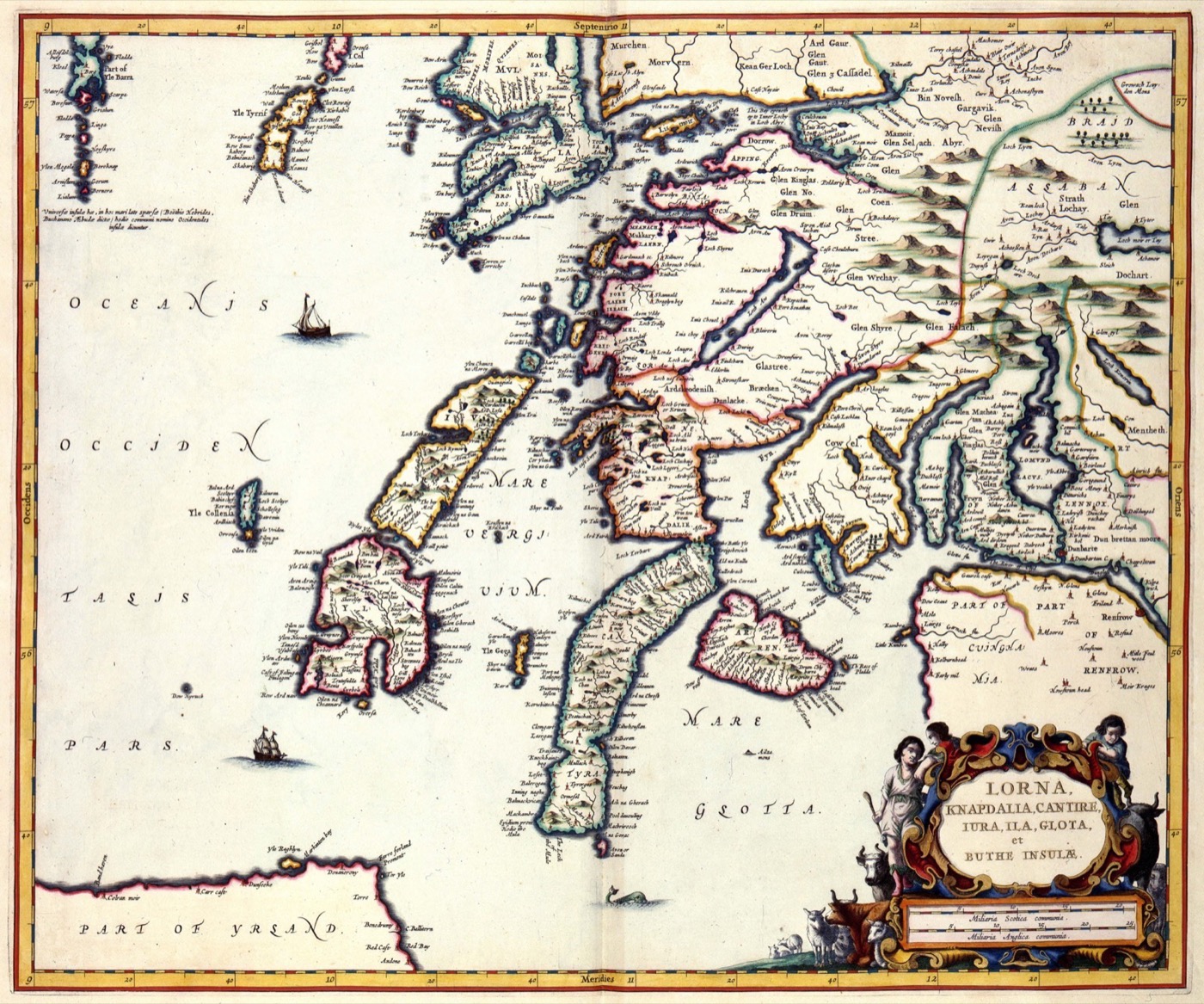
The name has a homeland you can stand in. Argyll is a country of sea-lochs and drowned glens on Scotland's western edge, a place where power always belonged to whoever commanded the water. At its heart lies Loch Awe, the longest freshwater loch in Scotland, with the mass of Ben Cruachan standing over its northern end: the mountain whose name the clan took for its war cry. The Campbells rose here precisely because the geography suited them, with an island castle on the loch, galleys on the sea-lochs either side, and the cattle-roads and kin-ties running between.
An unusual amount of it is still standing. Innis Chonnell, the island fortress where the story began, still rises from Loch Awe's southern reach. Kilchurn Castle, the Glenorchy Campbells' stronghold at the loch's head, is by common consent the most photographed castle ruin in Scotland. Inveraray, on Loch Fyne, is a double monument: the castle the Dukes raised from 1746, and beside it the first planned town in Scotland, built by the same family in the same decades, the clan's ambition expressed in Georgian streets. A few miles down the shore sits Auchindrain, the last Highland township left standing anywhere, the turf-and-stone world in which most families of the name actually lived, preserved as their castles never needed to be.
For the visitor from the diaspora it is an unreasonably convenient inheritance. Inveraray is two hours from Glasgow. The loop from there up Loch Fyne, over to Kilchurn, and down through Kilmartin Glen, where five thousand years of standing stones crowd the valley that later cradled the clan, can be driven in a day and deserves three. The name is on the shopfronts, the war memorials and the headstones the whole way. The glen your people left is still there, and it is open.
That was one chapter. The report carries the rest: where the name comes from, the clan and its chiefs, heraldry, the stories, a timeline, migration, the name today, notable bearers, and a page on tracing your own line. Every claim sourced the same way as the chapter above.
Get the Campbell report$14.99 · instant download, yours to keep and print
Not your name? Search yours, or read how we work, with another full chapter.
This history is written by AI from public-domain sources and the family's own published records, every one of them listed above. Where tradition and record disagree the text says so rather than choosing quietly. No image on this page is AI-generated.
First edition · last revised