 The Old Country
The Old Country
The Old Country
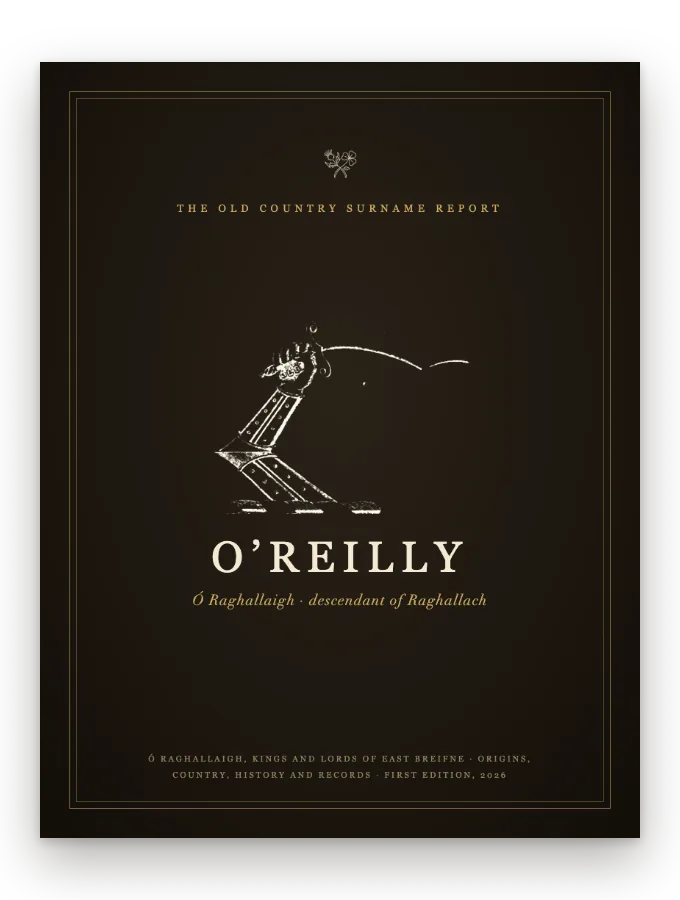
This report tells the story of a name that once meant a kingship. Ó Raghallaigh anglicises as O'Reilly, Reilly and Riley, and it belonged, for the better part of three and a half centuries, to the kings and lords of East Breifne, the territory that became County Cavan. The name means, at bottom, descendant of Raghallach, a personal name whose own meaning is not recorded; older pedigrees push the ancestry back through Fergus and Duach Galach, kings of Connacht, into the Uí Briúin Bréifne kindred that also produced the O'Rourkes of the neighbouring west. This report reads that pedigree, says so plainly, and does not borrow its certainty for the parts of the story the annals themselves can confirm.
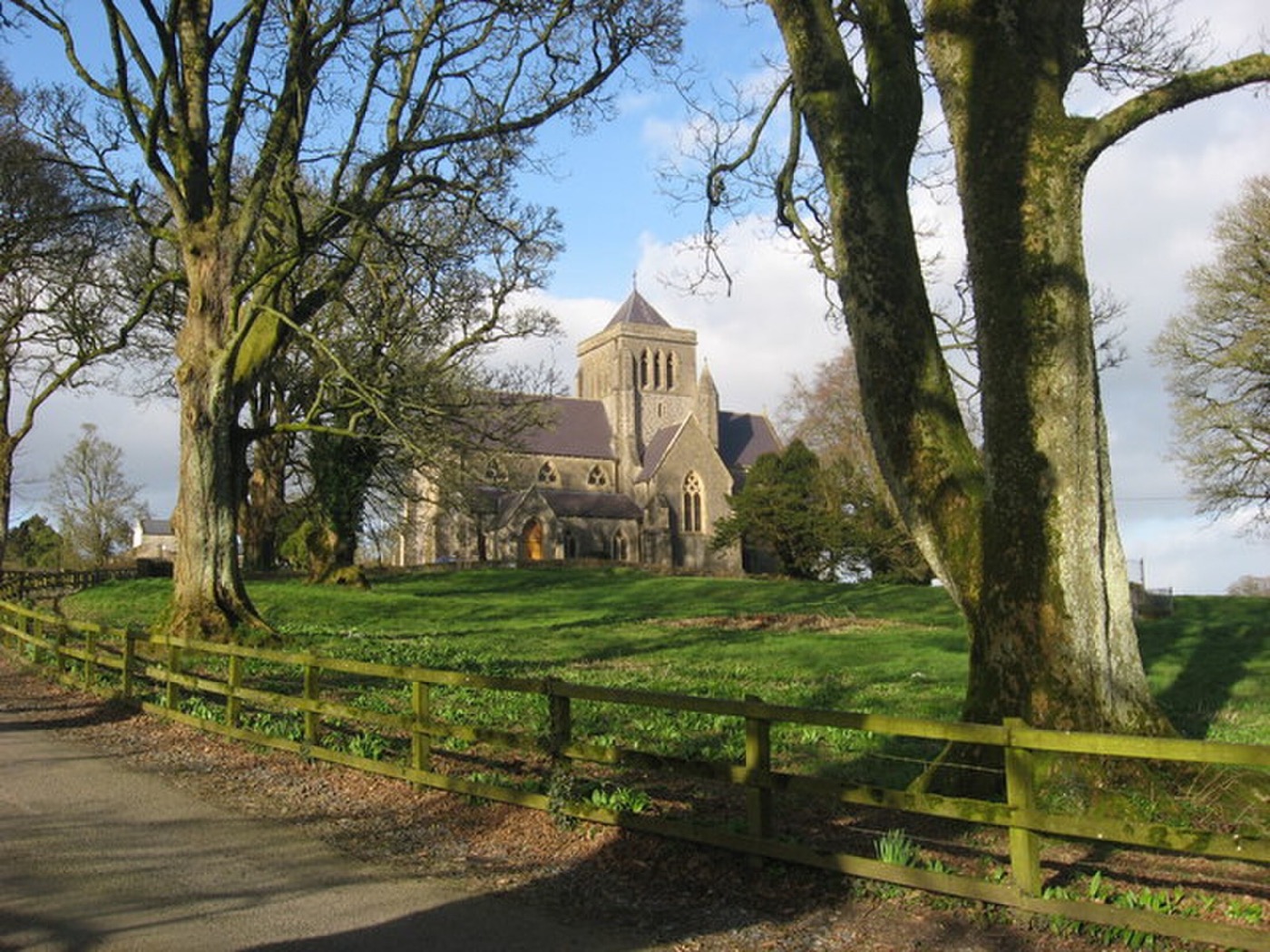
Cavan, Irish An Cabhán, describes its own ground plainly: a hollow among the low, rounded hills called drumlins that cover this whole stretch of the Irish midlands, the kind of country that made East Breifne hard to campaign through and easy to defend. Giolla Íosa Ruadh O'Reilly's fourteenth-century town grew into the O'Reillys' own market capital and, after the Composition of 1584 split the wider lordship into baronies, into the county town of the shire that replaced it. The diocese that carries the family's older, wider homeland's name, Kilmore, was formally established in 1152 at the Synod of Kells, and its ancient church at Kilmore itself, founded in the sixth century by Saint Felim, became the cathedral church of the diocese in 1454; two cathedrals stand there today, a Church of Ireland building completed in 1860 and a Roman Catholic cathedral consecrated in 1947, both carrying the name of a parish that has belonged to this story since before the O'Reilly kingship itself began.
The O'Reillys' own stronghold was not a single great castle on open ground but a defensible island keep: Cloughoughter, built by the family in the thirteenth or early fourteenth century on a crannog in Lough Oughter, a lake threaded through the same drumlin country. It is the site this report's central seventeenth-century story turns on, and it survives today as a round tower still rising from its own small island, reachable only by water. Above the town itself, the Hill of Tullymongan carried a later O'Reilly castle and, in tradition, the site where the O'Reilly kings were inaugurated in their final centuries; Chichester's administration ordered that castle seized in 1610 and granted to an English settler family, one small entry in the much larger confiscation this report's own story of the Composition and Plantation describes.
A separate and older inauguration tradition names Seantóman, a stone circle a few miles north-east of Cavan town, known locally as the fingers of Fionn mac Cumhaill; the sources checked for this report do not agree on how the two sites, Seantóman and Tullymongan, relate to one another in sequence, and this report states both as local tradition rather than settling a question the record itself leaves open. What is not in doubt is the drumlin country's own persistence: the same lakes, hollows and hills that sheltered the O'Reilly kingship for three and a half centuries are the ground the family's own name still describes, in the county arms, the diocese, and the town Giolla Íosa Ruadh built.
That was one chapter. The report carries the rest: where the name comes from, the clan and its chiefs, heraldry, the stories, a timeline, migration, the name today, notable bearers, and a page on tracing your own line. Every claim sourced the same way as the chapter above.
Get the O'Reilly report$14.99 · instant download, yours to keep and print
Not your name? Search yours, or read how we work, with another full chapter.
This history is written by AI from public-domain sources and the family's own published records, every one of them listed above. Where tradition and record disagree the text says so rather than choosing quietly. No image on this page is AI-generated.
First edition · last revised