 The Old Country
The Old Country
The Old Country
This report tells the story of the name MacArthur, and of McArthur and, on the clan association's own list, Arthur and the smaller spellings beside it. Clan Arthur believed itself, in a saying it still repeats, to be older than the hills. Its chiefly family is documented on Loch Awe from the 1490s, and clan tradition credits the family with support for Robert the Bruce and land to show for it. Then, in a single royal summons at Inverness, a MacArthur went to the block and the clan's power in Argyll never came back the same way. That is not the end of this story, only its turn: four centuries later, a Glasgow-born grandson of the same name stood behind a Wisconsin bench, and his own grandson accepted an empire's surrender, on behalf of the Allied Powers, on the deck of a battleship.
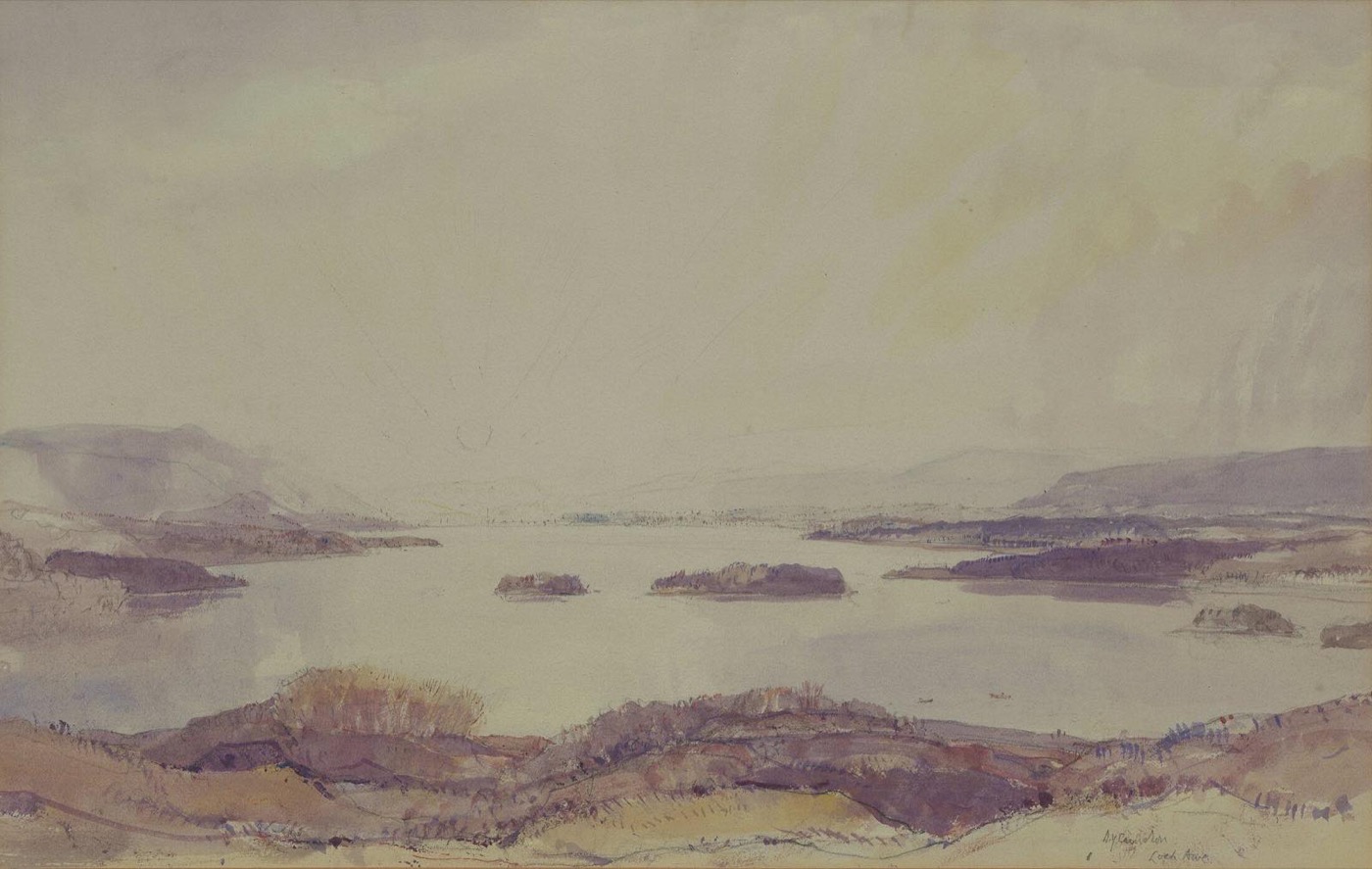
Loch Awe is a long, narrow loch running through the heart of Argyll, ringed by hills and threaded with islands, and it is the water this whole story starts from. Tirivadich, the documented seat of the chiefly line, sat on its western shore, on ground the clan association identifies with present-day Hayfield; this report has not identified surviving fabric of the chiefly house. A short way along the same loch stands Innis Chonnell, an island castle that was a Campbell stronghold for most of its working life, administered by MacArthur captains: the record shows Duncan MacArthur of Tirivadich as captain in 1567, and the family losing the office in 1613 after a later Duncan MacArthur was convicted of theft. The historic parish for this ground is Kilchrenan and Dalavich, whose registers are reached through ScotlandsPeople.
Two branch families carried the name well outside Argyll. On Islay, tradition holds that MacArthurs served as hereditary armourers to the MacDonald Lords of the Isles, based at Proaig, near the headland still called McArthur's Head; no contemporary record of the office is cited here, and the MacEacherns of Islay are separately remembered as smiths to the same lords, so it belongs in these pages as tradition rather than settled fact. On Skye, a separate MacArthur family held Hungladar, on the Trotternish peninsula near Kilmuir, as hereditary pipers to MacDonald of Sleat, a different chief from the MacLeods the more famous MacCrimmon pipers served at Dunvegan.
None of that geography explains what actually broke the clan's power on Loch Awe. For that, the story has to travel north, to a council chamber at Inverness.
That was one chapter. The report carries the rest: where the name comes from, the clan and its chiefs, heraldry, the stories, a timeline, migration, the name today, notable bearers, and a page on tracing your own line. Every claim sourced the same way as the chapter above.
Get the MacArthur report$14.99 · instant download, yours to keep and print
Not your name? Search yours, or read how we work, with another full chapter.
This history is written by AI from public-domain sources and the family's own published records, every one of them listed above. Where tradition and record disagree the text says so rather than choosing quietly. No image on this page is AI-generated.
First edition · last revised