 The Old Country
The Old Country
The Old Country
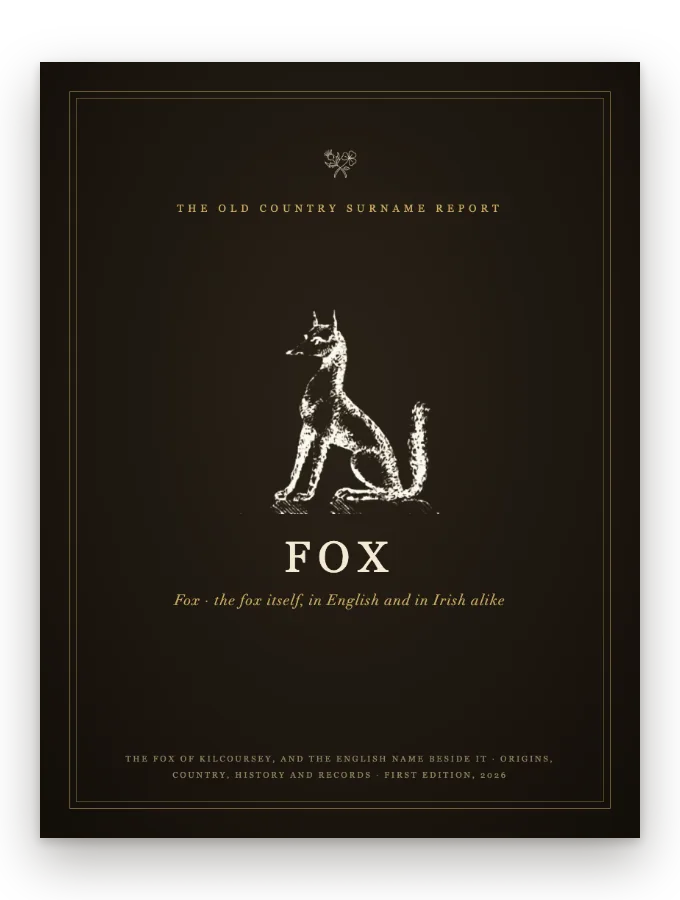
This report tells two stories under one spelling, and it keeps them apart rather than pretending they are one. In England, Fox is a nickname surname, first attached to a person thought cunning as the animal, or marked out by red hair the way the animal is marked out by its coat; a smaller thread traces instead to Faulks or Foulks, forms of a Germanic personal name. In Ireland, Fox is the settled English form of Sionnach, itself a nickname that swallowed a real surname whole: Woulfe's Sloinnte Gaedheal is Gall records a Meath family, once chiefs of all Teffia, whose patrimony narrowed over centuries to the barony of Kilcoursey in King's County, and whose head carried the plain title an Sionnach, The Fox, after an ancestor slain in 1084. Two roads, two peoples, one word for the same animal in two languages, and this report walks both rather than folding one into the other.
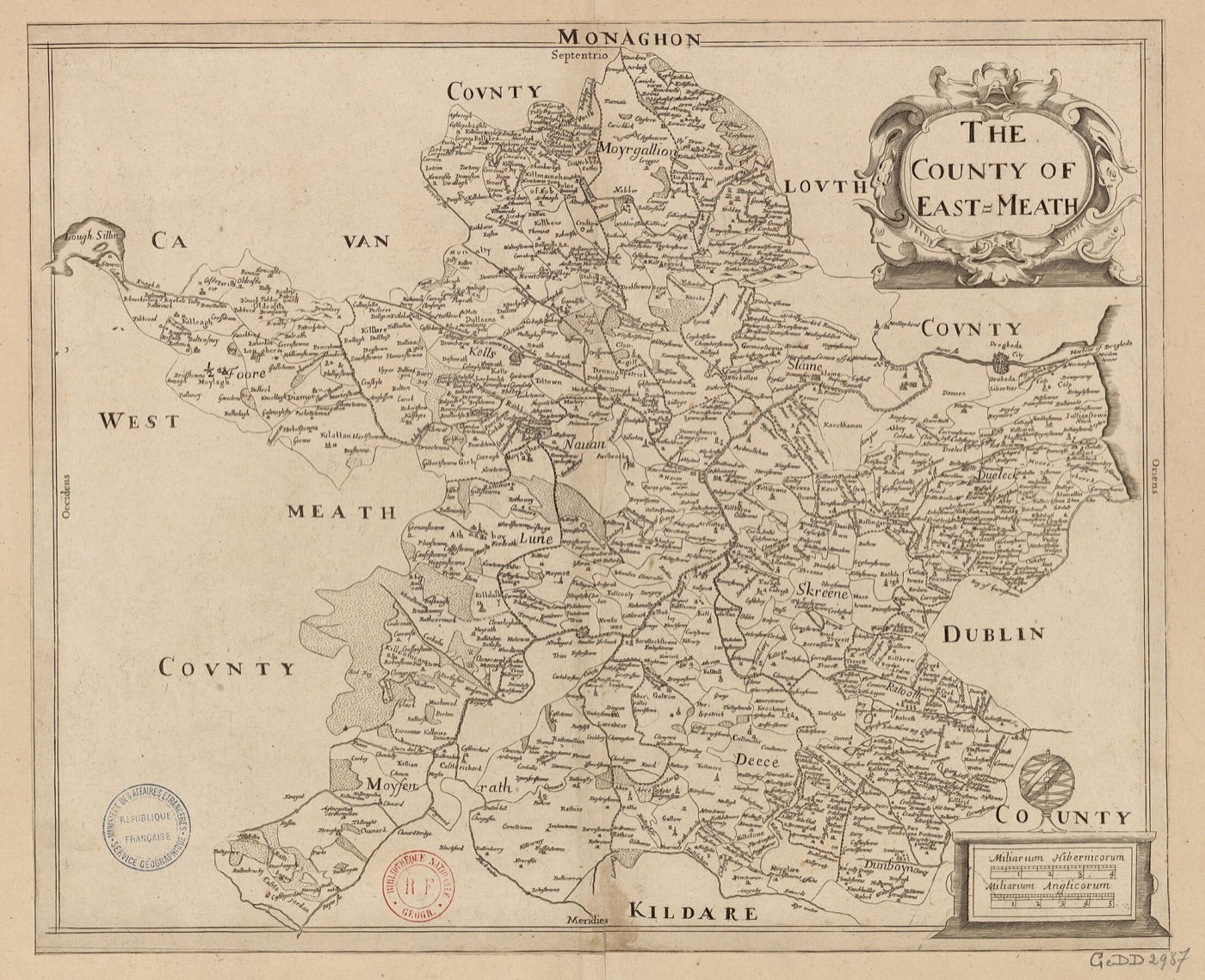
Teffia, the wider midland lordship the Ó Catharnaigh once held in full, ran across what are now Counties Westmeath and Offaly, hill and lake country between the Shannon and the plains of Meath. By the time the record catches the family in dated detail, that whole territory has narrowed to Kilcoursey, a single barony in the north of King's County taking in the modern town of Clara; Fairbairn's own armorial index still remembers the wider reach, listing the chiefs as Fox or O'Sionnach of Kilcoursey, King's Co., and Galtrim House, Co. Meath, a second seat in the county Woulfe calls the family's own origin before Teffia.
The 1526 covenant recorded between Mageoghegan and the Fox is not a curiosity found loose in an archive; it is the record of two neighbouring midland chiefs, Cinel Fhiachach and Muintir Thadhgain, settling their own affairs on their own terms, in Irish, on parchment, seventy years before either lordship answered to an English deed. Hubert Foxe's own 1599 surrender changed that permanently: the barony he held as an inherited Gaelic lordship became, in the same document, an English-law tenure, and the name of the last Fox chief to hold Kilcoursey under Gaelic law is the one the record keeps.
The family's fortunes on this ground did not end with a single dramatic collapse. Kilcoursey and its Fox proprietors were caught, like most midland Gaelic families, in the upheaval of the 1640s; O'Donovan himself records a tradition that two Fox estates, Cloghatinny and Streamstown, were lost in the troubles of 1641, though no confiscation instrument naming the chiefly line itself has been identified. A full century later, a different branch of the same name built a very different kind of seat at Foxhall in neighbouring Co. Longford, and lasted there, in slow decline, into the twentieth century.
That was one chapter. The report carries the rest: where the name comes from, the clan and its chiefs, heraldry, the stories, a timeline, migration, the name today, notable bearers, and a page on tracing your own line. Every claim sourced the same way as the chapter above.
Get the Fox report$14.99 · instant download, yours to keep and print
Not your name? Search yours, or read how we work, with another full chapter.
This history is written by AI from public-domain sources and the family's own published records, every one of them listed above. Where tradition and record disagree the text says so rather than choosing quietly. No image on this page is AI-generated.
First edition · last revised