 The Old Country
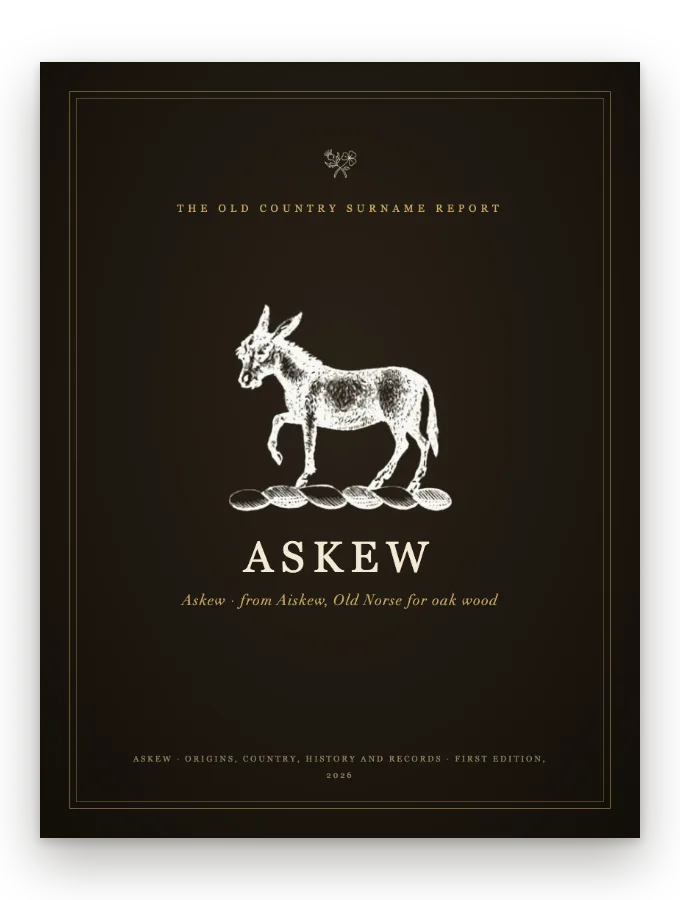
Askew comes from Aiskew, a village beside Bedale in North Yorkshire, whose Old Norse name means oak wood. It is the place's name that is Norse: a surname taken from a place tells us where a man lived, never what he was, and nothing about a reader's descent. Three dictionaries of surnames, Reaney and Wilson, the Oxford dictionary of family names and the American dictionary of family names, derive Askew from that place, and Bardsley agrees. No dictionary read gives the name another origin, so this report weighs none.
No email needed. It starts just below.
38 pages, 24 named sources, in your inbox within a minute.
The next page asks where to post it.
The hardback could not be added just now. Get your report here, and the hardback is offered on the next page for the same $79 in all.
Read it. If it is not the best account of your name you have seen, reply to your receipt within 14 days and we refund you.
“I have been tracing my family tree for some time, but there were certain stories that even our closest relatives never knew about. This surname report is a true deep dive. Thank you.”Susan D., reader
The Oxford dictionary prints the name's count in Great Britain in 1881: 3,269, "widespread in N and E England" and found especially in Lancashire, the West Riding of Yorkshire and Durham. Ainscough had 806 in 1881, in Lancashire. The same dictionary gives a current count of 4,834 for Askew, a different measure from a different source, and this report does not set the two side by side as growth.
In 1890 H. B. Guppy counted surnames among the farmers of each county, as "proportional numbers per 10,000 of the farmers in any particular county". For Askew he prints Cambridgeshire 20 and Derbyshire 6. His farmers and the 1881 population point at different counties, and neither is a count of every Askew in a county. A county missing from his row means under his threshold, not that no Askews lived there.
Across the Atlantic the first census of the United States, in 1790, has at least 39 index lines under Askew: 21 in North Carolina, 17 of them in the neighbouring counties of Bertie and Hertford (8 + 9 = 17, or 81.0 per cent of the state's lines), 7 in the Virginia lists of 1782 to 1785, 5 in Maryland, 4 in South Carolina and 2 in Pennsylvania. They are lines in an index, never people. Askewville in Bertie County was settled in the 1890s and "named for local family", the state gazetteer says; it does not name the family, and no source joins that family to the 1790 lines.
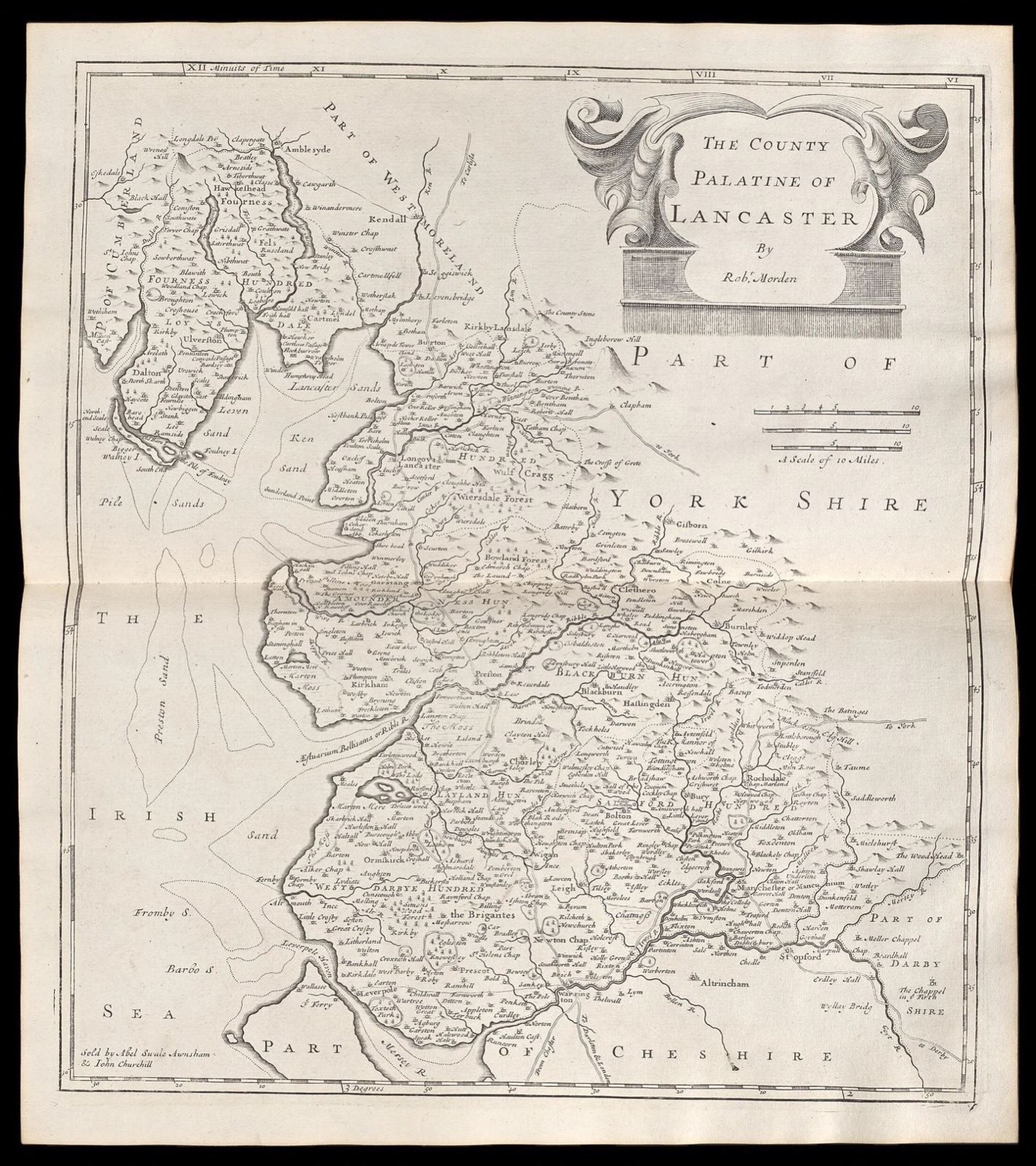
That was one chapter. The report carries the rest: where the name comes from, the family and its places, heraldry, the stories, a timeline, migration, the name today, notable bearers, and a page on tracing your own line. Every claim sourced the same way as the chapter above.
Get my report · $14.99Instant download, yours to keep and print
Read it. If it is not the best account of your name you have seen, reply to your receipt within 14 days and we refund you.
Not your name? Search yours, or read another name's free chapter.
One piece of research, three more ways to have it. Every edition includes the Askew report itself.
The Askew report and a five and a half minute film of the name, your spelling on the title.
Get the film · $39.99The report, the film and the hardback. Bought apart they are $118.99.
Get all three · $99For the wall. The Askew record on one framed sheet, 16 by 12 inches, $89 posted free. See the framed plate.
A gift? Send the Askew report on a day you choose, with a card.
This history is written from public-domain sources and the family's own published records, every one of them listed. Where tradition and record disagree the text says so rather than choosing quietly. No image on this page is AI-generated.
First edition · last revised