 The Old Country
The Old Country
The Old Country
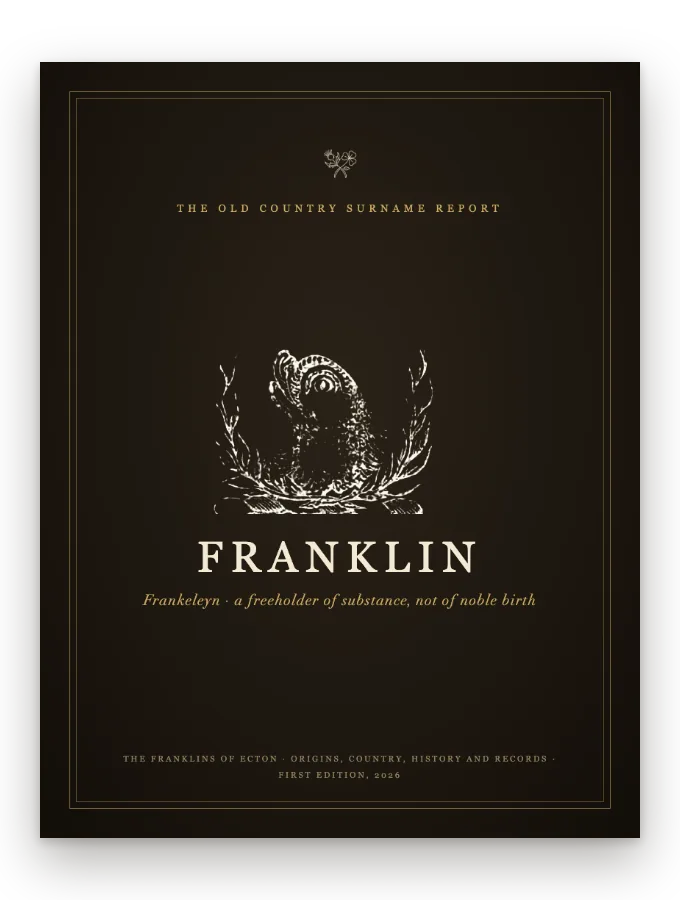
This report tells the story of a name that was never a family before it was a job description. A franklin was a freeholder of real substance: free by birth, landed, hospitable, ranked above the common freeholder while standing beneath a knight or a peer. Reaney and Wilson's Dictionary of English Surnames traces the word to Middle English frankeleyn, by way of Anglo-French fraunclein, back to franc, free. Chaucer gave the class a celebrated literary portrait in the Canterbury Tales: a franklin whose table was so well stocked it seemed to snow food and drink in his house. Because the word named a rank, not a trade, a place, or an ancestor, it was picked up independently, county after county, by families with no connection to one another. This report says so plainly, and does not pretend every Franklin shares a single line.
Ecton is a small village in Northamptonshire, in the gentle, hedged farmland of the English Midlands rather than any dramatic country, and it owes its place in this report entirely to a family, not a battle or a title. Benjamin Franklin's Autobiography is explicit about what the record there does and does not show: the parish register, searched at his own request on a visit in July 1758, held, in Franklin's own account, births, marriages and burials for the Franklin family reaching back to 1555; the rector, Eyre Whalley, wrote to him that same July that the register began on 25 September 1559, a small discrepancy between the two record-keepers this report has not resolved further. Five generations of Franklins, blacksmiths by trade, with the eldest son bred to the forge in every generation the record covers, lived and worked in Ecton across those twelve decades and more.
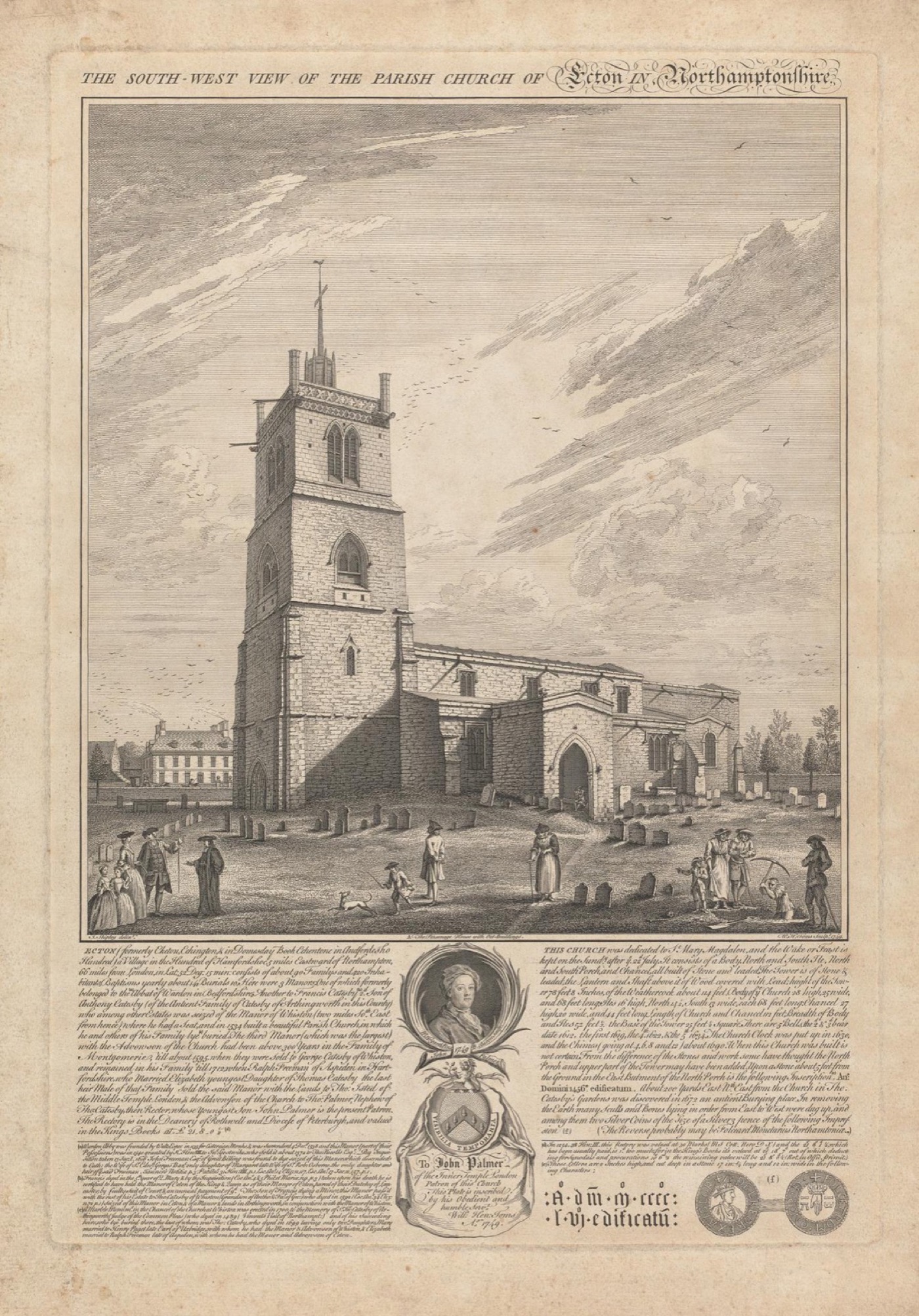
The village's own parish church, St Mary Magdalene, is the building whose register holds that three-hundred-year record, and it stood already old when the first Franklin baptism was entered in 1555. Josiah Franklin, the youngest surviving son with no trade left to inherit once his elder brothers had taken the forge and other livings, left Ecton for Boston, Massachusetts in 1683 at about twenty-five, carrying his family's trade memory rather than its land, since a thirty-acre freehold could support only one heir. The site of the Franklin family forge itself is marked in the modern village by a public house built on the same ground, a small, ordinary continuity between the blacksmiths' Ecton and the one visitors can walk through today.
Ecton is the one place this report can call a genuine Franklin homeland, in the sense that a documented family lived there across generations rather than merely sharing a surname with people who happened to live elsewhere. It is not, on its own, the origin of the surname itself, which was already old and already scattered across other English counties by the time any Franklin is recorded at Ecton at all.
That was one chapter. The report carries the rest: where the name comes from, the clan and its chiefs, heraldry, the stories, a timeline, migration, the name today, notable bearers, and a page on tracing your own line. Every claim sourced the same way as the chapter above.
Get the Franklin report$14.99 · instant download, yours to keep and print
Not your name? Search yours, or read how we work, with another full chapter.
This history is written by AI from public-domain sources and the family's own published records, every one of them listed above. Where tradition and record disagree the text says so rather than choosing quietly. No image on this page is AI-generated.
First edition · last revised