 The Old Country
The Old Country
The Old Country
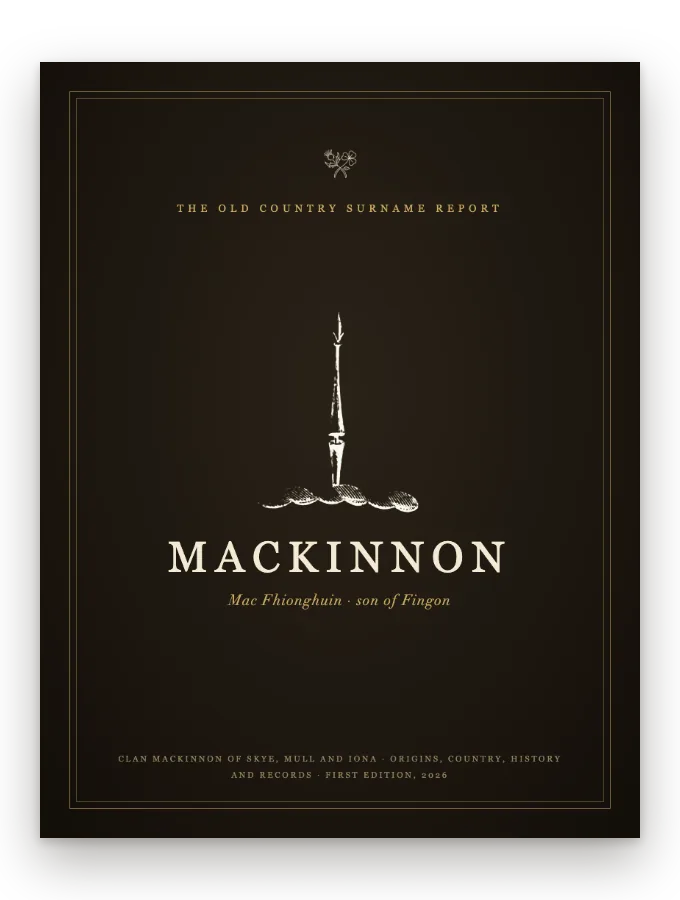
This report tells the story of a small Hebridean clan whose name means, at bottom, simply “son of Fingon”: MacKinnon, Mac Fhionghuin in Gaelic, of Skye, Mull and the abbey island of Iona. It follows the name from a single dated appearance on a 1409 charter, through more than a century of hereditary abbots on Iona, a Jacobite chief who hid a prince in a cave and paid for it with a year in an English fort, and a Campbeltown grocer's son who built a shipping empire on the coast of East Africa, to the Highland families who carried the name to Cape Breton, to New South Wales, and to a bishopric in Nova Scotia.
The MacKinnon homeland is not one place but three, linked by water rather than by a single boundary line. Mishnish, in the north of Mull, holds the earliest documented lands; Strath and Strathaird, on Skye's rugged southern coast beneath the Cuillin, became the clan's main seat, tradition says, after Bannockburn; and Iona, the small tidal island off Mull's western tip, was never MacKinnon clan land in the ordinary sense at all, but the seat of a church office the family held, generation after generation, for over a century.
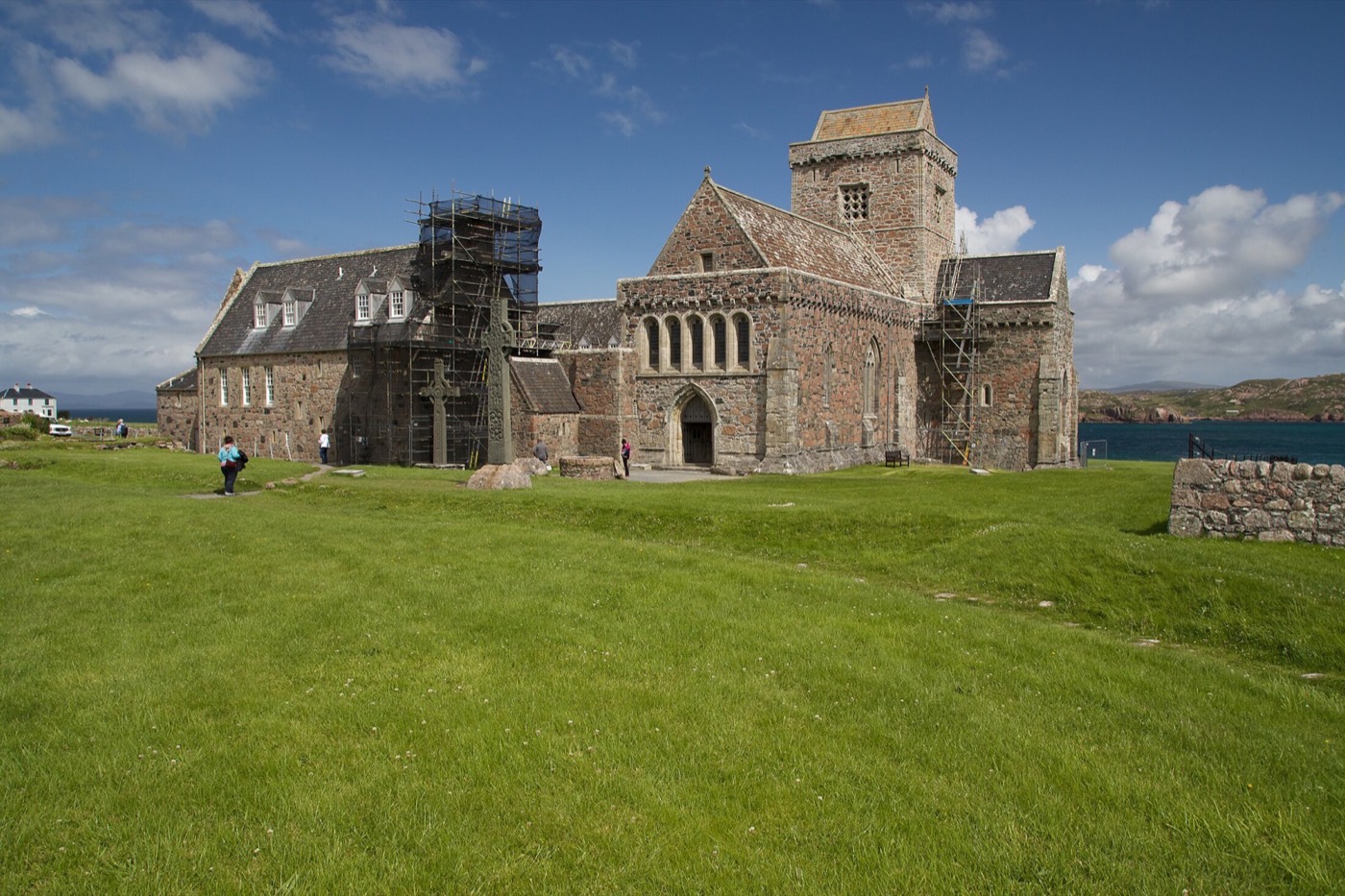
That office was the abbacy, and later the priorship, of Iona's Benedictine monastery, founded centuries earlier in the tradition of Columba. Finghuine MacFhionghain held it from at least 1357; his descendant Eoin MacFhionghain, known in English as John MacKinnon, was abbot from 1467 until about 1498 and died in 1500, two years after his abbacy is last recorded (not, as some later accounts have it, Bishop of the Isles, a title the historical record assigns to other men in this period). John MacKinnon's memorial, a finely carved stone cross dedicated in 1489, eleven years before his death, still stands on Iona today, inscribed in Latin: here lies John Macfingone, abbot of Iona, who died in the year 1500. The MacKinnons held the office; they did not own the island, which passed through the Bishopric of the Isles and, later, the Dukes of Argyll.
Dunakin, the fortified seat at Kyleakin on Skye's eastern shore, is a different kind of place again: part record, part legend. The tower that stands there today, a ruin now known as Caisteal Maol, dates mainly to the fifteenth century by its fabric, and stood watch over the narrow strait between Skye and the mainland that gives Kyleakin its name, Haakon's kyle, from a tradition that King Haakon of Norway mustered his fleet there before the Battle of Largs in 1263. An older legend, set centuries earlier still, holds that the fourth chief, Findanus, brought Dunakin into the clan by marrying a Norse princess nicknamed Saucy Mary, who ran a chain across the strait and levied a toll on every ship that passed.
That was one chapter. The report carries the rest: where the name comes from, the clan and its chiefs, heraldry, the stories, a timeline, migration, the name today, notable bearers, and a page on tracing your own line. Every claim sourced the same way as the chapter above.
Get the MacKinnon report$14.99 · instant download, yours to keep and print
Not your name? Search yours, or read how we work, with another full chapter.
This history is written by AI from public-domain sources and the family's own published records, every one of them listed above. Where tradition and record disagree the text says so rather than choosing quietly. No image on this page is AI-generated.
First edition · last revised