 The Old Country
The Old Country
The Old Country
This report tells the story of the name MacLeod, and of McLeod and Macleod, the same name wearing different centuries. It is a story that begins before Scotland reached the Hebrides at all: a Norse king's son turned Gaelic chief, a castle held by one family for some eight hundred years, a silk flag older than the clan that treasures it, and an island whose emptying scattered the name to Canada, the Carolinas, Australia and New Zealand.
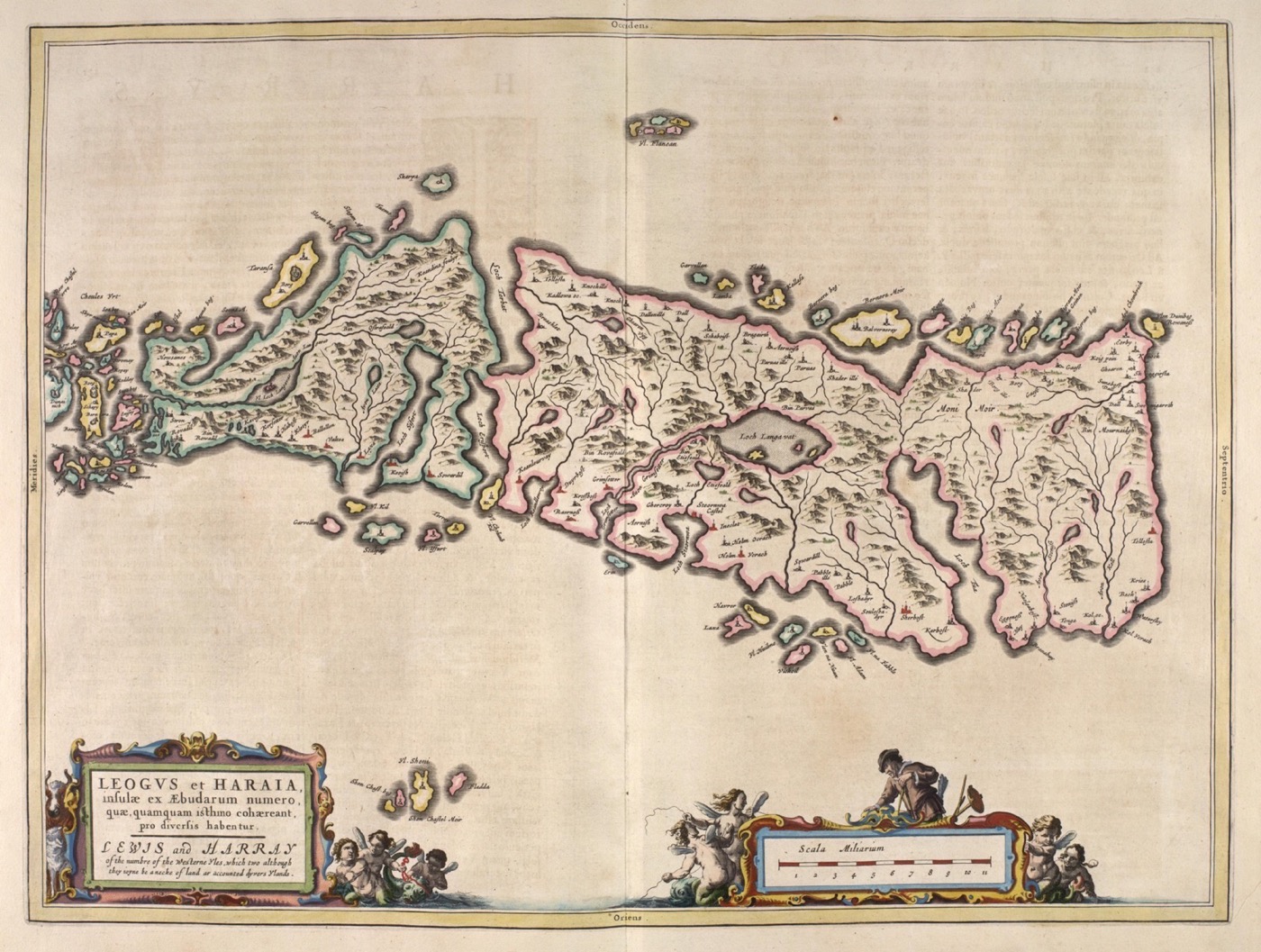
MacLeod country is two countries, and the difference between them shaped the name. Skye and Harris, the world of Siol Tormoid, are mountain and sea-loch: the Cuillin ridge black against the water, Dunvegan on its rock at the head of a sea-loch, the old sea-roads running south to Glenelg. Lewis, the world of Siol Torcaill, is the opposite country, low and immense and almost treeless, a plain of peat and lochan under a very large sky, ringed by the townships that carried the name to the ends of the earth.
Both are older than the clan by a long way. On Lewis, the stones of Callanish were raised some five thousand years ago, and they stood on that moor for three thousand years before a Norseman named Leòd was born. At Rodel in Harris, the church of St Clement holds the great carved tomb of Alasdair Crotach, the eighth chief, cut in 1528 and still the finest medieval monument in the Isles: a galley under sail, a castle, a hunting scene, and the chief in armour, in a building on the edge of the Atlantic.
For the traveller, the run is one of the great journeys in Scotland. Dunvegan on Skye, then the ferry from Uig across the Minch to Tarbert on Harris, up the spine of the island past Rodel and the shell-sand beaches, and on into Lewis for Callanish, Carloway broch and the blackhouse village at Gearrannan. Every mile of it is a place the name came from, and every mile has a war memorial with MacLeods on it.
That was one chapter. The report carries the rest: where the name comes from, the clan and its chiefs, heraldry, the stories, a timeline, migration, the name today, notable bearers, and a page on tracing your own line. Every claim sourced the same way as the chapter above.
Get the MacLeod report$14.99 · instant download, yours to keep and print
Not your name? Search yours, or read how we work, with another full chapter.
This history is written by AI from public-domain sources and the family's own published records, every one of them listed above. Where tradition and record disagree the text says so rather than choosing quietly. No image on this page is AI-generated.
First edition · last revised