 The Old Country
The Old Country
The Old Country
This report tells the story of the name Macpherson, Mac a' Phearsain in Scottish Gaelic, son of the parson, and it tells that story deliberately narrow. This shelf already carries a report on Clan Macpherson itself, sold under the name Smith, because Gow, the Gaelic word for a smith, is a recognised Clan Chattan sept whose bearers anglicised to that English surname; that report walks the wider confederation, its septs and its associated families in full. This one turns instead on the name Macpherson: the men and women who carried it, the documents that first caught it in ink, the chief who spent nine years hiding from a government reward on his own head, the poet who built an international literary sensation out of it and then had to answer for how he built it, and the records that carried the name from Badenoch to Nova Scotia and to Australia.
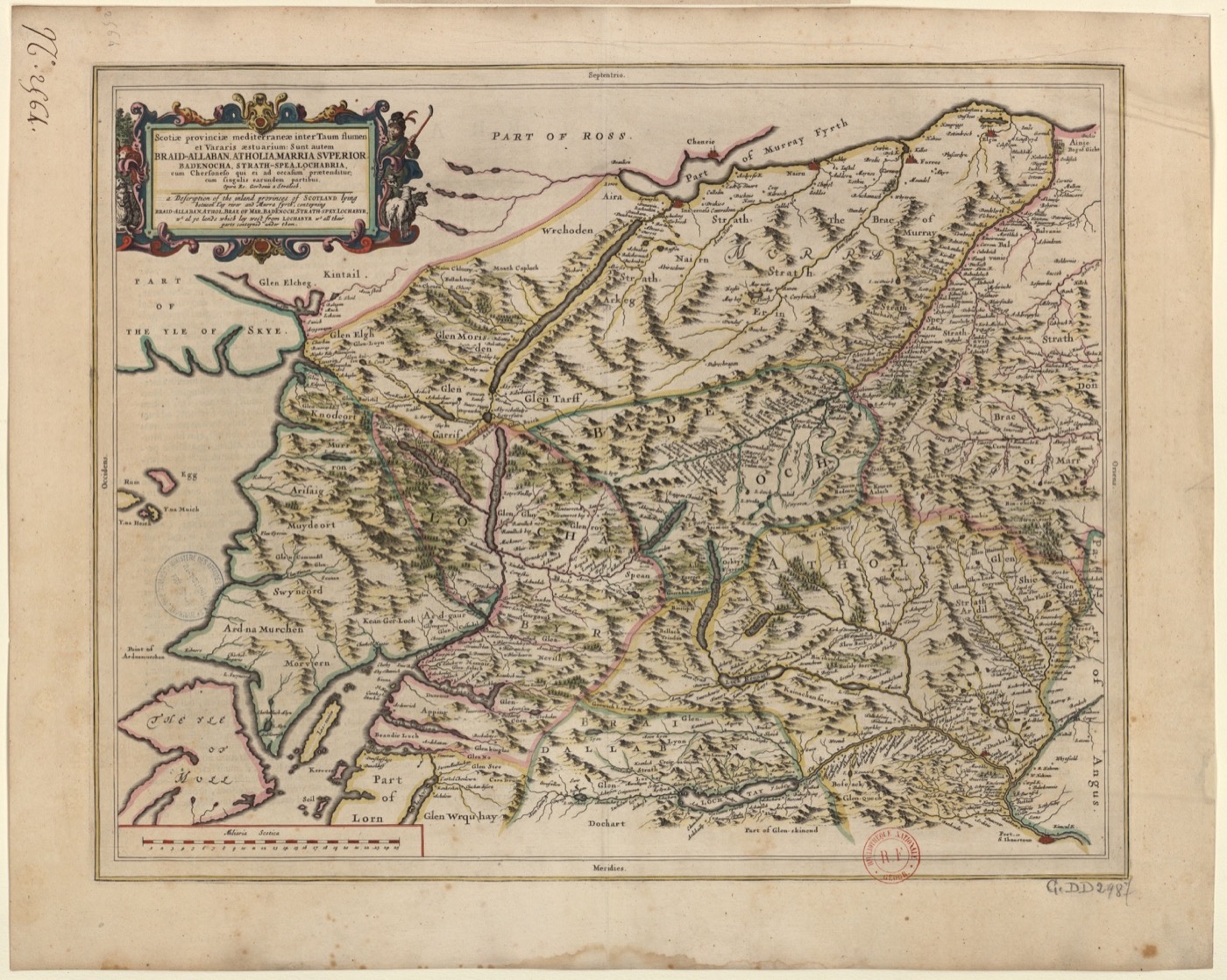
Badenoch is Highland Inverness-shire's upper Spey valley, a broad, forested strath running from Newtonmore and Kingussie in the west toward the Cairngorms' own western flank, farming and forestry country rather than a single defended glen. Robert Gordon of Straloch's map, engraved for Blaeu's 1654 atlas, sets the district plainly alongside its neighbours, Atholl, Mar, Strathspey and Lochaber, the whole Central Highland block the Macphersons and their Clan Chattan confederates once dominated between them.
The district's own record runs deeper than the Macpherson name itself. The Comyns held much of Badenoch until the early fourteenth century, when their opposition to Robert the Bruce cost them their lands there; the Macphersons' own rise across the two centuries that followed built itself, marriage by marriage and feu charter by feu charter, on ground the Comyns had once ruled outright. Kingussie, the district's oldest parish centre, sits a few miles from Ruthven, where a government barracks, built in the 1720s on the site of an older fort, would later fall briefly to a Jacobite raiding party in 1745 before surrendering the following year; it is also, more famously for this report's purposes, the parish James Macpherson was born into in 1736.
Cluny itself, the chiefly seat, lies further west along the Spey in the parish of Laggan, the same parish the record's own Duncan the Parson held his teinds from four centuries before any Macpherson chief built a house there. The present Cluny Castle, begun in 1800 and completed a decade later, stands on the ground of an older stronghold that government troops burned in 1746; the family that built the new house had waited most of a lifetime to be allowed back onto it.
That was one chapter. The report carries the rest: where the name comes from, the clan and its chiefs, heraldry, the stories, a timeline, migration, the name today, notable bearers, and a page on tracing your own line. Every claim sourced the same way as the chapter above.
Get the MacPherson report$14.99 · instant download, yours to keep and print
Not your name? Search yours, or read how we work, with another full chapter.
This history is written by AI from public-domain sources and the family's own published records, every one of them listed above. Where tradition and record disagree the text says so rather than choosing quietly. No image on this page is AI-generated.
First edition · last revised