 The Old Country
The Old Country
The Old Country
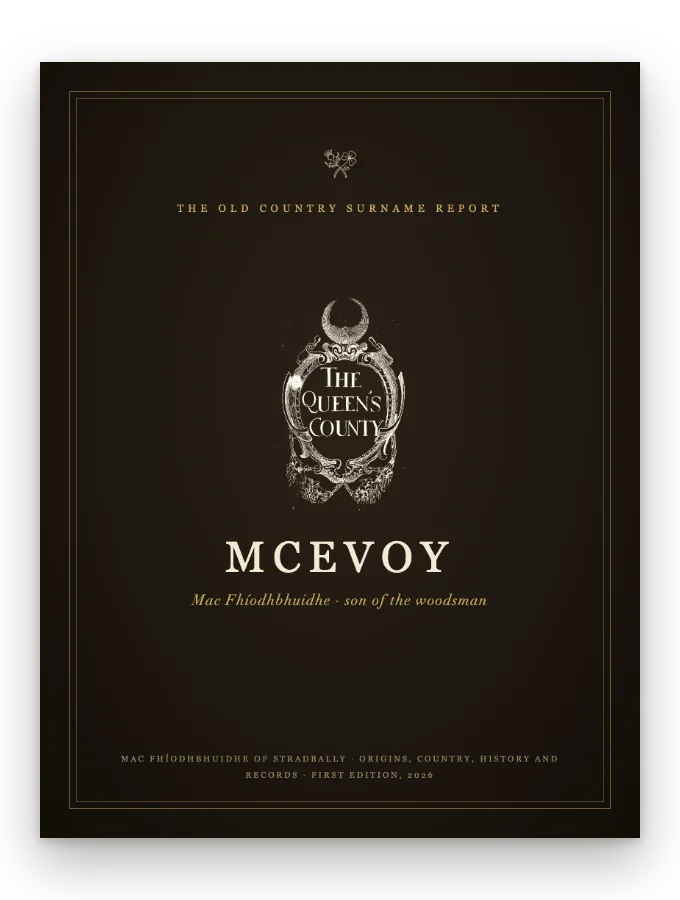
This report tells the story of a midlands Irish sept whose name is a workman's description, not a boast: Mac Fhíodhbhuidhe, son of Fíodhbhadhach, built from fiodhbhadh, woodland, and meaning at bottom "of the wood, woodman." Woulfe's Sloinnte Gaedheal is Gall places the family plainly, chiefs of Tuath-Fiodhbhuidhe, a district in the barony of Stradbally, Queen's County, who had earlier held a different territory again, Hy-Mac-Vais in the barony of Moygoish, County Westmeath. Burke's General Armory adds that they were reckoned of the Clan Colla, the legendary conquerors of ancient Ulster, a pedigree this report reads as tradition, not as settled history, while the Moygoish and Stradbally homelands themselves are independently attested and treated as record.
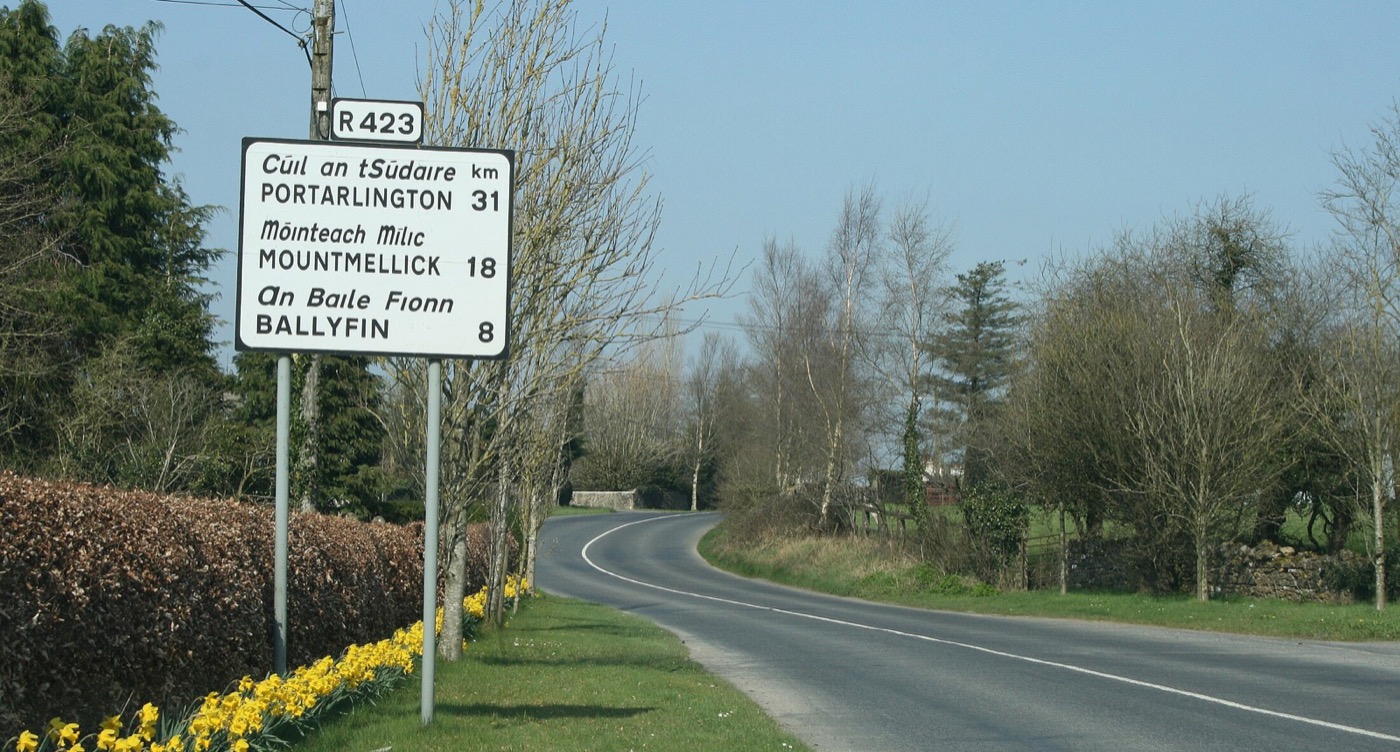
Stradbally is a barony in the north-east of County Laois, hill and river country on the road between Portlaoise, the old Maryborough, and Athy, the kind of ground a midlands family could hold for generations without ever ruling a whole province. Within it, Woulfe names Tuath-Fiodhbhuidhe as the MacEvoys' own district, a name that survives today chiefly in the family's own, carrying it into the barony's own record long after the chieftaincy that once held the land was broken. The parishes of Mountrath and Raheen, within the wider barony, are named in multiple modern accounts as the family's own recorded holding, though this report notes that no single primary grant naming those two parishes specifically was independently re-verified this session.
The MacEvoys did not come to Stradbally first. Burke's General Armory records an earlier seat again, Hy-Mac-Vais in the barony of Moygoish, County Westmeath, a territory the family is said to have held as descendants of the legendary Three Collas before the recorded move south-west into Laois. No source checked for this report gives an exact date for that move, and none is invented here; what can be said is that both territories, Moygoish and Stradbally, are independently named across the sources this report checked, and that the family's own later history, the Mullaghmast slaying and the Tarbert exile alike, belongs entirely to the Laois chapter of that story, not the Westmeath one.
A few miles east of Stradbally, in County Kildare, stands the ráth of Mullaghmast, an ancient earthwork with no MacEvoy garrison and no MacEvoy tradition attached to the site itself before 1577; it entered this family's story only on the day it became a killing ground. This report's homeland chapter therefore carries two very different kinds of ground: the barony the family held and farmed for generations, and the neighbouring county where that holding was ended in an afternoon.
That was one chapter. The report carries the rest: where the name comes from, the clan and its chiefs, heraldry, the stories, a timeline, migration, the name today, notable bearers, and a page on tracing your own line. Every claim sourced the same way as the chapter above.
Get the McEvoy report$14.99 · instant download, yours to keep and print
Not your name? Search yours, or read how we work, with another full chapter.
This history is written by AI from public-domain sources and the family's own published records, every one of them listed above. Where tradition and record disagree the text says so rather than choosing quietly. No image on this page is AI-generated.
First edition · last revised