 The Old Country
The Old Country
The Old Country
Gray is the 87th largest surname in the United States, 246,116 people at the 2010 Census, with a further 12,680 recorded under the parallel spelling Grey. This report treats Gray and Grey as one name, because the record does: the same families, the same crest, the same history, spelled two ways depending on which side of an ocean, or which century, wrote it down.
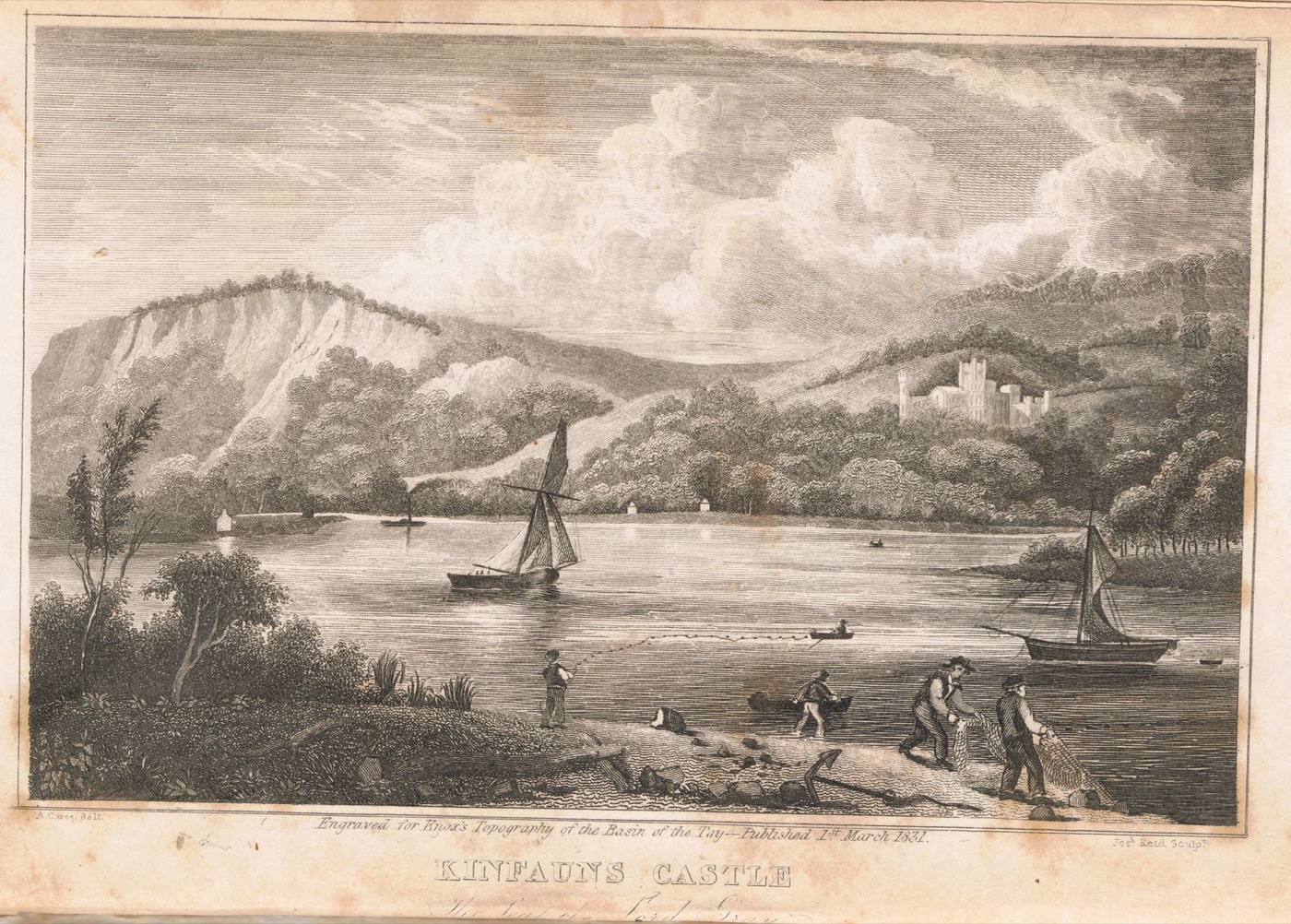
This name's places run in two directions at once. The Scottish baronial line moved north and east across four centuries: Fowlis, in Angus, the original seat from the 1377 marriage that brought it into the family; Broughty, on the Tay estuary near Dundee, granted in 1490 with authority to build (the tower probably raised around 1500), and held until 1666; Kinfauns, in Perthshire, held from the 1740s until it passed out of the Gray male line in 1878 (Balmerino, in Fife, the second seat the family's own recorded blazon names, reached the line later, through the Moray connection, not the 1741 Kinfauns marriage). A cadet branch reached further still, to Skibo, in Sutherland, where a Gray held the castle's constableship in the Earls of Sutherland's service from 1565.
The other direction points back across the Channel, to Graye-sur-Mer, a small commune on the Calvados coast of Normandy, the place Harrison ties to this name, citing its form Graeium in 1086, and the place Reaney and Wilson give for the byname of Anschitill de Grai, a tenant in Domesday Book. Clan tradition derives the Scottish Grays from the Norman Greys by way of the Greys of Chillingham, but no documented line connects the place-name Graye itself to the later Scottish barons; this report shows the place because it is the place the record itself points to, not because any bearer's descent from it is proven.
The first Lord Gray's own monument is at Fowlis itself. By January 1450 a petition to the pope already spoke of the collegiate church Andrew, Lord Gray, meant to found in his town of Fowlis, and an inscription at the church records its building in 1453, though the college was not fully established until after 1514. The church is still there, and so are its fifteenth-century paintings from before the Reformation: a Crucifixion painted across eighteen oak boards, and apostles and saints on eleven more.
That was one chapter. The report carries the rest: where the name comes from, the clan and its chiefs, heraldry, the stories, a timeline, migration, the name today, notable bearers, and a page on tracing your own line. Every claim sourced the same way as the chapter above.
Get the Gray report$14.99 · instant download, yours to keep and print
Not your name? Search yours, or read how we work, with another full chapter.
This history is written by AI from public-domain sources and the family's own published records, every one of them listed above. Where tradition and record disagree the text says so rather than choosing quietly. No image on this page is AI-generated.
First edition · last revised