 The Old Country
The Old Country
The Old Country
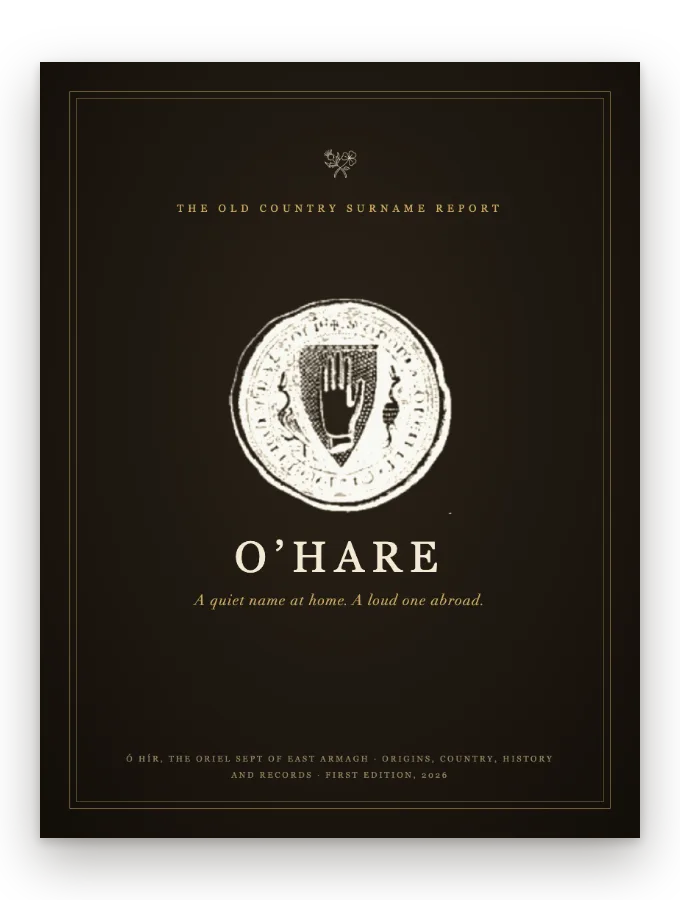
This report tells the story of a small Ulster surname whose documented centre has barely shifted across the records that do survive, and whose most famous modern bearers made an extraordinary journey a long way from it. O'Hare anglicises Ó hÍr, a name whose own meaning is uncertain rather than settled: the reference works that gloss it do not agree, and this report says so plainly rather than choosing a favourite. It was never one of Ireland's largest surnames: one aggregator of modern census data ranks it around the 39,647th most common name worldwide, a figure worth treating as approximate rather than exact.
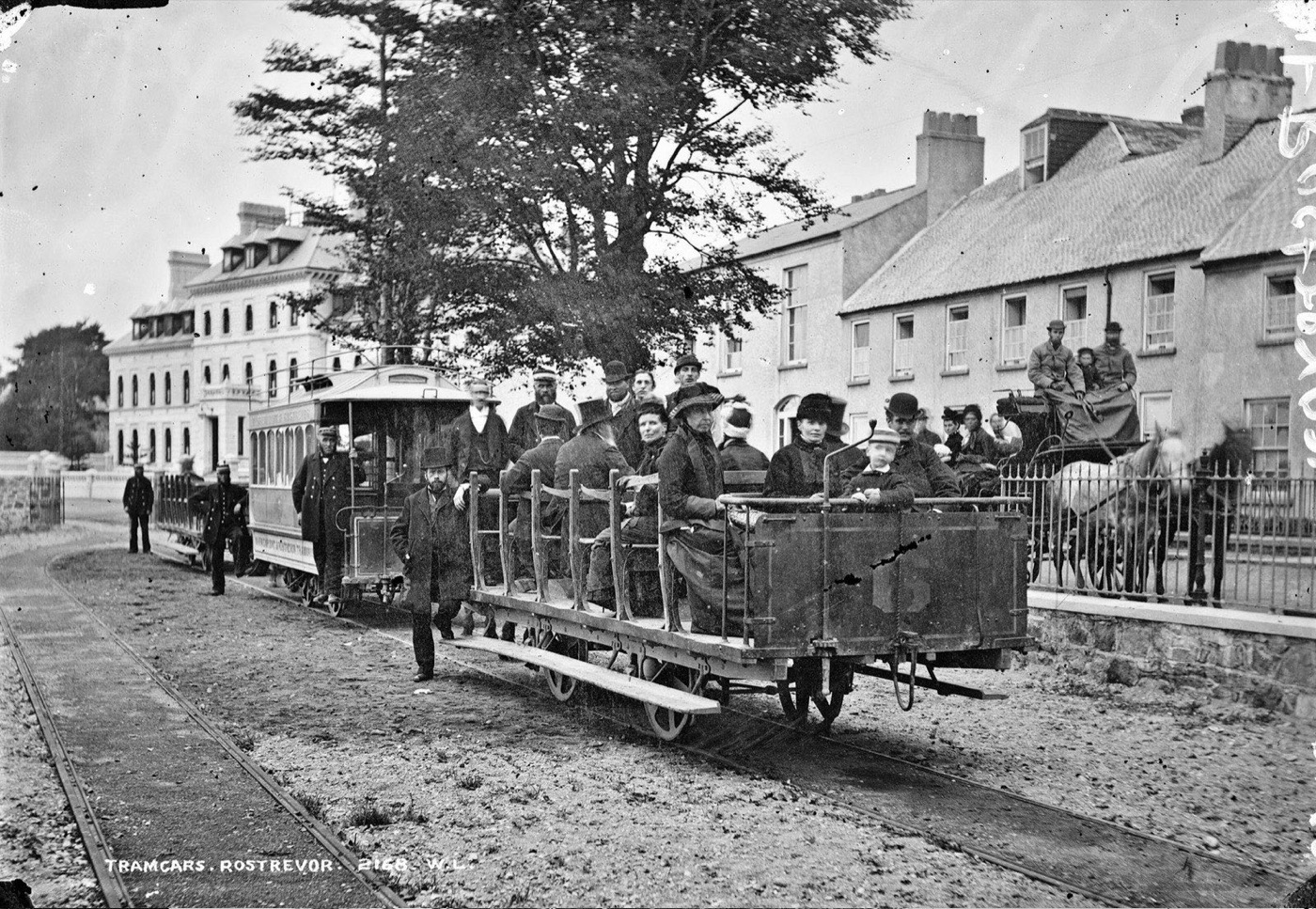
South Armagh is Ring of Gullion country: a landscape of round hills radiating out from Slieve Gullion itself, the extinct volcano and passage tomb summit that gives the ring its name, bordered by the baronies of Fews and Orior. Orier, the barony the reference works associate with Ó hÍr, lies on the ring's eastern flank, and its southern edge narrows into the Moyry Pass, the ancient defile between Ulster and the rest of Ireland that has been fought over since before written record and is still known locally as the Gap of the North: nearby geography, and the historic pass into this country, rather than documented O'Hare property.
This is also, not by coincidence, close to the ground Matheson's 1890 birth index points to. Newry, straddling the boundary of Armagh and Down some ten miles north of the Louth border, sits at the southern gateway of Orier and was held by the O'Hanlons, Ó hÍr's stated kin, as the leading Gaelic Catholic family through the eighteenth century. A few miles north, Killeavy, at the foot of Slieve Gullion, and Creggan, in the neighbouring barony of the Fews, both sat inside the wider Oriel homeland this family is associated with. None of these places carries a document naming an individual O'Hare, and that honesty is worth keeping in view. What the search for this report did find is the territory itself, continuously inhabited by the sept's kin and neighbours for centuries.
Rathfriland, County Down, over the hills to the east, is the one exception, and the strongest single O'Hare place in the whole homeland: it is the documented birthplace, on 23 April 1835, of Catherine O'Hare, later Schubert, whose own story is told in full later in this report.
That was one chapter. The report carries the rest: where the name comes from, the clan and its chiefs, heraldry, the stories, a timeline, migration, the name today, notable bearers, and a page on tracing your own line. Every claim sourced the same way as the chapter above.
Get the O'Hare report$14.99 · instant download, yours to keep and print
Not your name? Search yours, or read how we work, with another full chapter.
This history is written by AI from public-domain sources and the family's own published records, every one of them listed above. Where tradition and record disagree the text says so rather than choosing quietly. No image on this page is AI-generated.
First edition · last revised