 The Old Country
The Old Country
The Old Country
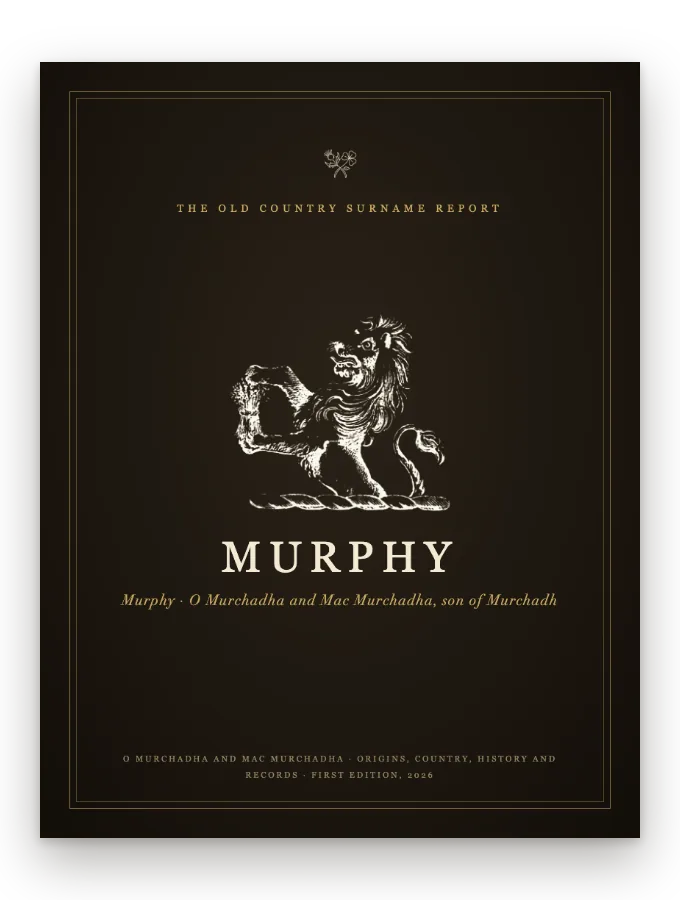
Murphy is the single most common surname in Ireland, and has been since the record allows the claim to be tested: Robert Matheson's 1894 Special Report on Surnames in Ireland put it first among the hundred most numerous names in the country, an estimated 62,600 people, thirteen in every thousand, drawn from the births registered in 1890. What that plain fact hides is that Murphy is not one family's name at all. It anglicises two related but separate Irish originals, O Murchadha, descendant of Murchadh, and, in Ulster, Mac Murchadha, son of Murchadh, and the antiquarian Patrick Woulfe names three wholly unconnected O Murchadha families before he is finished: one in County Tyrone, one on the shore of Sligo Bay, one in County Wexford. A fourth, separately anglicised Mac Murchadha line in Ulster adds a fifth thread, and Edward MacLysaght records a further Munster sept, around Cork's own River Lee valley. This report keeps all of them apart rather than inventing one ancestor to explain a name that plainly never had just one.
Most reports in this series can point to one homeland. This one cannot, honestly, because the record itself will not allow it. Munster, Ulster, Connacht and Leinster each carried a family of this name before the seventeenth century was out, and the modern count still shows the same spread: the 1901 census indexes 14,533 people surnamed Murphy in Cork and the 1911 census 14,105, with Dublin next at 5,783 in 1901 and Wexford third at 5,506.
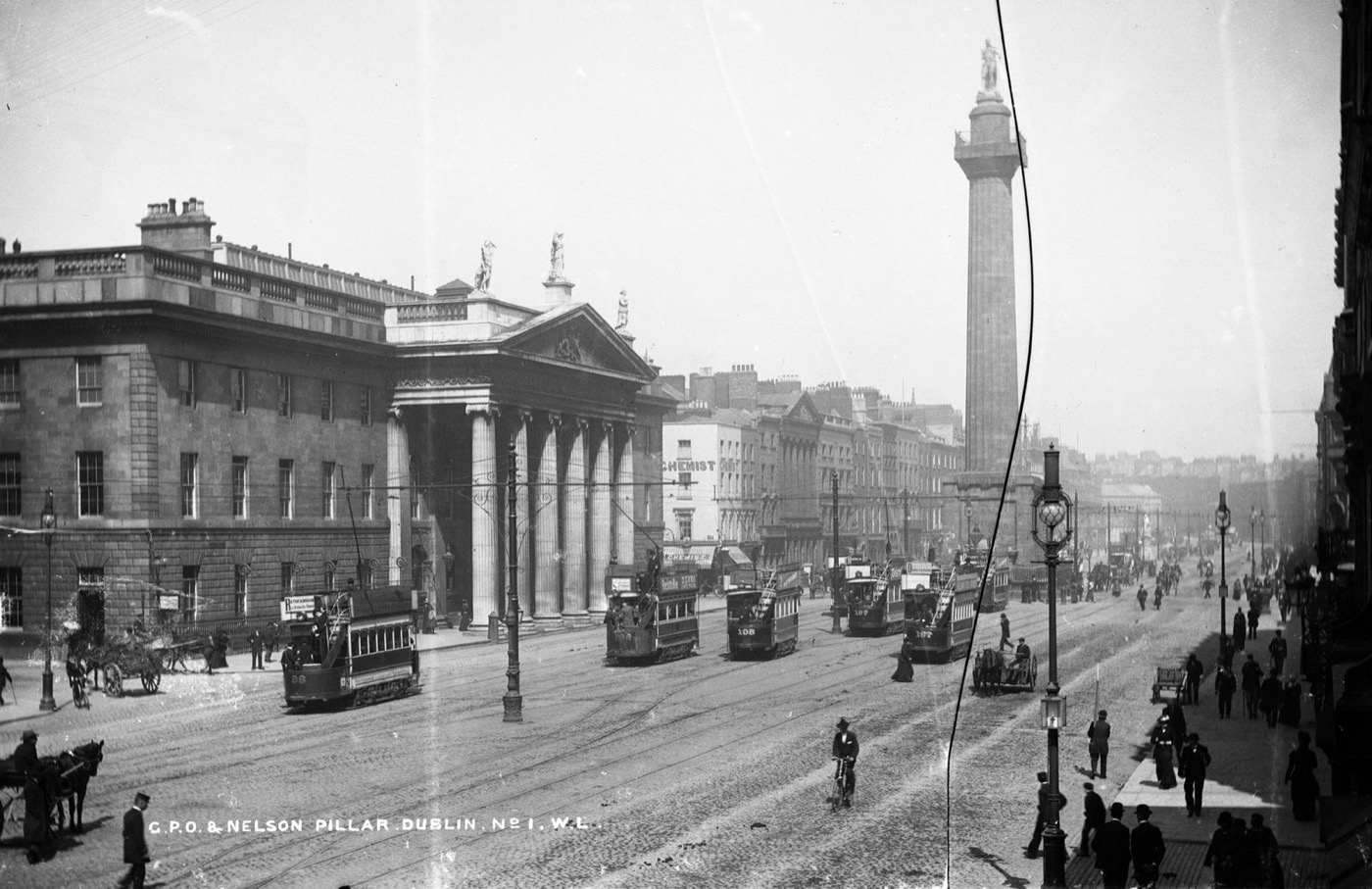
Dublin's own Murphy count owes less to any medieval sept than to the ordinary pull of a capital city: by 1901 it already held the name's second-largest concentration in the country, a pattern that would matter more than most two decades later, when a Cork-born Murphy built a newspaper and a tramway company on its streets. His story is told in full later in this report.
Raw numbers flatter Cork, because Cork is large. Set against everyone the 1901 census indexes in each county, Wexford comes first, with about fifty-three Murphys in every thousand people, then Carlow with about forty-three and Cork with thirty-six, against about thirteen for Ireland as a whole; Tyrone and Sligo, two of Woulfe's three O Murchadha countries, sat in the bottom third of the list at under five. That is the order Robert Matheson had found in the births of 1890: Murphy stood first among all names in two Leinster counties only, Wexford and Carlow, ran a close second to Sullivan in Cork, led in Armagh alone in Ulster, and led nowhere in Connacht. The old ground is still on the map. Ballaghkeen, in the east of Wexford, is the barony the Ui Cheinnsealaigh O Murchadha held as chiefs of Ui Feilme. Skreen and Templeboy, on the south shore of Sligo Bay, are the parishes the Ui Fiachrach family lost in the thirteenth century. Muskerry, along the valley of the River Lee, is where MacLysaght and Burke both put a Cork sept, though they disagree about where it came from.
That was one chapter. The report carries the rest: where the name comes from, the clan and its chiefs, heraldry, the stories, a timeline, migration, the name today, notable bearers, and a page on tracing your own line. Every claim sourced the same way as the chapter above.
Get the Murphy report$14.99 · instant download, yours to keep and print
Not your name? Search yours, or read how we work, with another full chapter.
This history is written by AI from public-domain sources and the family's own published records, every one of them listed above. Where tradition and record disagree the text says so rather than choosing quietly. No image on this page is AI-generated.
First edition · last revised