 The Old Country
Stoltzfus is a name most Americans meet in Lancaster County, Pennsylvania, and most Germans have never met at all. The 2020 Census counted 19,505 people of the name in the United States, almost double the 10,159 of the 2000 Census. In Germany the telephone directories hold seven listings of the spelling Stolzfuß, all of them in Berlin, and none under the family's older spellings. A name that fills Amish school registers and mail routes in Pennsylvania has all but gone from the country that made it, and this report follows it through the records that still hold it.
No email needed. It starts just below.
46 pages, 20 named sources, in your inbox within a minute.
The next page asks where to post it.
The hardback could not be added just now. Get your report here, and the hardback is offered on the next page for the same $79 in all.
Read it. If it is not the best account of your name you have seen, reply to your receipt within 14 days and we refund you.
“I have been tracing my family tree for some time, but there were certain stories that even our closest relatives never knew about. This surname report is a true deep dive. Thank you.”Susan D., reader
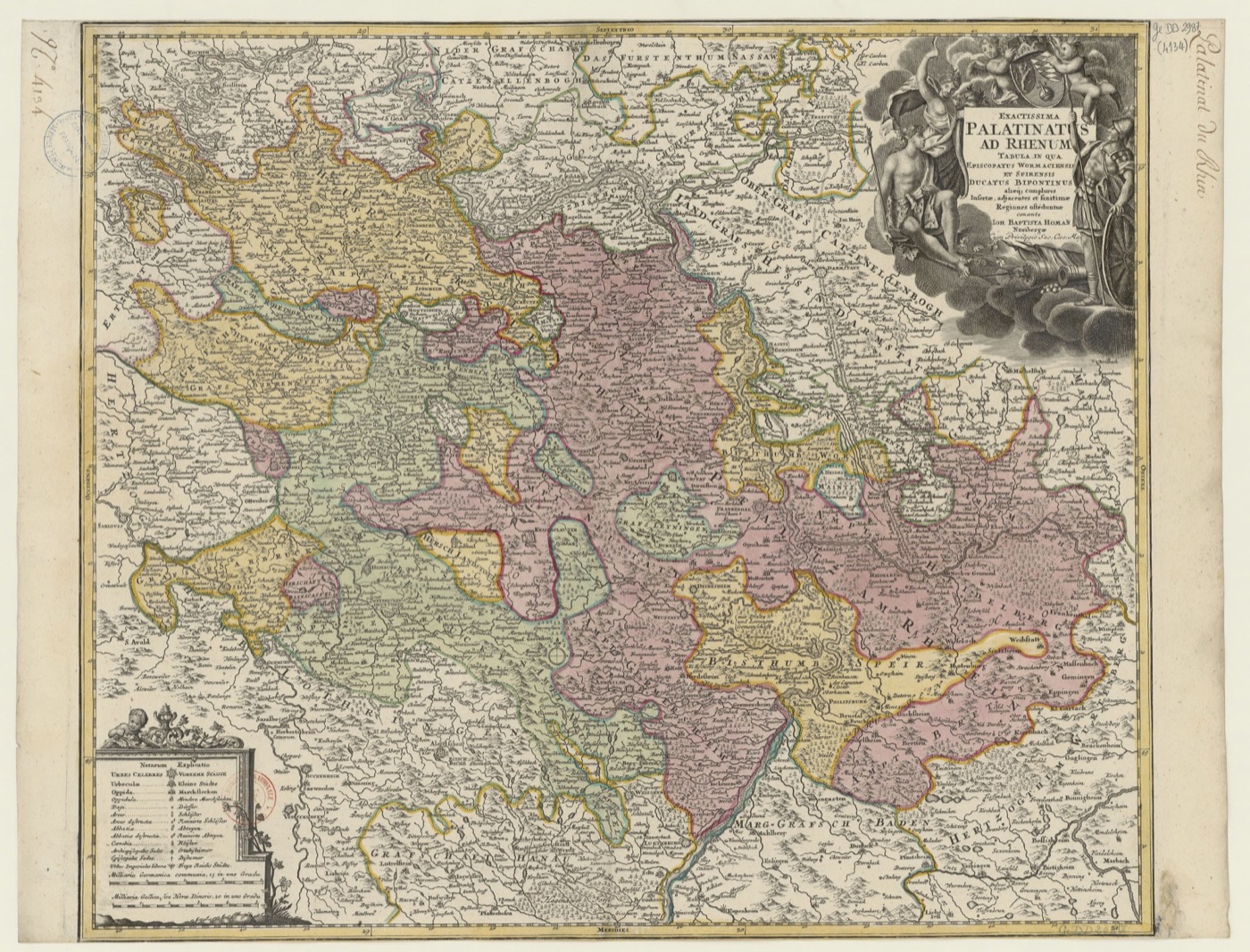
The family's two homelands lie far apart. Rudolstadt and Rottleben are in Thuringia, in the middle of Germany. Zweibrücken is on the western edge of the Palatinate, close to today's French border, and in the eighteenth century it was the seat of a state of its own, the Duchy of Pfalz-Zweibrücken, which the Mennonite Encyclopedia calls "a tiny 400 sq. mi. principality", a state from 1410 to 1799. In 1724, twenty years before the letter of 1744, Johann Baptist Homann's map named it in its very title, the "ducatus Bipontinus".
The road between the two places is the genealogy's to tell. Nicholas's father, born at Rottleben in 1692, was a wigmaker who became a citizen of Zweibrücken, went back to Saxony to marry in 1717, and died young; his widow brought their son back to Zweibrücken and married there again in 1723. By 1744 the son was working on Mennonite farms in the duchy, and in the 1750s he was the tenant of the Ringweilerhof, which is today a dwelling-place of the town of Hornbach, about eight kilometres from Zweibrücken. Hornbach itself, where he ran a mill in 1759, lies south of the city on the border. The ruler of the duchy in those years was Duke Christian IV, who had taken the government into his own hands on 22 November 1740.
For a reader this matters because each homeland keeps its own papers. The Thuringian years belong to the church books of Rottleben, to the Schwarzburg archive at Rudolstadt and to Müldener's printed history. The Zweibrücken years belong to the ducal government's records, which are the business of the Landesarchiv Speyer, the state archive of the Palatinate, and to the family accounts that have printed parts of them in English. The trace chapter at the end of the report sets out both.
That was one chapter. The report carries the rest: where the name comes from, the region and its records, arms, seals and marks, the stories, a timeline, migration, the name today, notable bearers, and a page on tracing your own line. Every claim sourced the same way as the chapter above.
Get my report · $14.99Instant download, yours to keep and print
Read it. If it is not the best account of your name you have seen, reply to your receipt within 14 days and we refund you.
Not your name? Search yours, or read another name's free chapter.
One piece of research, three more ways to have it. Every edition includes the Stoltzfus report itself.
The Stoltzfus report and a five and a half minute film of the name, your spelling on the title.
Get the film · $39.99The Stoltzfus report as a hardback, posted free to your door.
Get the book · $79The report, the film and the hardback. Bought apart they are $118.99.
Get all three · $99For the wall. The Stoltzfus record on one framed sheet, 16 by 12 inches, $89 posted free. See the framed plate.
A gift? Send the Stoltzfus report on a day you choose, with a card.
This history is written from public-domain sources and the family's own published records, every one of them listed. Where tradition and record disagree the text says so rather than choosing quietly. No image on this page is AI-generated.
First edition · last revised