 The Old Country
The Old Country
The Old Country
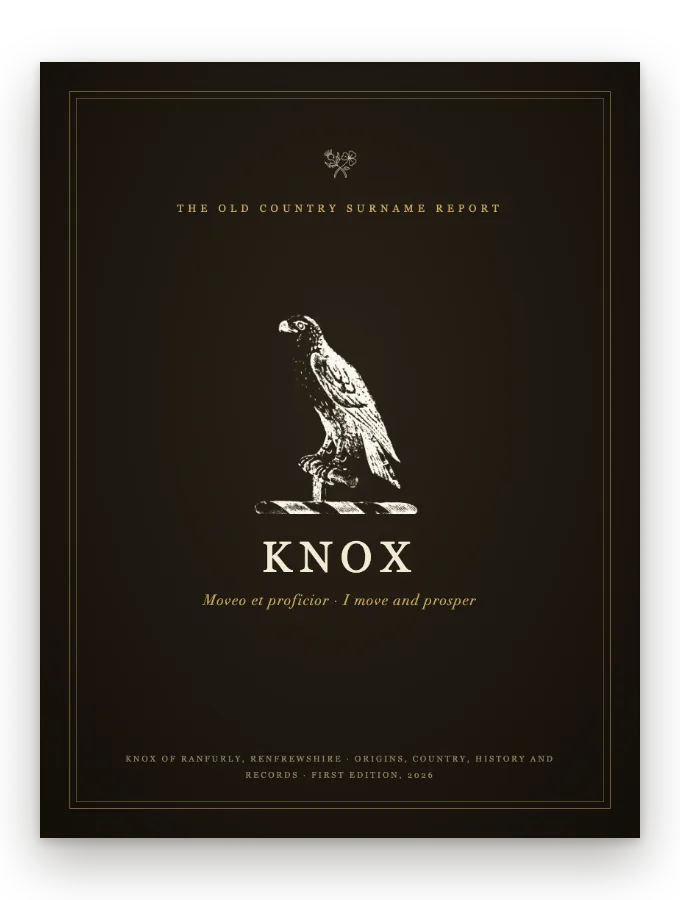
This report tells the story of the name Knox, and it tells two versions of it side by side, because the record itself does. On the one hand, Knox is a hill name: a family took it from the lands of Knock, in the barony of Renfrew, sometime before a witness called John de Cnoc put his mark to a charter around 1260. That family rose, across four centuries, from country lairds to the lords of Ranfurly Castle, and then, through a Belfast merchant's purchase of a Tyrone estate in 1692, to an earldom. On the other hand, Knox is the name of the Reformer, John Knox, and his own family later claimed that very Ranfurly pedigree for itself, a claim that even his Victorian biographers doubted in print. What Knox actually wrote about his own grandfather, goodsher and father points somewhere else entirely, and this report treats that as the honest turn in the story rather than smoothing it over.
The country of this name is a low ridge of ground south of the Clyde, not a glen or an island. The barony of Renfrew held an isolated hillock the old records call simply Knock, and it was from those lands, according to the family's own later pedigree, that the surname first came. By the fifteenth century the family's seat had moved a few miles south west to Ranfurly, above Bridge of Weir, where they built a stone tower about seven metres square, its walls a metre and a half thick: a small keep rather than a great fortress, with a single slit window in its east wall and a tall, narrow doorway cut through both ground and first floor. It still stands today as a ruin some six metres high, a scheduled monument on the edge of Bridge of Weir.
A few miles north east, at Paisley, the abbey that gave the town its name holds the family's earliest documented trace: in 1272 a John de Cnoc, and in an undated charter of about 1284 a William de Knoc, put their names to grants of land to the abbey, among the name's oldest surviving written appearances. The abbey itself, founded in the twelfth century and rebuilt more than once after fire, still stands as a working church today. The Ranfurly line held its Renfrewshire ground until the middle of the seventeenth century, when a want of sons ended it: the last laird's heir was a daughter, and the estate passed by sale, in 1665 by the dating of the buyer's own surviving papers, out of the family's hands for good.
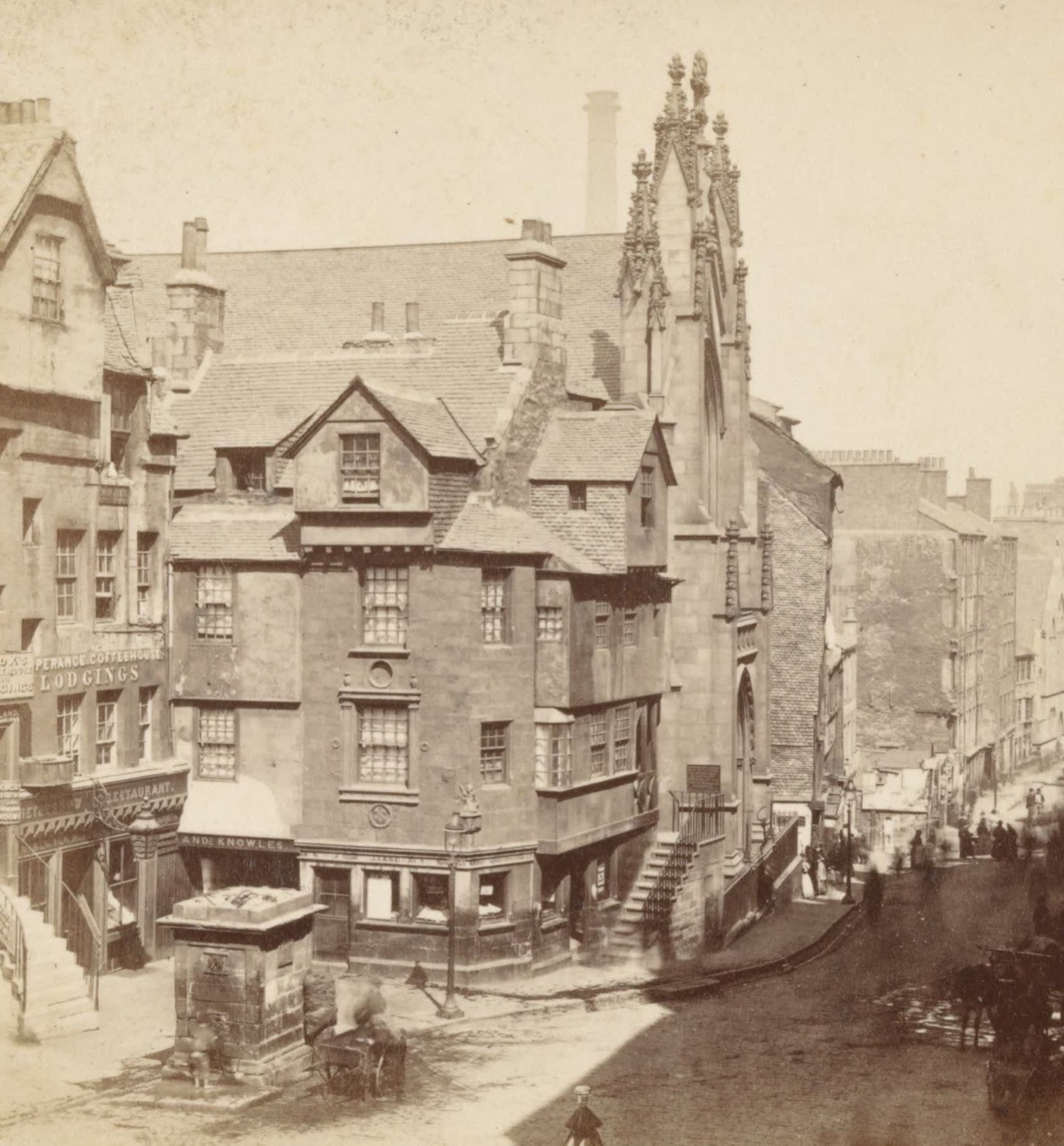
East along the Forth, in Haddington, a different thread of this story runs. Tradition, not any surviving document, marks a house on the Giffordgate as the birthplace of John Knox the Reformer; the house itself was still standing in 1785 and was pulled down afterwards, and the Knox family documented living on the site did not move in until three years after the Reformer's own death. Edinburgh keeps a firmer, if still traditional, claim: the house on the Royal Mile that bears his name today is honestly described, by the trust that runs it, as a place he is said to have lived in only in his last few months. Further west, in Renfrewshire, the name Craigends belongs, by the time of any surviving building, to a different family entirely, the Cuninghames; family tradition ties an early Knox marriage to that ground, but the mansion pulled down there in 1972 was never a Knox house.
That was one chapter. The report carries the rest: where the name comes from, the clan and its chiefs, heraldry, the stories, a timeline, migration, the name today, notable bearers, and a page on tracing your own line. Every claim sourced the same way as the chapter above.
Get the Knox report$14.99 · instant download, yours to keep and print
Not your name? Search yours, or read how we work, with another full chapter.
This history is written by AI from public-domain sources and the family's own published records, every one of them listed above. Where tradition and record disagree the text says so rather than choosing quietly. No image on this page is AI-generated.
First edition · last revised