 The Old Country
The Old Country
The Old Country
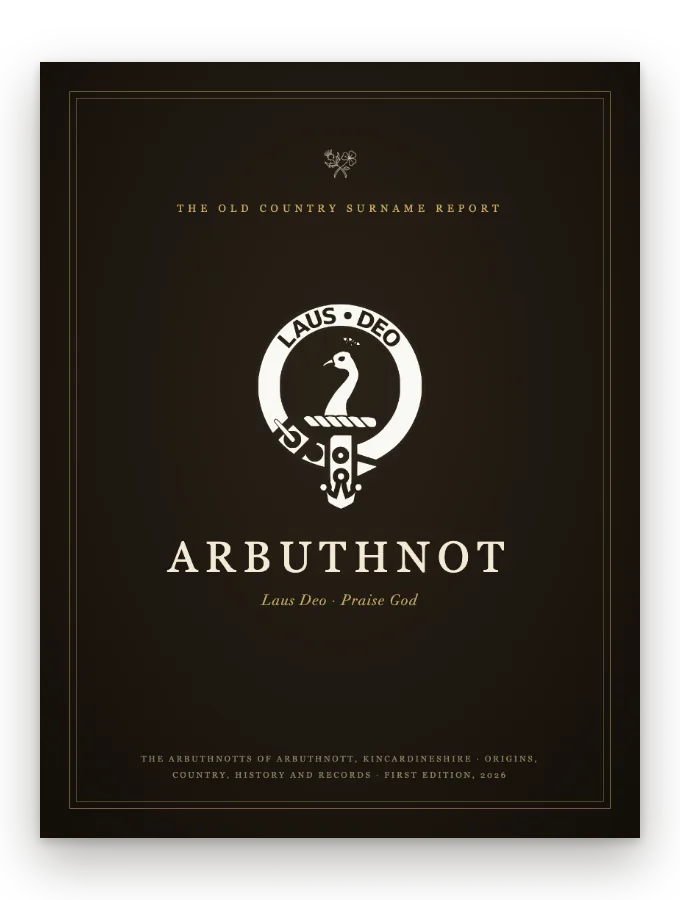
This report tells the story of a name that has stayed in one family's hands, in one parish, for longer than almost any other surname in this series. Arbuthnot, and its fuller spelling Arbuthnott, is territorial: it comes from the lands of Arbuthnott in Kincardineshire, on Scotland's north-east coast, the family's own holding traceable to the twelfth century. George F. Black's standard dictionary of Scottish surnames describes it simply as a territorial surname from the old barony of that name in Kincardineshire. The familiar claim that Black himself called it Celtic, aber (the Pictish word for a river-mouth) plus a second element of obscure meaning, is not Black's own verdict; that specific reading belongs to Henry Harrison's Surnames of the United Kingdom (1912), and this report keeps the two apart. What is not obscure is the family itself: a line that has held the same ground since before 1200, was raised to a viscountcy by Charles I in 1641, and has produced, from one small Mearns parish, a Queen's physician who gave the language John Bull, the printer who finished Scotland's first Bible, two Royal Navy admirals a century apart, and a banking house that traded from Madras to the City of London before it collapsed in spectacular scandal in 1906.
Arbuthnott is a small parish and hamlet in the Howe of the Mearns, the fertile agricultural country of Kincardineshire on Scotland's north-east coast, a short run inland from Inverbervie on the coast road between Aberdeen and Montrose. It is quiet farming country today, not a wilderness and not a tourist landscape, the kind of ground a family could hold quietly and continuously for eight centuries without ever needing to defend it against a rival clan the way a Highland family might. Arbuthnott House itself, the family's seat since before 1200, incorporates a thirteenth or fourteenth century tower house core, was expanded around a courtyard in the fifteenth century, gained further additions in the sixteenth, was remodelled for symmetry in the 1750s, and still carries a fine plaster ceiling dated 1685.
The parish church of St Ternan, dedicated to the apostle of the Picts and the parish's own patron saint, is thirteenth century in origin and remains in use today as part of a combined Church of Scotland charge. It was here, in 1491, that the priest James Sibbald wrote the Arbuthnott Missal on vellum, in Gothic script, with illuminated capitals and a full-page painting of St Ternan himself: the only complete missal of the pre-Reformation Scottish liturgical Use to survive anywhere. It remained the Arbuthnott family's own property until 1897, when Archibald Coats of Paisley bought it and gave it to what is now Paisley Museum, where it stays today, kept in controlled storage and rarely photographed for conservation reasons. No image of its own pages could be sourced for this report; what survives instead, in the same parish, is the church that made it.
Arbuthnott parish carries one further claim to fame that this report states plainly has nothing to do with the family that gives it its name: the novelist Lewis Grassic Gibbon grew up at Bloomfield within the parish and is buried in the churchyard's corner, and a small museum in the village now tells his story. It is a coincidence of geography, not a family connection, and this report keeps the two apart rather than implying a link that does not exist.
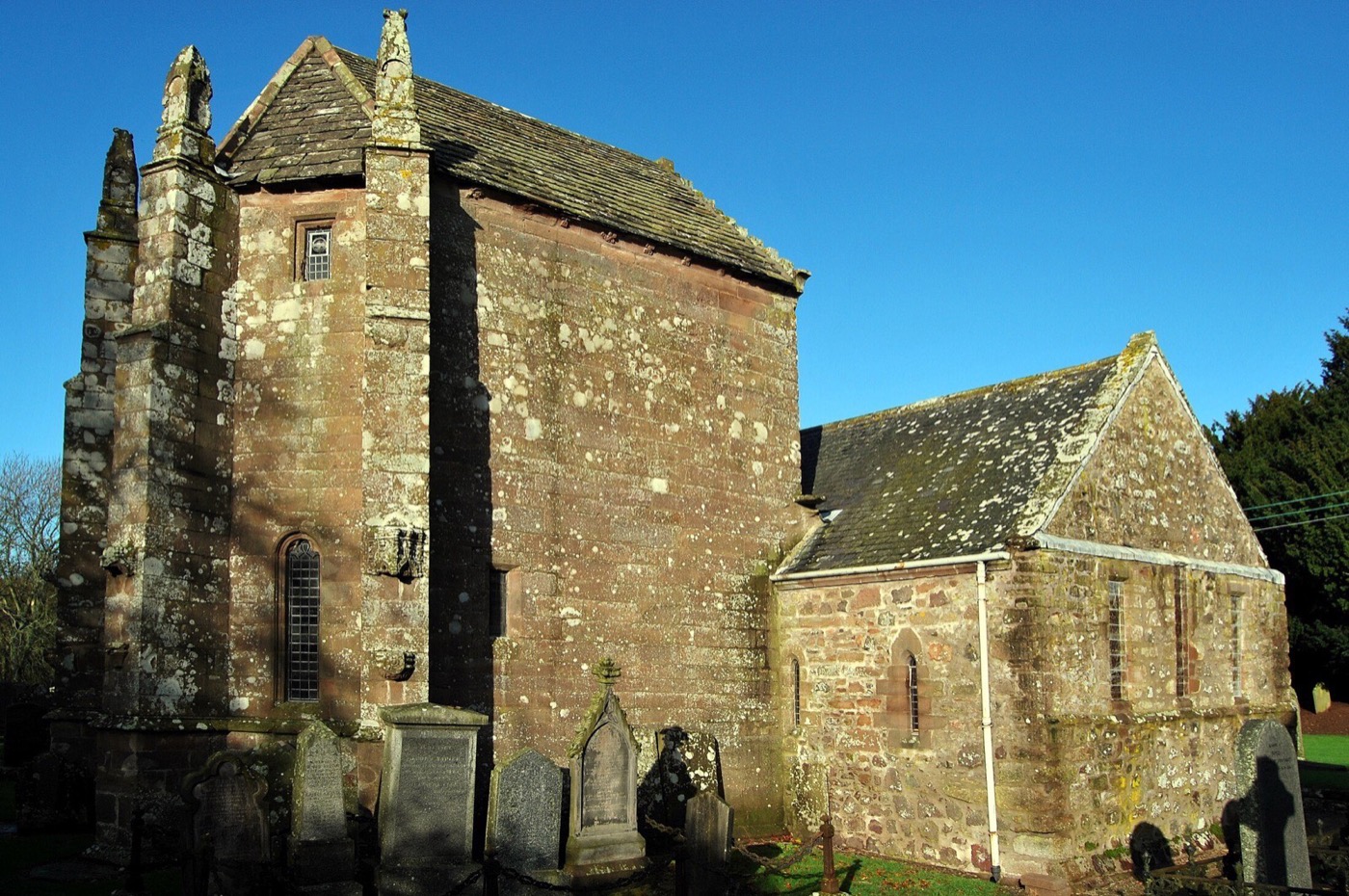
That was one chapter. The report carries the rest: where the name comes from, the clan and its chiefs, heraldry, the stories, a timeline, migration, the name today, notable bearers, and a page on tracing your own line. Every claim sourced the same way as the chapter above.
Get the Arbuthnot report$14.99 · instant download, yours to keep and print
Not your name? Search yours, or read how we work, with another full chapter.
This history is written by AI from public-domain sources and the family's own published records, every one of them listed above. Where tradition and record disagree the text says so rather than choosing quietly. No image on this page is AI-generated.
First edition · last revised