 The Old Country
The Old Country
The Old Country
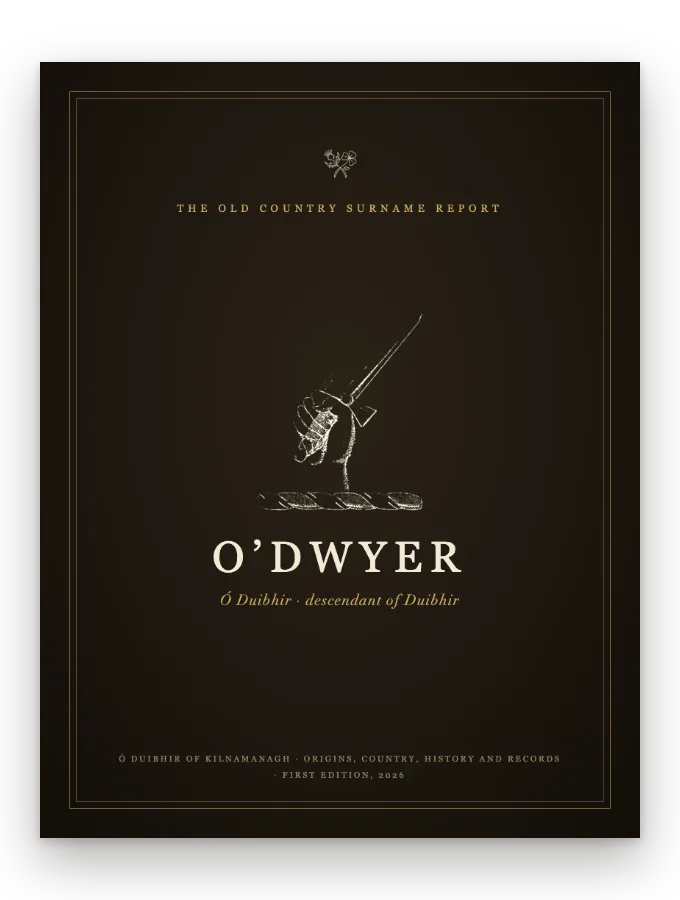
This report tells the story of a small Tipperary sept whose name means, at bottom, a description handed down as a boast: Ó Duibhir, descendant of Duibhir, a personal name built from dubh, dark, and odhar, sallow or dun-coloured. What Duibhir himself looked like nobody now knows; what the record shows is a family who held the wooded hill country of Kilnamanagh, in west and mid Tipperary, closely enough and long enough that the barony still carries their monks-wood name. Woulfe's Sloinnte Gaedheal is Gall calls them plainly a Tipperary family of Leinster origin, chiefs of Coill na Manach. Older, grander pedigrees push the line back through legendary kings of Leinster into the Milesian genealogies; this report reads those pedigrees, says so, and does not borrow their certainty.
Kilnamanagh, Irish Coill na Manach, the wood of the monks, is not one place but two adjoining baronies in west and mid Tipperary: Kilnamanagh Upper, whose chief town is Borrisoleigh, and Kilnamanagh Lower, whose chief town is Dundrum. It is hill and woodland country rather than the rich limestone plain the Golden Vale is known for further south, the kind of ground a family could hold against a more powerful neighbour for a long time without ever ruling a whole province. This is the country Woulfe names as the O'Dwyers' own, and the country the 1901 census still shows thick with the name three and a half centuries after the Cromwellian confiscations broke the chiefly line's hold on it.
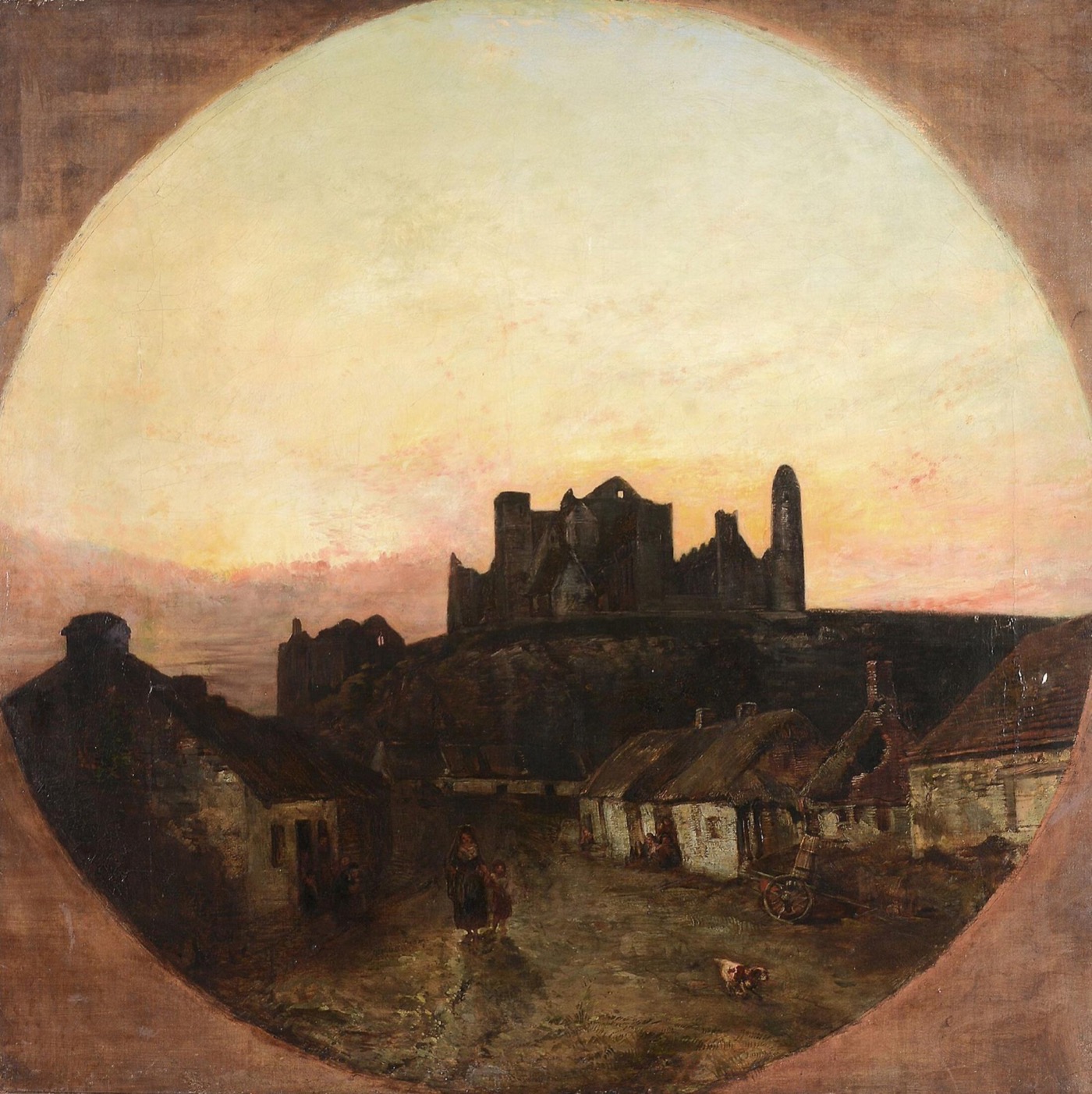
A few miles south of Kilnamanagh's baronies stands the Rock of Cashel, the ancient seat of the Kings of Munster, and the record, not just tradition, places the O'Dwyers there: Philip O'Dwyer, the last chief of the old order, led the capture of Cashel town in 1641. Separately, the Earl of Inchiquin's forces stormed the Rock of Cashel itself in 1647; Philip died the following year. Ballagh and Dundrum, the family's own strongholds, are separately said in local and clan tradition to have fallen to Cromwellian forces in March 1650, associated by that tradition with a kinsman's later resistance, Edmund O'Dwyer's, rather than with Philip's own death; this report keeps the documented 1641, 1647 and 1648 events and the traditional 1650 one apart, where popular retellings often run them together.
The Glen of Aherlow lies immediately to the west, a historic pass used as cover by Irish fighters against Cromwellian forces through the seventeenth century; several tourism and history sources describe the Glen in exactly those terms, but none names the O'Dwyers specifically as its people, and this report does not claim the association beyond noting the Glen's plain geographic adjacency to the Kilnamanagh baronies.
That was one chapter. The report carries the rest: where the name comes from, the clan and its chiefs, heraldry, the stories, a timeline, migration, the name today, notable bearers, and a page on tracing your own line. Every claim sourced the same way as the chapter above.
Get the O'Dwyer report$14.99 · instant download, yours to keep and print
Not your name? Search yours, or read how we work, with another full chapter.
This history is written by AI from public-domain sources and the family's own published records, every one of them listed above. Where tradition and record disagree the text says so rather than choosing quietly. No image on this page is AI-generated.
First edition · last revised