 The Old Country
The Old Country
The Old Country
This report tells the story of a name that never belonged to one family. Craig is a topographic surname, taken from the Gaelic creag and the Scots craig, a rock or a steep crag, and it was given, independently, to whichever household happened to farm or fortify the ground beside one. Black's own catalogue of Scottish surnames records at least three separate families styled Craig of that Ilk in the fifteenth century alone, meaning three different lairds in three different places, each taking the name of his own rock. The result is a surname thick on the ground in Ayrshire, Angus, Aberdeenshire and Lanarkshire alike, with no single glen or chieftaincy this report can honestly call the Craig homeland, and no single ancestor behind it.
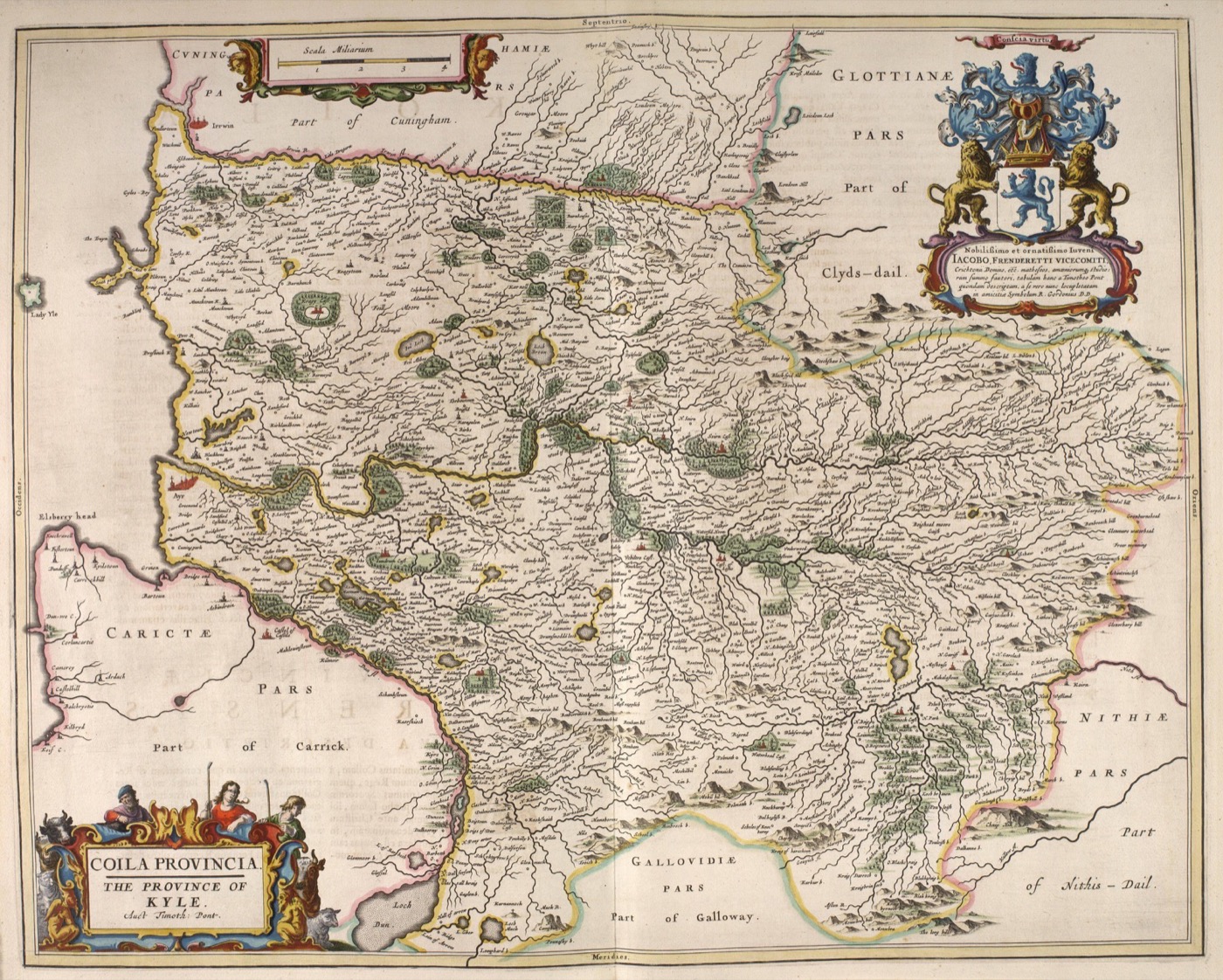
There is no single Craig homeland this report can point to on a map, and saying so plainly is more honest than inventing one. The record instead shows the name settled early and independently across lowland and north-east Scotland alike: Ayrshire and Lanarkshire in the south-west, where a Craig paid homage in 1296 and another held land in 1323; Angus, where a place called Craig gave a family its name in the north-east Lowlands; and Aberdeenshire, where the Craigs of Craigfintray and Auchindoir farmed a harder, hillier country than the Lowlands further south. Black's observation that more crags exist in the north of Scotland than in the Lowlands explains, on its own, why the name's early history carries a genuine north-east bias alongside its southern one, without needing a single migrating family to account for it.
Riccarton itself, the estate that gives this report's best-documented line its name, sits only a few miles west of Edinburgh, in what is now the suburb of Currie, and its story is bound up with the city rather than with any wild or remote ground. It was in Edinburgh's courts that Sir Thomas Craig built his career, in Edinburgh's Church of Scotland that the man modern scholarship identifies as his probable uncle, John Craig, helped settle the Reformation's terms, and on an open field just north of Edinburgh's old High Street that a later, unrelated Craig, James, laid out the New Town whose story this report tells in full. Three separate Craigs, three separate centuries, and one city holding all of them.
The Aberdeenshire branch carries the name's other major thread: the clan-society tradition that ties Craig of Craigfintray to Clan Gordon, and the far better attested record of John of the Craig, who led a relief force from this same county into one of the more dramatic actions of the Second War of Scottish Independence. Kildrummy Castle, the fortress his men helped save, still stands, roofless, on its own hillside above the Don.
That was one chapter. The report carries the rest: where the name comes from, the clan and its chiefs, heraldry, the stories, a timeline, migration, the name today, notable bearers, and a page on tracing your own line. Every claim sourced the same way as the chapter above.
Get the Craig report$14.99 · instant download, yours to keep and print
Not your name? Search yours, or read how we work, with another full chapter.
This history is written by AI from public-domain sources and the family's own published records, every one of them listed above. Where tradition and record disagree the text says so rather than choosing quietly. No image on this page is AI-generated.
First edition · last revised