The Old Country
Cover of the Cumming Surname Report
Free to read · One name from the Continent in four streams: the medieval Comyns of Buchan and Badenoch, the Cummings of Altyre and their cadets, the English Comyns and Cumings, and the Anglo-Norman and Gaelic names of Ireland

CummingSurname meaning, origin and history

This report is about a name that came to Scotland with one man and was carried afterwards by families that no record joins. The first of it in Scottish record is William Cumin, King David's chancellor, who witnesses a royal charter about 1136 and is written Willelmo Cumino cancellario about 1139. Where the family came from on the Continent is not settled: the Scots Peerage and Black say it is believed to have been Comines in Flanders, near Lille, though Black and Bardsley find no positive evidence; Reaney and Wilson think Bosc-Bénard-Commin, near Rouen in Normandy, probably correct. Through the chancellor's nephew Richard and his marriage to Hextilda, a granddaughter of King Donald Bane, came the Comyns: Earls of Buchan by the heiress Marjory, lords of Badenoch and Lochaber, Comyns of Kilbride. By 1316 the senior lines had ended. The name had not: Thomas Cummine of Altyre in Moray stands in a contract of 21 June 1482, and Nisbet in 1722 called Altyre the principal family of that name now.

Get my report · $14.99

40 pages, 25 named sources, in your inbox within a minute.

Read it. If it is not the best account of your name you have seen, reply to your receipt within 14 days and we refund you.

“I have been tracing my family tree for some time, but there were certain stories that even our closest relatives never knew about. This surname report is a true deep dive. Thank you.”Susan D., reader

Not today? Read the Cumming chapter free. We will email it to you.Rather read it later? We will email you the Cumming chapter.

One email: the link to this page and the free Clan Finder, eighteen clans and every surname recorded as belonging to them, on two printable pages. Nothing else unless you tick the box.

The Cumming name at a glance

Meaning
The family's origin is disputed: Comines in Flanders, as the Scots Peerage and Black report the belief, or Bosc-Bénard-Commin near Rouen, as Reaney and Wilson think.
Earliest records
About 1139: Willelmo Cumino cancellario, William Cumin, King David's chancellor, witnesses a charter at Haddington; as chancellor he witnesses a royal grant about 1136.
The houses
Buchan by the heiress Marjory, in or before 1214; Badenoch and Lochaber; Kilbride. The senior lines had ended by 15 November 1316; the name had not.
The claim
1291: John Comyn of Badenoch, the Black Comyn, claims the crown through Hextilda, granddaughter of Donald Bane; judgment for Balliol, 17 November 1292.
Four streams
The medieval Comyns; the Cummings of Altyre and their cadets; the English Comyns and Cumings; in Ireland the Anglo-Norman Comyns and four Gaelic names. No authority printed here makes them one.
Spellings
Cumming, Comyn, Cumyn, Cumin, Cummin, Cumine and Cuming are one name; Cummings is routed with a caveat; Cummins and Commins are mostly other names.
Scotland today
92 register entries in 2025, joint 280th; 162 in 1975, joint 233rd.
United States today
Cumming 2,790 at the 2020 Census, ranking 10,906th; Cummings 76,172, ranking 418th; Cummins 19,717.
Chapter four, free to read in full

Buchan, Badenoch and Altyre

The Comyn country begins in Buchan, in the north-east of Aberdeenshire. William Comyn was Earl of Buchan by his marriage to Marjory in or before 1214; between 1211 and 1214 the two gave the church of Buthelny, now Oldmeldrum, to the abbey of Arbroath, and in 1219 he founded the Cistercian abbey of Deer, on or near the site of the old Columban monastery, as the Peerage puts it. The earls' country lay about Ellon, Deer and Slains, and it is the country that burned in 1308: Bruce routed the earl at Inverurie and, in Fordun's words, ravaged the earldom of Buchan with fire. John Thomson's map at the front of this report shows it, from Cruden Bay to Peterhead and Turriff.

Buchan was the earls' country and Badenoch the lords'; Altyre in Moray is where the name went on after both had ended.

The second country is Badenoch. The Comyns held it from Walter, lord of Badenoch, who died in 1258, and the Peerage calls Lochindorb, a castle on an island in its loch, the Comyn castle; the Black Comyn, the Dictionary of National Biography says, died at his castle of Lochindorb soon after November 1299. Ruthven stood on the same lordship, and Lochaber, to the west, was the house's too. After the end of the male line, the Peerage says, the lands were gradually gifted to others. Further south the family held Dalswinton and lands in Nithsdale, Easter Kilbride in Lanarkshire, and in England the Tynedale lands that came with Hextilda.

The third country is the one the name kept. Altyre lies in the parish of Rafford near Forres in Moray, and Cummings held it from 1482 at the latest; Shaw's 1882 edition, under the parish of Dallas, has a Sir Thomas Cuming of Altyre before 1411. Shaw, writing in 1775, would not vouch for the family's descent from the earls: tradition bore it, he wrote, but at what time he found not, and he had not seen the writs of the family. Logie and Relugas, on the Findhorn and the Divie, were held by branches of the house in Shaw's day. In Aberdeenshire the arms in Burke and Nisbet place Cummings at Auchry, Brunthill and Culter, whose line of baronets the Dictionary of National Biography ends with a son who died some time before 1796. In 1890 Guppy's Homes of Family Names put Cumming among the surnames of the Highlands north of Forfarshire, Perthshire and Argyllshire, beside Cruickshank, Mackintosh, Duncan, Mackay and Farquharson.
Lochindorb Castle on its island, the castle the Scots Peerage calls the Comyn castle; John Comyn of Badenoch, the Black Comyn and claimant of 1291, died there s
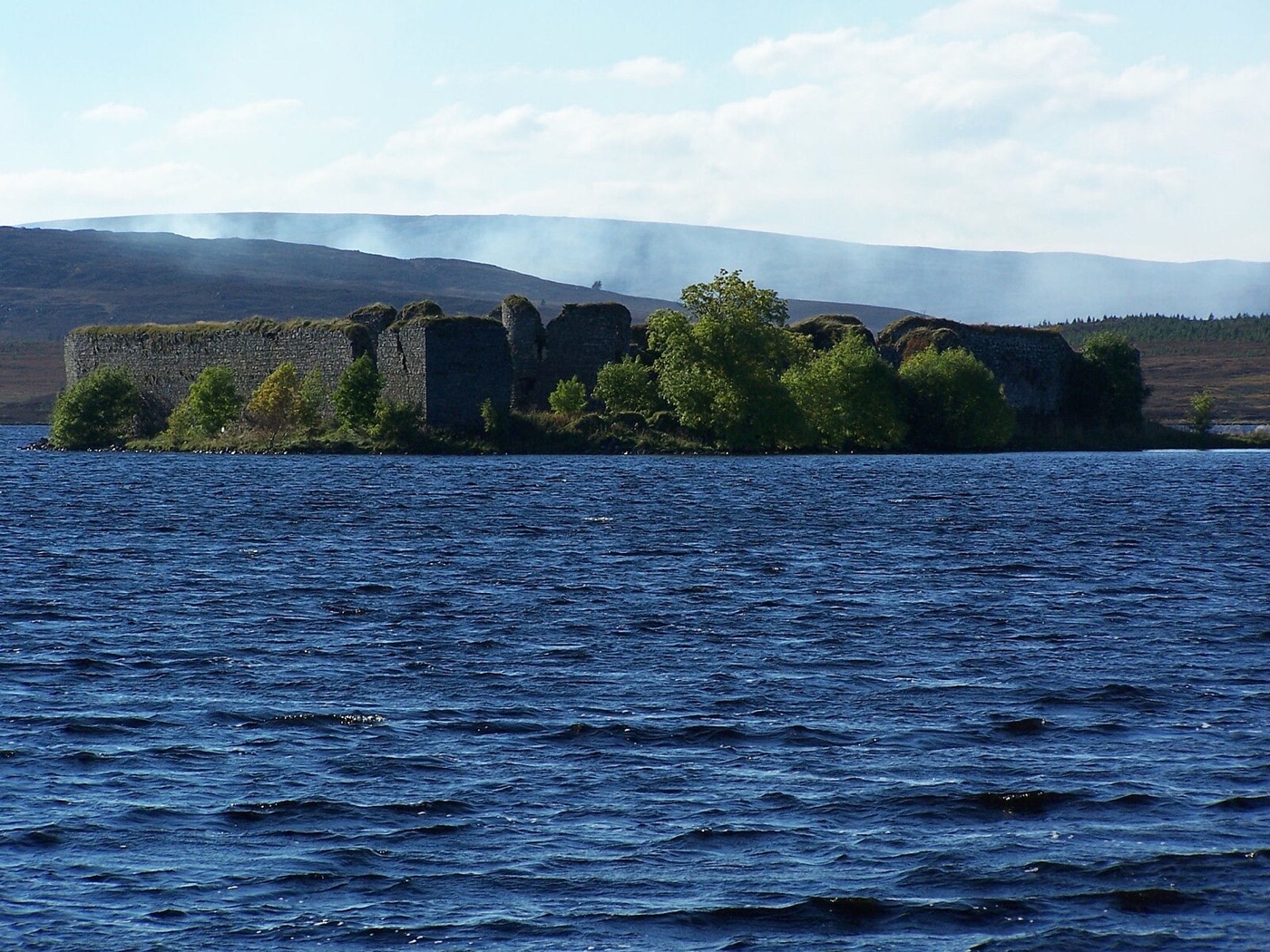
Lochindorb Castle on its island, the castle the Scots Peerage calls the Comyn castle; John Comyn of Badenoch, the Black Comyn and claimant of 1291, died there soon after November 1299, as the Dictionary of National Biography has it. Photograph by Billreid, 2007; Wikimedia Commons, CC BY-SA 3.0.
One name from the Continent in four streams: the medieval Comyns of Buchan and Badenoch, the Cummings of Altyre and their cadets, the English Comyns and Cumings, and the Anglo-Norman and Gaelic names of Ireland · 40 pages

The full Cumming surname report

That was one chapter. The report carries the rest: where the name comes from, the clan and its chiefs, heraldry, the stories, a timeline, migration, the name today, notable bearers, and a page on tracing your own line. Every claim sourced the same way as the chapter above.

Get my report · $14.99

Instant download, yours to keep and print

Read it. If it is not the best account of your name you have seen, reply to your receipt within 14 days and we refund you.

Not your name? Search yours, or read another name's free chapter.

The editions

Read it, watch it, or keep it on the shelf.

One piece of research, three more ways to have it. Every edition includes the Cumming report itself.

Watch itin five days$39.99

The Cumming report and a five and a half minute film of the name, your spelling on the title.

Get the film · $39.99
Keep itin two weeks$79

The Cumming report as a hardback, posted free to your door.

Get the book · $79
All three Best valuesaves $19.99$99

The report, the film and the hardback. Bought apart they are $118.99.

Get all three · $99

For the wall. The Cumming record on one framed sheet, 16 by 12 inches, $89 posted free. See the framed plate.

A gift? Send the Cumming report on a day you choose, with a card.

The sources page, in fullWhere every claim on this page comes from.
Where the record is uncertainWhere this report cites an early record it cites the edition that prints it: the chancellor's charters through Lawrie, the Durham affair through Arnold's edition of the Durham continuations and John of Hexham as Lawrie prints him, the claim of 1291 through the Annales Regni Scotiae, the roll of 1296 through the Bannatyne Club's Instrumenta Publica, and the killing at Dumfries through each chronicle's printed edition. Where one writer is the only authority for a statement, the report says whose it is. No commercial surname site was used as corroboration.
  • Black, The Surnames of Scotland (New York Public Library, 1946), pp. 191-192, s.v. Cumming; C. W. Bardsley, A Dictionary of English and Welsh Surnames (1901), s.v. Comyn; P. H. Reaney and R. M. Wilson, A Dictionary of English Surnames, 3rd ed. (Oxford, 1995), s.v. Cumming
  • Sir James Balfour Paul (ed.), The Scots Peerage, vol. 2 (1905), Comyn, Earl of Buchan, pp. 250-261; vol. 1 (1904), Comyn, Lord of Badenoch, pp. 503-510, and The Kings of Scotland, p. 3
  • Archibald C. Lawrie, Early Scottish Charters prior to A.D. 1153 (Glasgow, 1905), charters CIX, CXXII, CXXV and CXXVI, and notes, pp. 349, 366-370
  • Patrick Woulfe, Sloinnte Gaedheal is Gall: Irish Names and Surnames (Dublin, 1923), s.v. Coimin, O Cuimin, O Coimin, O Comain, Mac Coimin and Mac Cuimin; Edward MacLysaght, The Surnames of Ireland (Dublin, 1985), s.vv. Commons, Comyn, Cumming(s)
  • Symeonis Monachi Opera Omnia, ed. Thomas Arnold, vol. 1 (Rolls Series, 1882), the Durham continuations, pp. 143-167; Greenway, Fasti Ecclesiae Anglicanae 1066-1300, vol. 2 (1971), pp. 29-32, 105-107
  • Willelmi Rishanger Chronica et Annales, ed. H. T. Riley (Rolls Series, 1865), Annales Regni Scotiae, pp. 249, 265-267, and introduction
  • Instrumenta Publica sive Processus super Fidelitatibus et Homagiis Scotorum (Bannatyne Club, 1834), the roll of 1296, pp. 119-158 and index
  • The Chronicle of Lanercost 1272-1346, trans. Sir Herbert Maxwell (Glasgow, 1913), pp. 176, 180-181; Chronicon domini Walteri de Hemingburgh [Walter of Guisborough], ed. H. C. Hamilton (1849), vol. 2, pp. 245-250; Flores Historiarum, ed. H. R. Luard (Rolls Series, 1890), vol. 3, pp. 128, 323
  • John of Fordun, Chronicle of the Scottish Nation, ed. W. F. Skene (1872), pp. 331-337; Joannis de Fordun Scotichronicon cum supplementis Walteri Boweri, ed. Walter Goodall (1759), vol. 2, pp. 228-229
  • John Barbour, The Bruce, ed. W. M. Mackenzie (1909), Books II and IX and notes; Andrew of Wyntoun, The Orygynale Cronykil of Scotland, ed. David Laing, vol. 2 (1872), p. 368
  • Lachlan Shaw, The History of the Province of Moray (1775), ed. J. F. S. Gordon (1882), vol. 2; Frank Adam, The Clans, Septs and Regiments of the Scottish Highlands (1908), pp. 43-44, 132
  • Alexander Nisbet, A System of Heraldry (1722; reprint 1816), vol. 1, p. 367; Burke, The General Armory (1884), pp. 219-220, 251-252
  • W. R. Macdonald, Scottish Armorial Seals (1904), nos. 578-592, 2333 and 2568; Scottish Register of Tartans, refs 834, 835 and 840; Standing Council of Scottish Chiefs, members
  • Dictionary of National Biography, vol. 11 (1887), the Comyn entries, pp. 455-464; vol. 13 (1888), the Cuming and Cumming entries, pp. 294-301
  • Dictionary of Canadian Biography, vol. 2 (Cumings, Archibald) and vol. 9 (Cumming, Cuthbert); Australian Dictionary of Biography, vols 3, 8 and 13; Encyclopedia of Alabama, Kate Cumming
  • The National Archives, Kew, toilet design: Alexander Cumming's patent number 1105 of 1775
  • George Patterson, A History of the County of Pictou (1877), pp. 231, 282; John Camden Hotten, The Original Lists of Persons of Quality, 1600-1700 (1874); C. K. Bolton, Scotch Irish Pioneers in Ulster and America (1910); George Hill, An Historical Account of the Plantation in Ulster (1877)
  • Henry Gannett, The Origin of Certain Place Names in the United States (1902); Fitzpatrick, Nebraska Place Names; New Georgia Encyclopedia, Cumming
  • H. B. Guppy, Homes of Family Names in Great Britain (1890)
  • Heads of Families at the First Census of the United States taken in the Year 1790 (Bureau of the Census, 1907-08), the state indexes
  • National Records of Scotland, Most Common Surnames, 2025; United States Census Bureau surname files, 2000, 2010 and 2020; National Archives of Ireland, Census of Ireland 1901 and 1911, exact surname search
  • The arms of Comyn, Earl of Buchan, from the head-piece of the Comyn article in The Scots Peerage, vol. 2 (1905), public domain.
  • Photographs: Billreid (Lochindorb Castle), 2007, and Otter (Deer Abbey), 2011, CC BY-SA 3.0, Wikimedia Commons; Anne Burgess (Altyre House), 2021, geograph.org.uk, CC BY-SA 2.0
  • Map: John Thomson, Northern part of Aberdeen and Banff shires (1826), David Rumsey Map Collection, via Wikimedia Commons; public domain
  • Map coastlines: Natural Earth, public domain; OpenStreetMap contributors, Open Database Licence.

This history is written from public-domain sources and the family's own published records, every one of them listed. Where tradition and record disagree the text says so rather than choosing quietly. No image on this page is AI-generated.

First edition · last revised

More surname histories, free to read

Every surname we have written →