 The Old Country
The Old Country
The Old Country
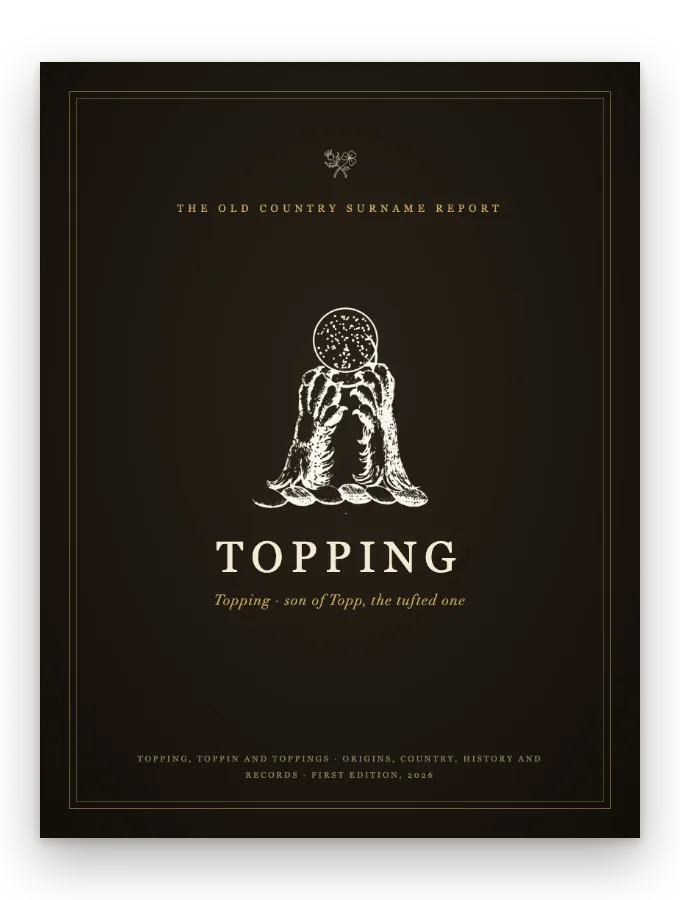
This report tells the story of a surname built from a nickname rather than a place or a trade: Topping, son of Topp, from an Old English or Old Norse byname for a tuft or crest of hair, worn by some forgotten man distinctive enough that his neighbours named him for it and his descendants kept the name. The earliest citations put a bearer of the root name, Toppe, in the Lincolnshire Pipe Rolls of 1200, and the surname itself, spelled Toppyng, in the Yorkshire Poll Tax returns of 1379. This report has now read the 1379 entry for itself, in the Yorkshire Archaeological and Topographical Journal's printed edition of those very rolls. The 1200 citation is widely repeated across genealogical compilations and could not be checked against a primary edition this session, and this report says so plainly rather than dressing borrowed certainty up as its own research.
Lancashire and the West Riding of Yorkshire are the country the earliest record places this name in: hill and pasture country either side of the Pennines, closer to moor than to the flat wheat country further south, and thickly settled enough by the fourteenth century that an ordinary household, not a lord's, could be counted for tax and leave a paper trail six and a half centuries deep. No single Topping manor or hall survives as a visitor attraction the way a chieftaincy's seat might; the record this report found is a taxpayer's name on a roll, which is a smaller kind of evidence than a charter, but a real one.
Across the Irish Sea, County Antrim and County Down carry the name's second and, today, its densest home. This report was careful here: no specific Topping or Toppings settler turned up in the two major plantation-era muster sources checked directly, the c.1630 Ulster Muster Rolls and the 1642 Antrim and Down regimental roll, and this report does not invent one to fill the gap. What the modern record shows instead is a population, not a person: Northern Ireland holds the surname's highest concentration anywhere in the world by share of population, and forebears.io's own religious breakdown puts it at 46 per cent Presbyterian in Ireland overall, a demographic signature that reads, as plainly as demography ever does, as Scots and English plantation stock settling in and staying.
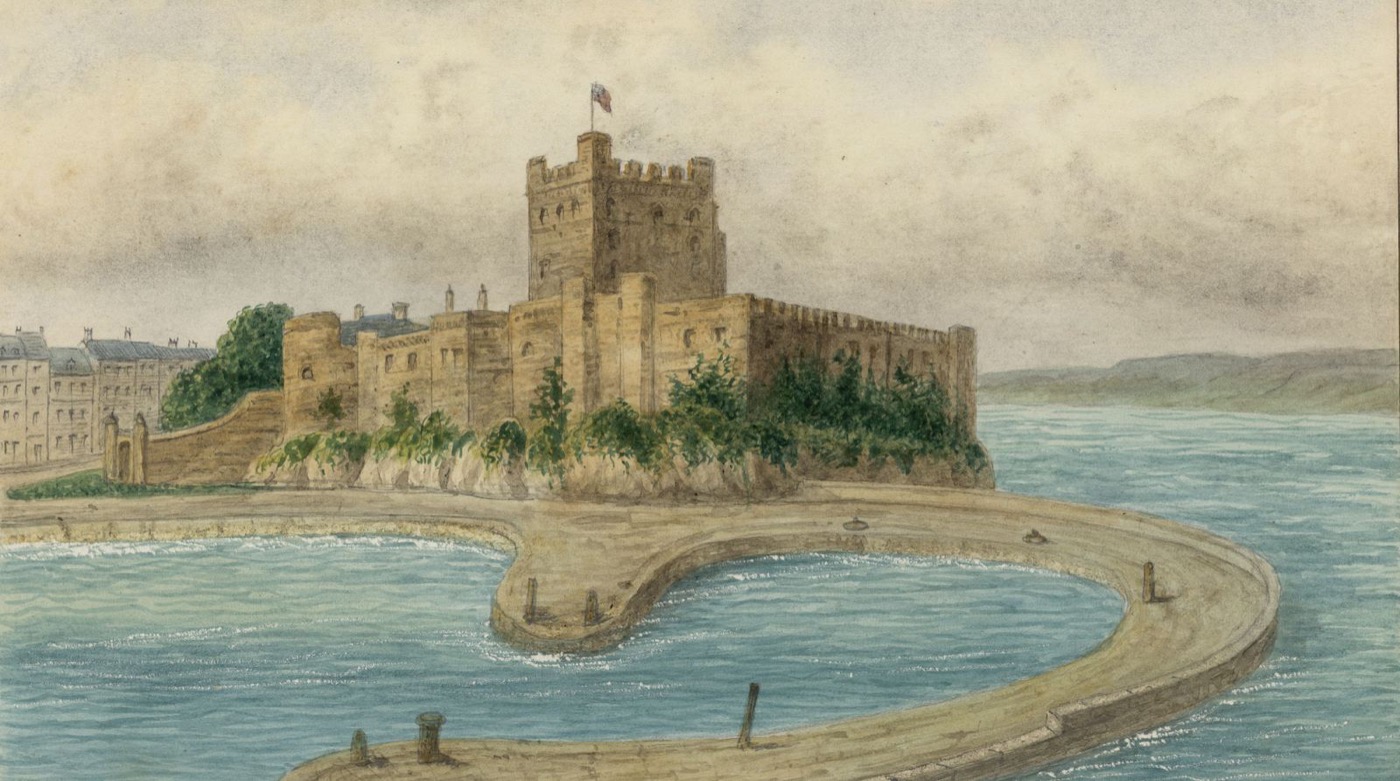
Carrickfergus, on the County Antrim shore of Belfast Lough, is not a site this report can tie to a named Topping directly; it stands here as the general landing-place and garrison town of the wider plantation the Ulster branch belongs to, the way a period map stands for a homeland rather than for one family's own front door.
That was one chapter. The report carries the rest: where the name comes from, the clan and its chiefs, heraldry, the stories, a timeline, migration, the name today, notable bearers, and a page on tracing your own line. Every claim sourced the same way as the chapter above.
Get the Topping report$14.99 · instant download, yours to keep and print
Not your name? Search yours, or read how we work, with another full chapter.
This history is written by AI from public-domain sources and the family's own published records, every one of them listed above. Where tradition and record disagree the text says so rather than choosing quietly. No image on this page is AI-generated.
First edition · last revised