 The Old Country
The Old Country
The Old Country
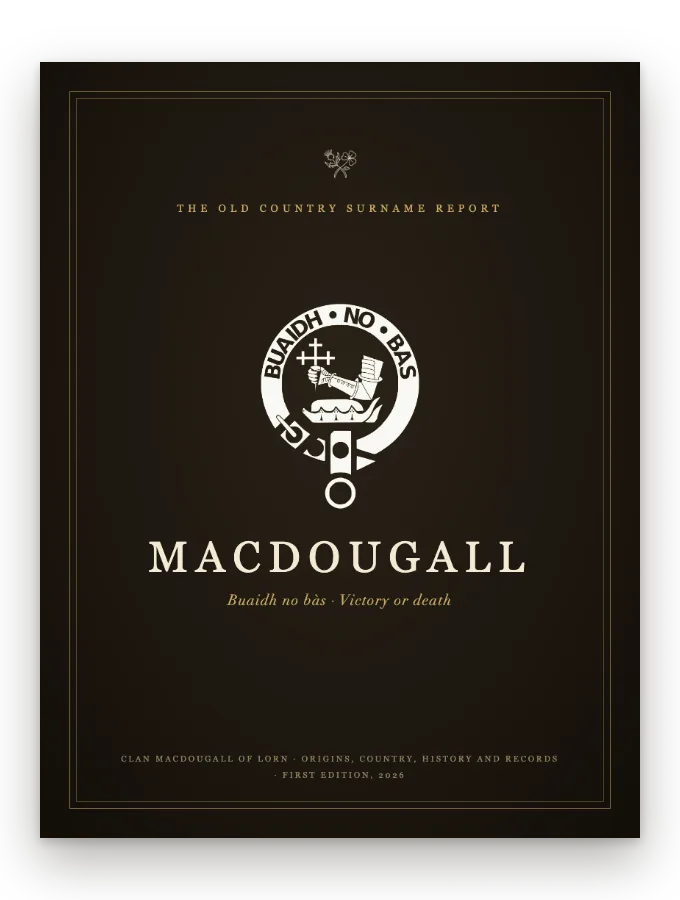
This report tells the story of MacDougall, MacDougal and McDougall, the anglicised forms of Gaelic Mac Dhùghaill, son of Dubhghall. Dubhghall himself, dubh and gall, means dark foreigner, a byname the Gaelic-speaking world once hung on dark-haired Norsemen to set them apart from the fair-haired Fionnghall, the Norwegians. The Dubhghall this name actually descends from was a real, dateable man: Dubhgall, one of the sons of Somerled, the Norse-Gaelic warlord who ruled Argyll and the Isles until his death in 1164. Somerled's kingdom was carved up among his sons, and Dubhgall's share, Lorn and, tradition holds, a scatter of islands running from Mull to Coll, became Clan MacDougall's own country for the eight and a half centuries since. By the thirteenth century clan tradition ranks this among the leading powers on Scotland's western seaboard, ruling from two castles that still stand today, Dunollie above Oban and Dunstaffnage on its rock at the mouth of Loch Etive.
Lorn is the district on Scotland's west coast that gave Clan MacDougall its second name in every older telling, the Lords of Lorn, and it remains the clan's country today: the coastline and hill country around the town of Oban, bounded roughly by Loch Etive to the north, Loch Awe to the east, and the sea lochs and islands of the Firth of Lorn to the west and south. It is working Highland ground rather than a single grand estate, farmland, forestry and fishing villages threaded between two ruined castles that still carry the family's own story in their stone.
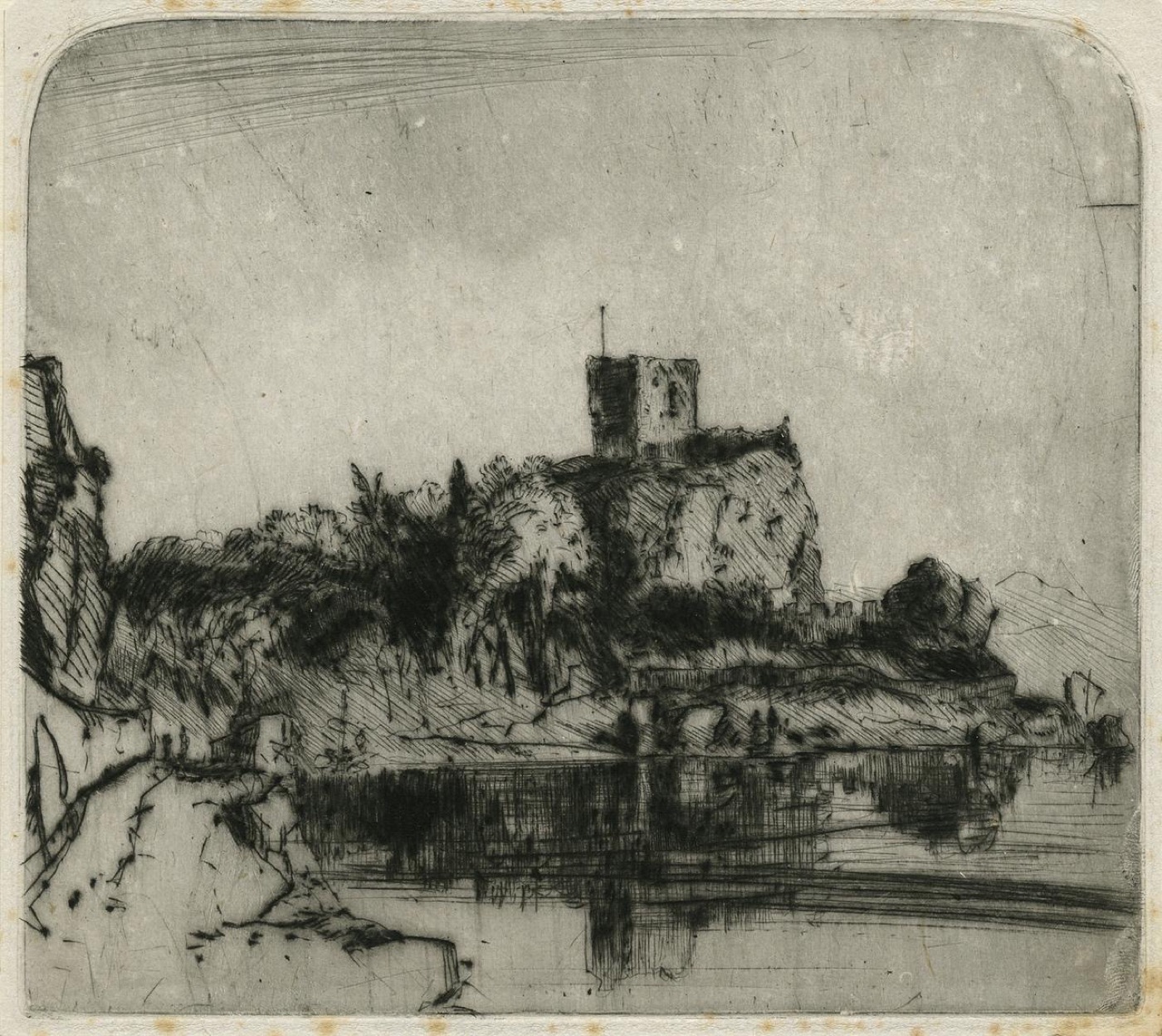
Dunollie, immediately north of Oban, is the older and the more continuously held of the two: a fortified height since at least the sixth or seventh century, seat once of the kings of Dál Riata, and the MacDougall family's own seat, in one form or another, for close to nine hundred years by the Dunollie trust's own reckoning. The present Dunollie House, beside the ruined medieval castle, has been the chiefs' actual residence since the eighteenth century, and today it operates in part as a museum telling the clan's own story to visitors.
Dunstaffnage, a few miles further north at the mouth of Loch Etive, was the grander of the two in the thirteenth century, begun before 1240 and held by the MacDougalls until Robert Bruce besieged and captured it in 1308, after which it passed by stages into Campbell and then Crown hands. Both castles, and Duntrune further south on Loch Crinan, mark the same story: a clan that built in stone what it held by the sword, and lost most of it inside a single generation.
That was one chapter. The report carries the rest: where the name comes from, the clan and its chiefs, heraldry, the stories, a timeline, migration, the name today, notable bearers, and a page on tracing your own line. Every claim sourced the same way as the chapter above.
Get the MacDougall report$14.99 · instant download, yours to keep and print
Not your name? Search yours, or read how we work, with another full chapter.
This history is written by AI from public-domain sources and the family's own published records, every one of them listed above. Where tradition and record disagree the text says so rather than choosing quietly. No image on this page is AI-generated.
First edition · last revised