 The Old Country
The Old Country
The Old Country
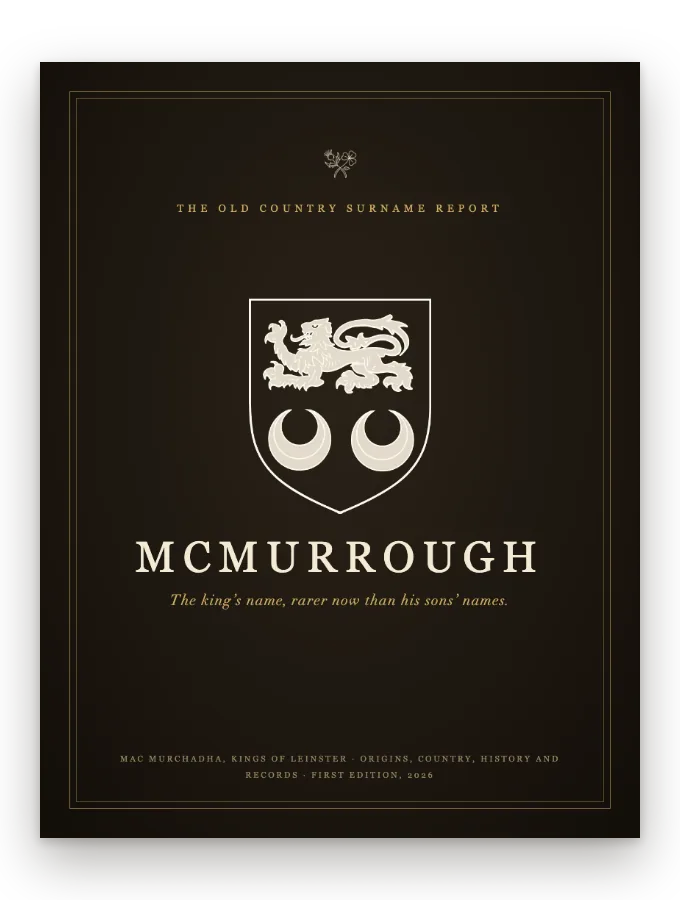
This report tells the story of a name that once sat on a throne and now barely survives at all. McMurrough anglicises Mac Murchadha, 'son of Murchadh', a personal name meaning sea warrior, from muir, sea, and cath, battle. The family it names, the Uí Cheinnselaig kings of Leinster, seated at Ferns in County Wexford, were among the most powerful dynasties in medieval Ireland. The surname itself is today one of the rarest in the country it once ruled: one aggregator of modern data estimates roughly three hundred McMurroughs worldwide.
Ferns, in north County Wexford, was the capital of this dynasty for as long as it had one. Tradition holds a monastery was founded here around 600 by St Edan; what stands today is largely a medieval cathedral: the thirteenth century building was burned in 1575 and rebuilt in its present form in 1577. Diarmait Mac Murchada, who had already founded the Cistercian abbey of Baltinglass in County Wicklow in 1148, founded an Augustinian abbey here, on or near an earlier foundation, around 1158 to 1162, in partnership with his brother in law Laurence O'Toole, archbishop of Dublin. He died at Ferns in 1171, the Annals of Ulster record, and is reputed, the Office of Public Works itself says carefully, to be buried in the churchyard, the grave believed to be marked by the remains of a high cross still visible today.
The castle beside the cathedral is a later, Anglo-Norman building: 'William, Earl Marshal built the castle around 1200', the Office of Public Works states, on the ground the family it displaced had ruled. Tourist guides to the town report that it later became a stronghold of the MacMurrough Kavanagh kings in their own right, held until the Tudor conquest, though this report has not found that continuity confirmed in an official heritage record and states it with that caveat. What survives, roughly half the original structure, includes a circular chapel with a moulded rib vaulted ceiling and carved Dundry stone details. Sir Charles Coote dismantled the outworks and blew up part of the castle in 1641.
Enniscorthy Castle, downriver, tells the same story from the other direction. The castle's own published history dates the first Anglo-Norman castle on the site to 1190, the Kavanagh recovery to 1375 under Art Mór, and the surrender to the crown to 1536; the standing building is largely late sixteenth century work, an archaeological survey concludes, on the site the family had held. This is documented family ground, not merely regional geography, the one substantial castle site this report can name as genuinely, repeatedly, the dynasty's own.
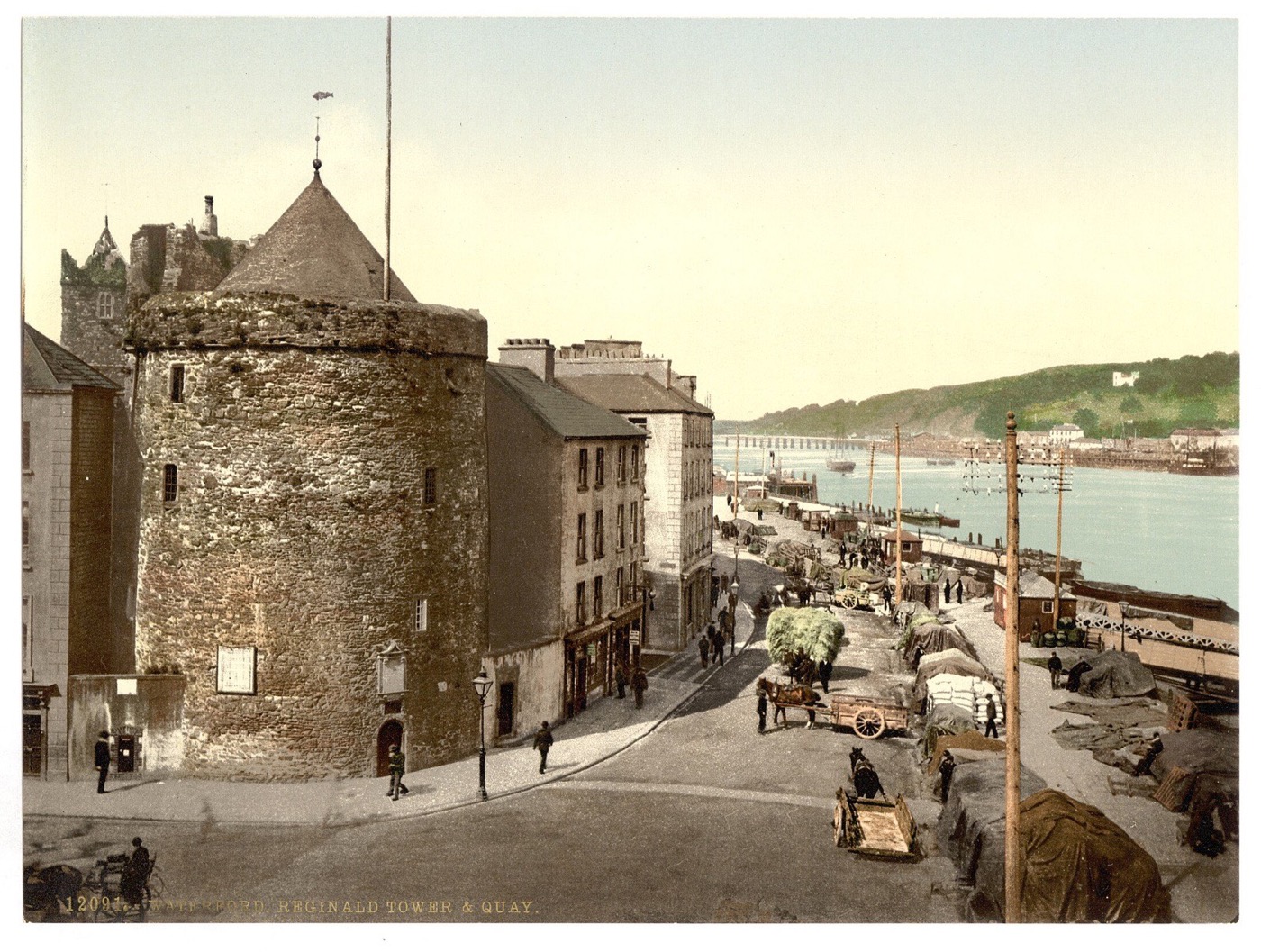
That was one chapter. The report carries the rest: where the name comes from, the clan and its chiefs, heraldry, the stories, a timeline, migration, the name today, notable bearers, and a page on tracing your own line. Every claim sourced the same way as the chapter above.
Get the McMurrough report$14.99 · instant download, yours to keep and print
Not your name? Search yours, or read how we work, with another full chapter.
This history is written by AI from public-domain sources and the family's own published records, every one of them listed above. Where tradition and record disagree the text says so rather than choosing quietly. No image on this page is AI-generated.
First edition · last revised