 The Old Country
The Old Country
The Old Country
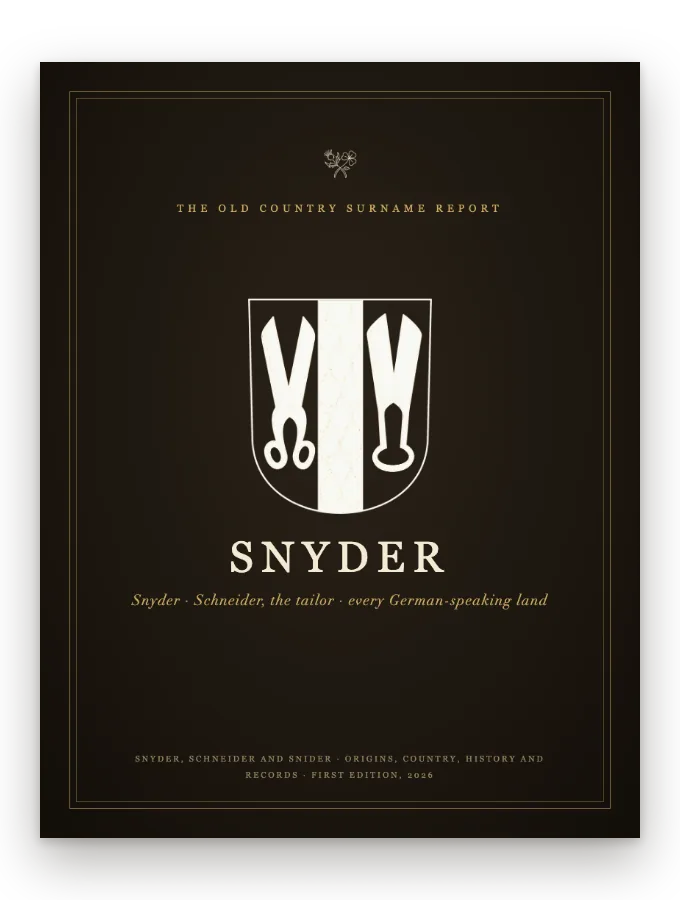
Snyder is a trade name, and the trade is the oldest sort of surname there is: a word for what a man did, which stuck to him and then to his children after the job had moved on. The word is Schneider, the German for a tailor, built on the Middle High German snîdære, a cutter, and Duden Familiennamen glosses it tailor, clothes-maker and cloth-seller. Every market town in the German-speaking lands had one, which is why Schneider is the third most frequent surname in Germany today and why no single family, village or coat of arms can claim it. What this report follows instead is the word, the trade behind it, the dialect line that decides where in Germany you find it, and the crossing that turned it into Snyder.
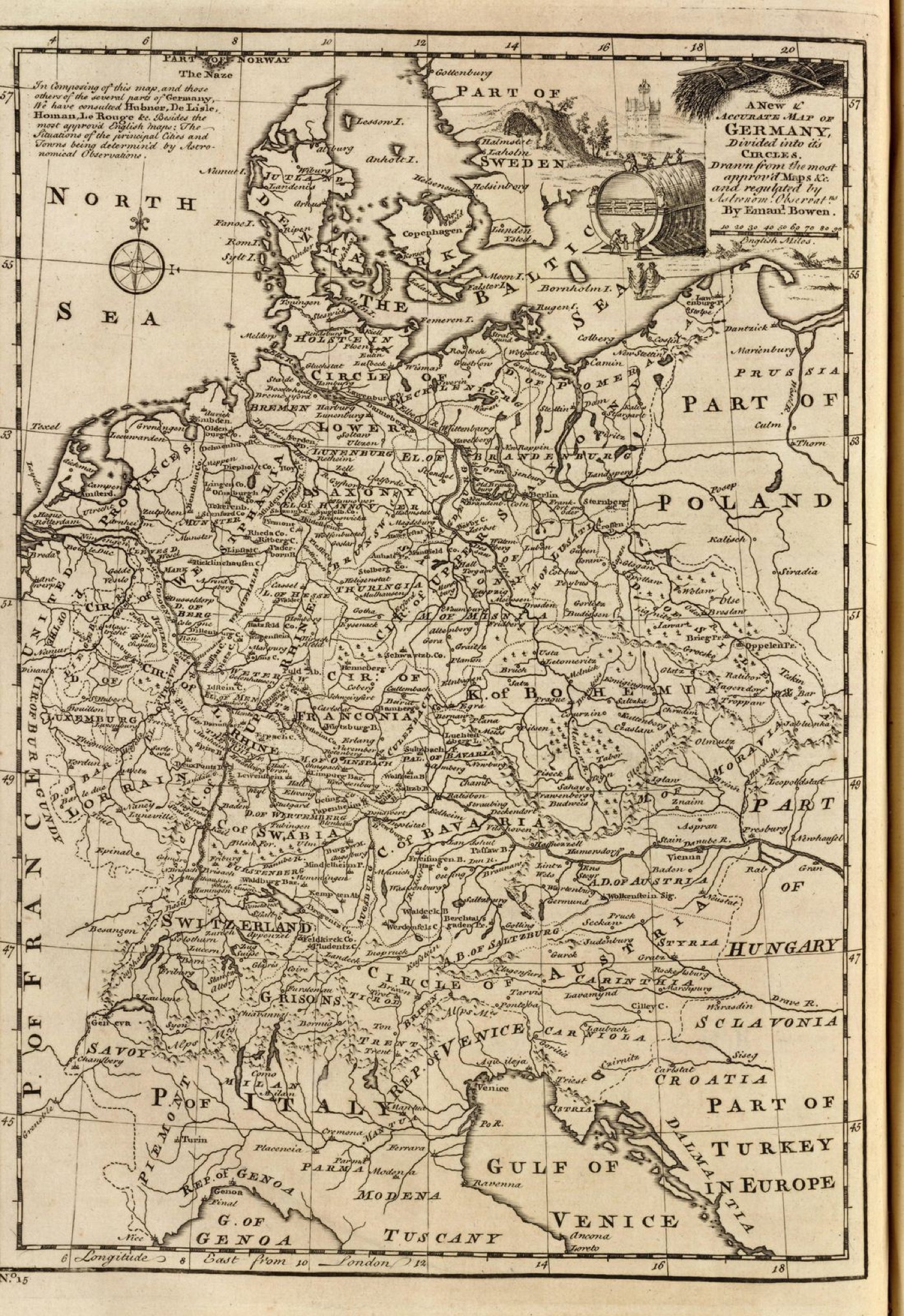
Ask where the Snyders come from and the honest answer is a region rather than a place, because the trade that made the name was practised in every town that had cloth to cut. The region is real all the same. It is the High German half of the German-speaking world: the belt that runs from the Saarland and the Rhineland-Palatinate across Hesse into Franconia and Swabia, down into Bavaria and east into Thuringia and Saxony, with Switzerland and Austria beyond it. Those are the lands where the tailor was called the Schneider, and where a family of the name could be sitting in any one of ten thousand villages.
The numbers put edges on it. Of the 122,944 Schneider listings in the German telephone directories, North Rhine-Westphalia holds 22,854 and Bavaria 20,332 on the strength of their size, but the density tells the better story: the Rhineland-Palatinate holds 12,818 and the Saarland 3,326, in two of the smallest states in the country, and Hesse 14,219. Baden-Württemberg has 19,155, Saxony 7,142, Thuringia 3,364. Against that, the whole northern coast is thin: Schleswig-Holstein 2,063, Hamburg 1,195, Bremen 470, Mecklenburg-Vorpommern 933. The name did not fail to spread north. It simply had another word waiting for it there.
For a family tracing back from America this matters more than it looks. The Pennsylvania and Ohio valley Germans came overwhelmingly out of the Palatinate, the Rhineland, Württemberg, Baden and the Swiss cantons, which is the same ground the Schneider distribution covers today; the ships that carried them sailed from Rotterdam, and the passenger lists that name them were kept at Philadelphia. So the region a Snyder is looking for is the one the name is thickest in now, and the coincidence is not luck. It is the same country, three hundred years apart, with the same trade still in the directory.
That was one chapter. The report carries the rest: where the name comes from, the region and its records, arms, seals and marks, the stories, a timeline, migration, the name today, notable bearers, and a page on tracing your own line. Every claim sourced the same way as the chapter above.
Get the Snyder report$14.99 · instant download, yours to keep and print
Not your name? Search yours, or read how we work, with another full chapter.
Also as a film, $39.99, a printed book, $59, or all three, $79, with Snyder on the title.
Buying it for someone? Send it on a day you choose, with a card.
This history is written by AI from public-domain sources and the family's own published records, every one of them listed above. Where tradition and record disagree the text says so rather than choosing quietly. No image on this page is AI-generated.
First edition · last revised